Just out of curiosity: You always show the M+R Castor. Do you also have the Pollux? If so, how do you like it?
2 Likes
I don’t have it yet, but I plan to buy it… I’m curious how it will sharp… I would probably buy a Janus too, but I don’t know exactly which one and whether it will be sharp when used… and it will probably be quite expensive. Or another tip for a good sharpener with similar properties?
2 Likes
It is quite difficult to find a Janus 4048 in good condition, and in most cases the blade is blunt; replacement blades are even harder to find. The Janus 4046 and the replacement blades (not compatible to the ones for the 4048!) is even more rare. To me, the Pollux is the better Janus  And although some users complain about problems with certain pencils, I have not yet had any problems with mine (except with low quality pencils). – There was also the Helios 5078 from Johann Faber with similar properties which was sold around the same time when the Janus 4046 was offered but it’s very rare too.
To me, the Pollux is the pinnacle of hand sharpeners. – By the way, Möbius+Ruppert is the last company in the world to manufacture brass pencil sharpeners.
4 Likes
If I may… I second completely @Gunther 's opinion about the impeccable quality of the Pollux: I am glad it exists, otherwise the only true alternative to get that sorts of pencil tips would be to use an El Casco planetary burr rotary sharpener, and those are not only deadly expensive (even though they can be found on the second-hand market at much more reasonable prices), but also not really easy to use — I find that a certain amount of care and “help” by the human is necessary, in order to achieve truly outstanding results.
The Janus 4046 and 4048 is available, for both models, in brass and aluminum; while the blades for the “overhead screw” model (the 4048) can be obtained a bit more easily because they are standard blades with unthreaded holes which are bent by the central pressure of the screw securing them to the bed of the sharpener, the curved blades with threaded holes for the 4046 (“under-gripping screw”) are almost impossible to get in a decent condition.
There was once a listing on the German Bay for some flat blades with threaded holes which I think may be forced to work properly in a Janus 4046, but when I was about to buy them I discovered that someone else had already arrived before me (I planned to use them in a tiny hand-held metal sharpener by El Casco, as its original blade needs a threaded screw).
If you can, @majkycz_y , get a Pollux (and maybe a set of replacement blades, as they are a bit different from the standard ones used in smaller sharpeners made by M+R), and even a lead pointer Minofix if you can find one: they are superbely made, and estraordinarily reliable. 
8 Likes
Great, thanks to @Gunther and @Leonov for their advices!
PS: @leonov - Do you mean “Minfix” not “Minofix” (?) … it is in my pictures (it’s the second one, just turned around)
1 Like
I mean this one, made by M+R: https://www.jetpens.com/M-R-Minofix-Brass-Lead-Pointer-Double-Hole-Block/pd/21264
The “Minifix” (or Minfix) was made by Faber-Castell, and is actually one of the best pointers ever, in all its many variants; the “Minofix” is a modern variant, made by M+R — when it came out, it stirred quite some controversy because of the name, and its similarity with the vintage one.
3 Likes
@Leonov Thank you for the additional details!
Unfortunately the 4048 has some design flaws. While some of them (chatter marks in the blade bed, untidy knurling) are cosmetic, at least one is annoying: The blade can be rotated around the screw a tiny bit. Of course fasting the screw will fix it but you have to fiddle until you find the proper position. The Pollux is from a completely different world!
When buying spare blades it is recommended to look very closely; on one blade, I overlooked a crack near the hole. By the way, sharpening a dull blade won’t work because this will change its geometry and renders the blade unusable.
I fully agree with the recommendation for Minofix, and while we’re at it: Get a “Grenade” too. Its history dates back to 1890, and while the point it creates may not be as spectacular as the one cut by Pollux and Castor it’s both a great sharpener and a fascinating piece of pencil history.
2 Likes
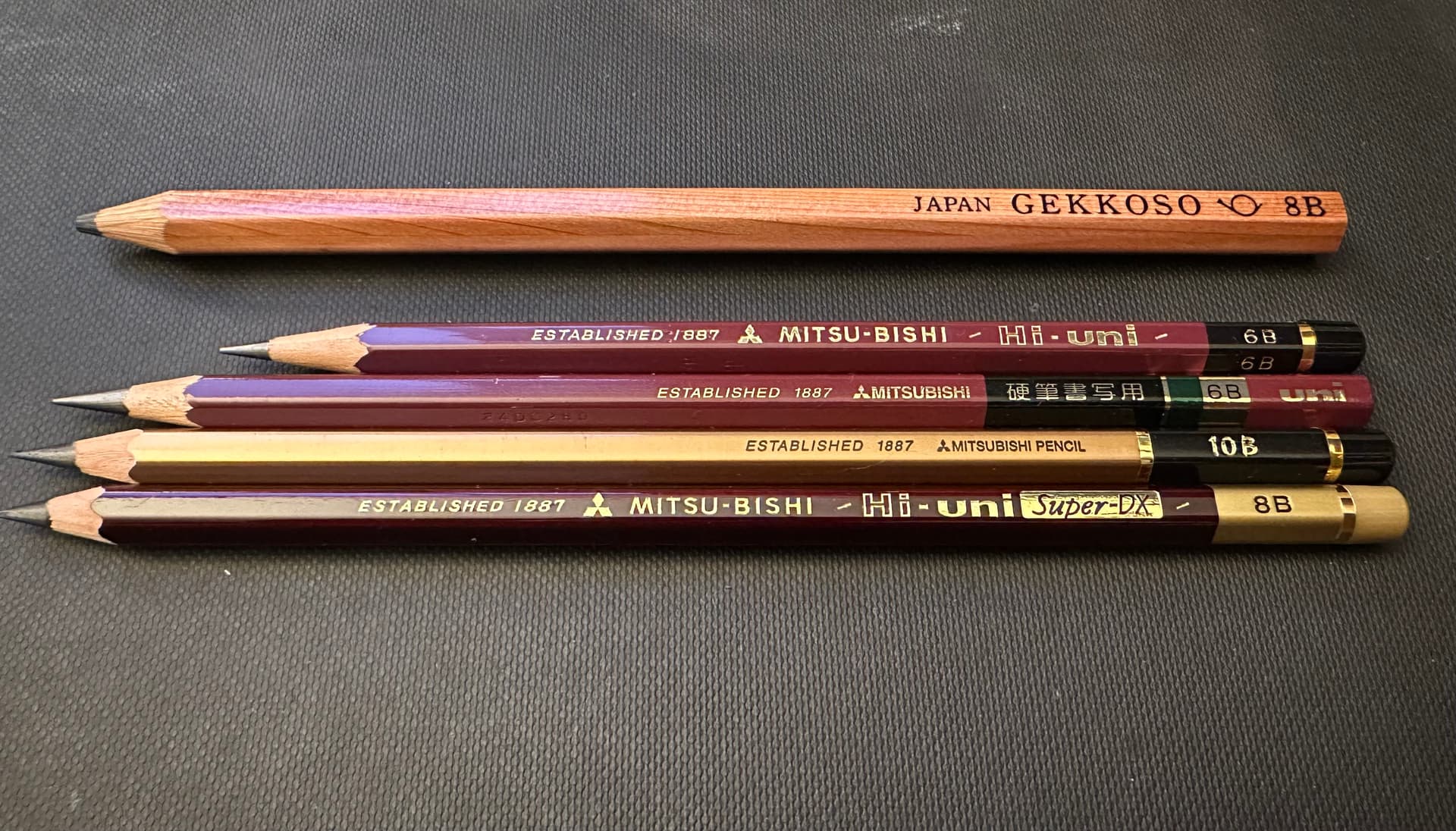
The uni pencils are fantastic!
2 Likes
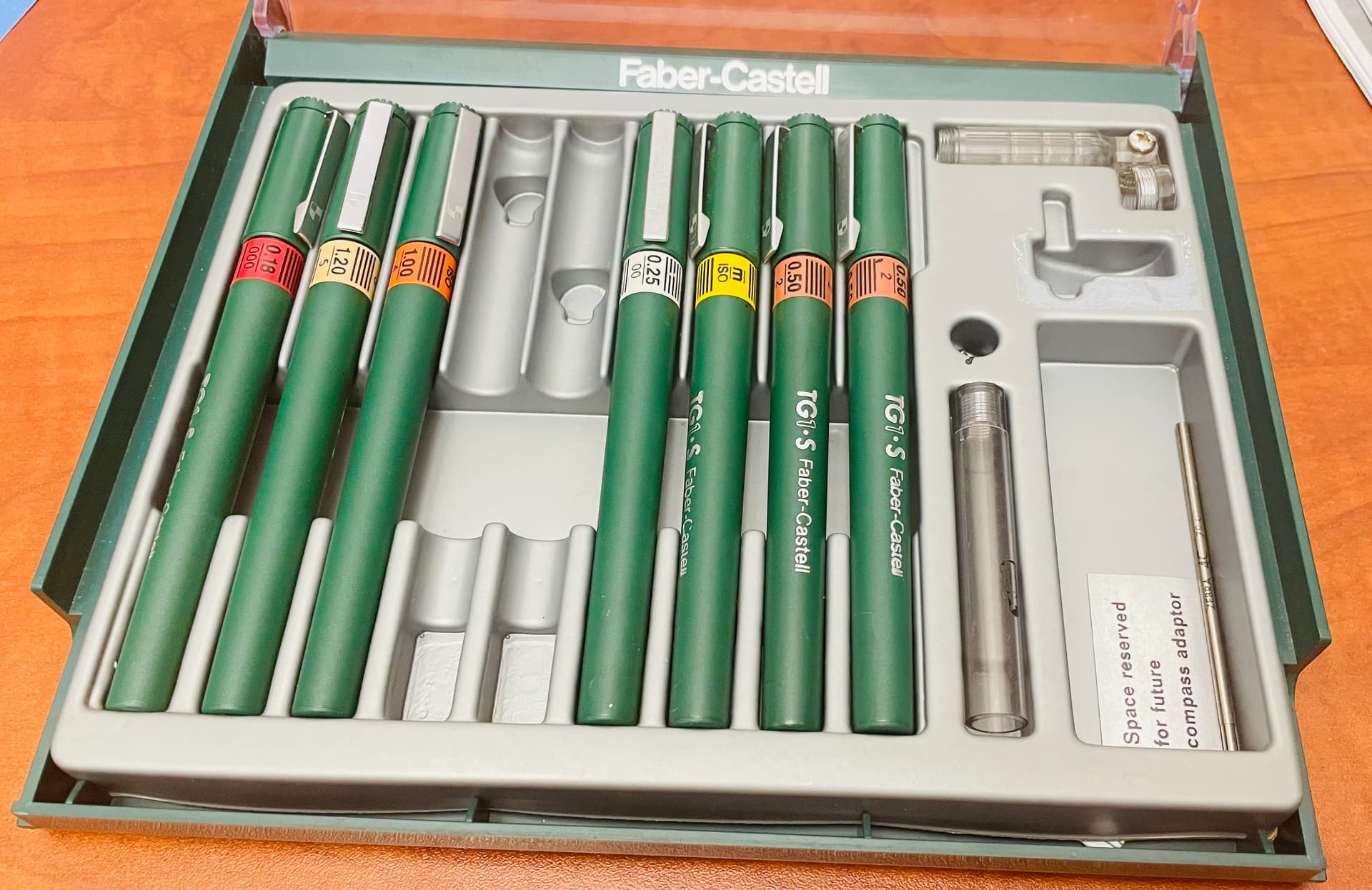
You collecting Tech pens too?
2 Likes
yeah -
1 Like
What are your favourite technical pens? rOtring, Staedtler, Faber-Castell, or something else perhaps (e.g. K+E, speaking of US, or KERN from Switzerland)?
Do you happen to use the old Graphos by Pelikan?
2 Likes
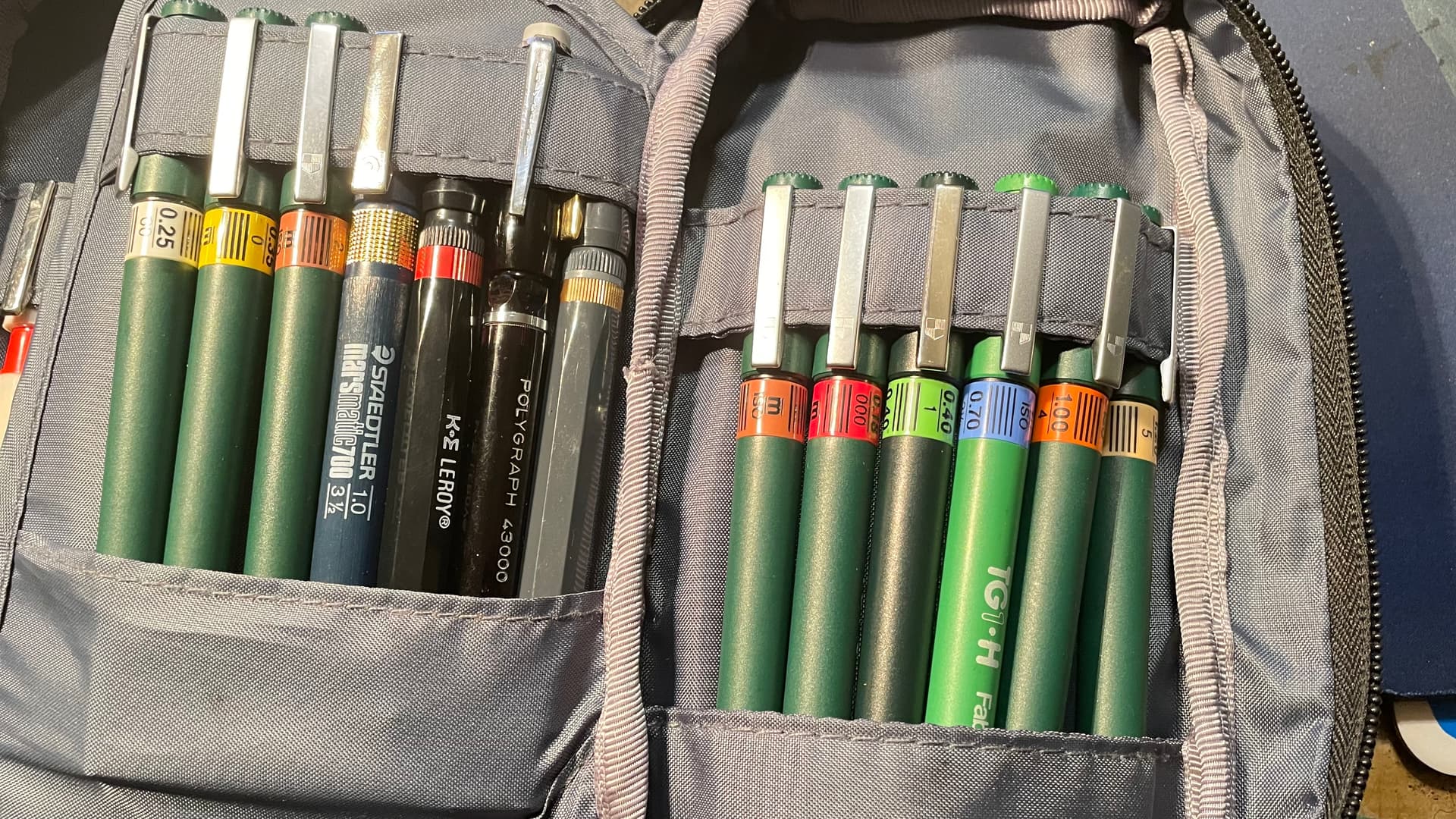
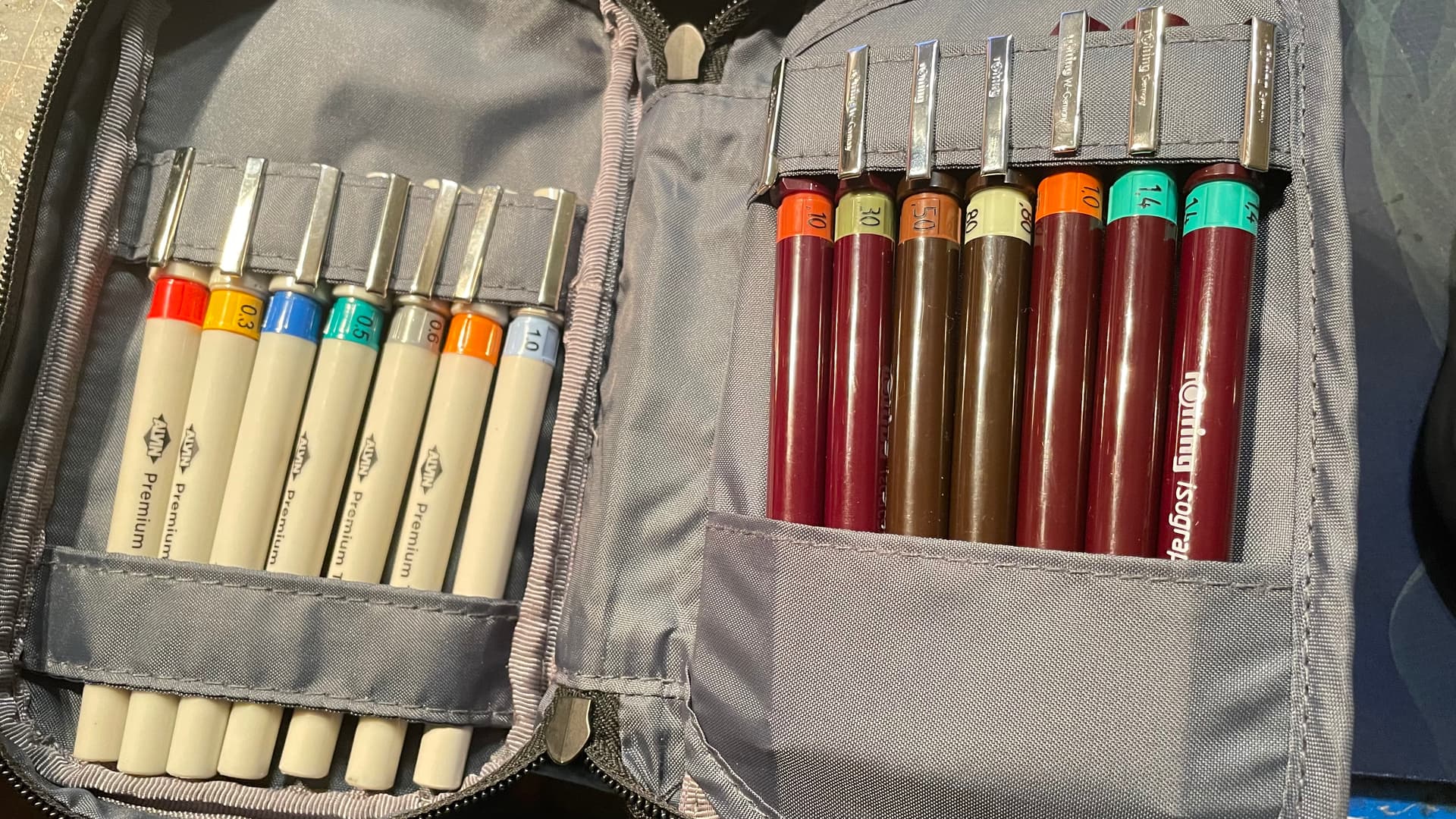
I have these:
- Alvin (says “premium” but are kind of low quality)
- Koh-I-Noor Rapidograph
- K&E Leroy (edit: I have a set of these but left them in my Leroy set)
- Polygraph 43000 (another favorite)
- Staedtler Marsmatic 700
- FC TG1 - these are my favorites. Mainly because of the humidity reservoir in the cap. You dont need to shake to prime them, even after a few days. The others (pretty much all of them) will “dry out” even after a few minutes of inactivity, you have to shake it to prime it for use.
- rOtring Isograph - these are my 2nd favorite
9 Likes
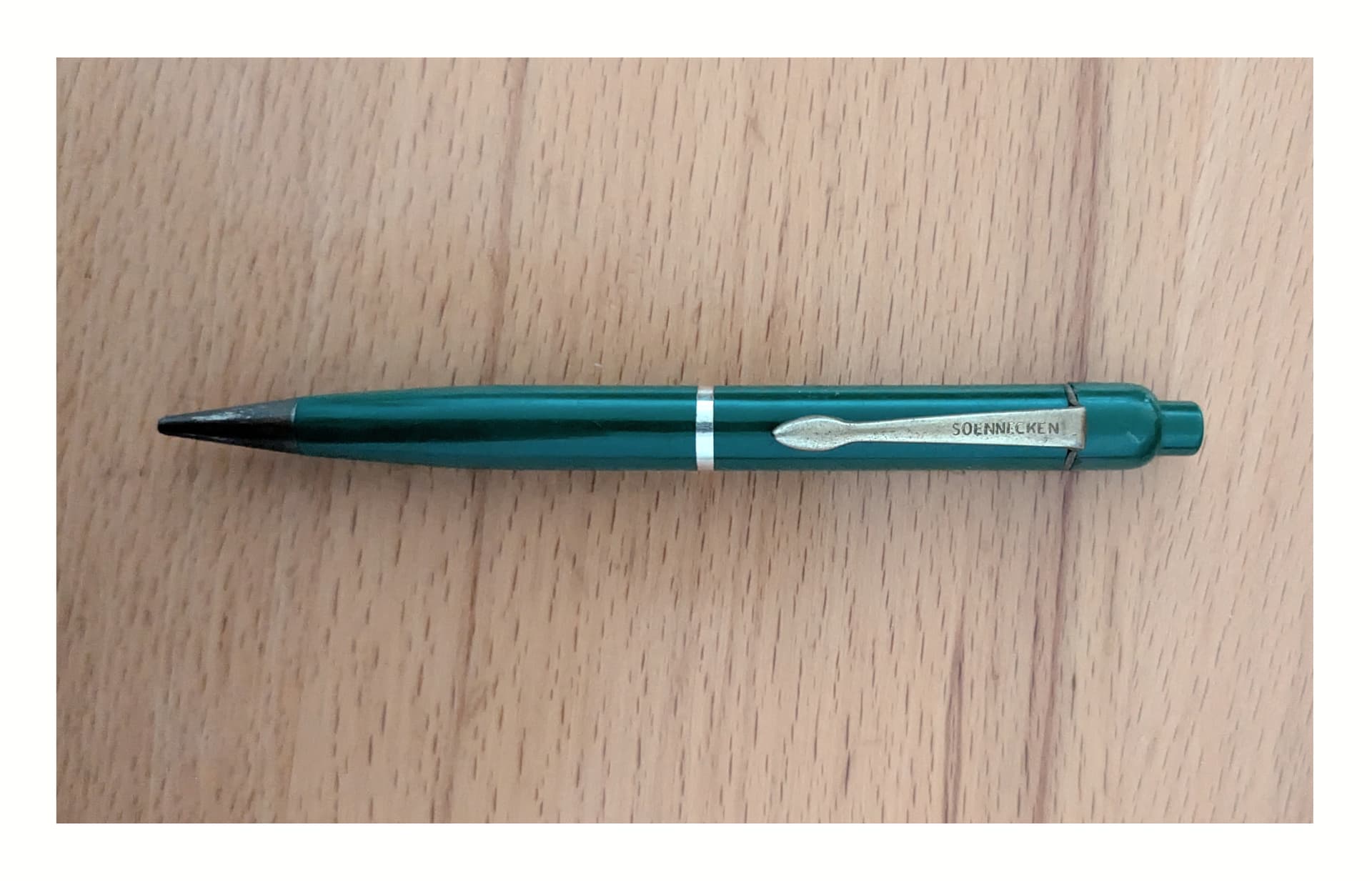
Oldest one in the collection. A Soennecken 44. Pretty roughed up, but still knocking after 70+ years!
13 Likes
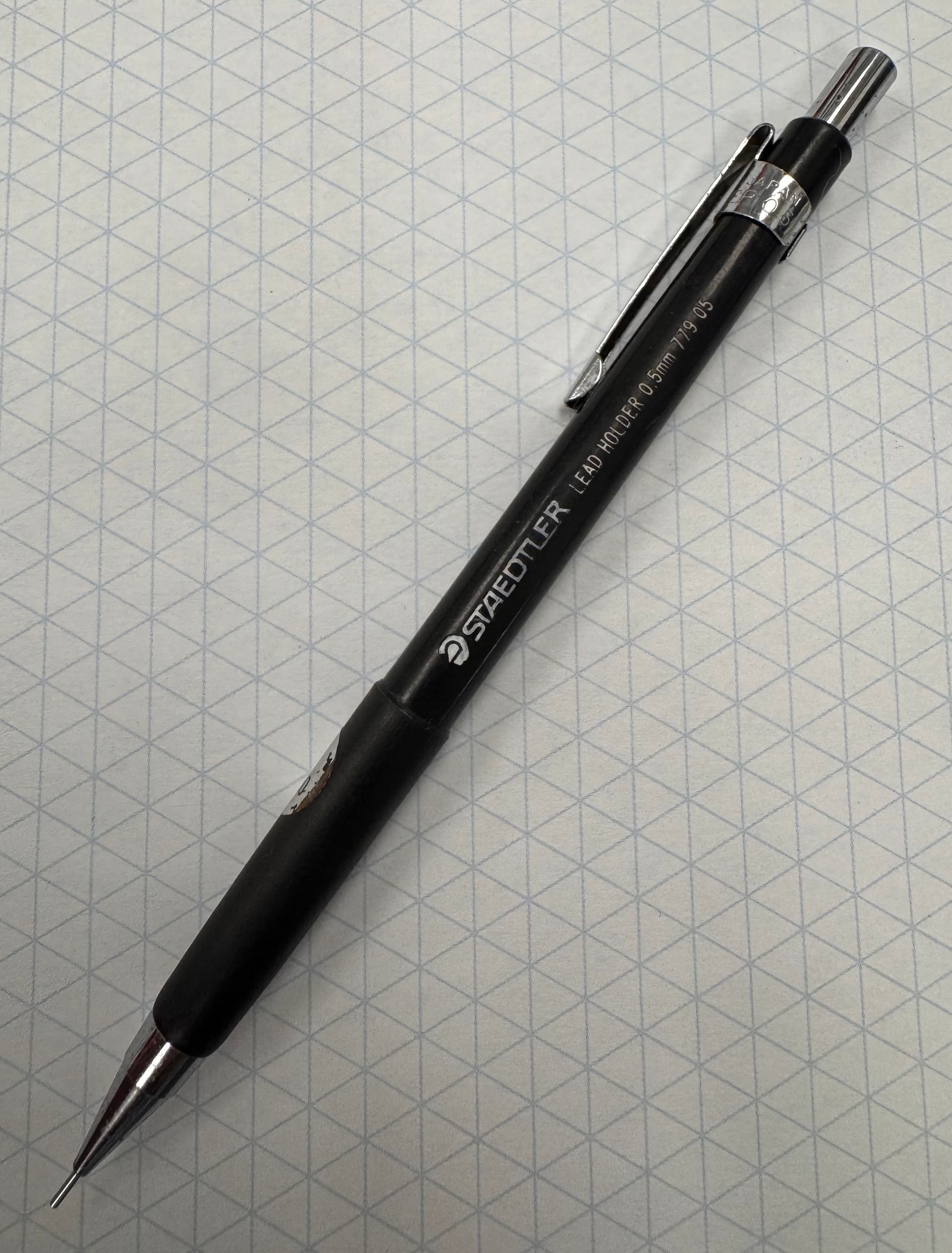
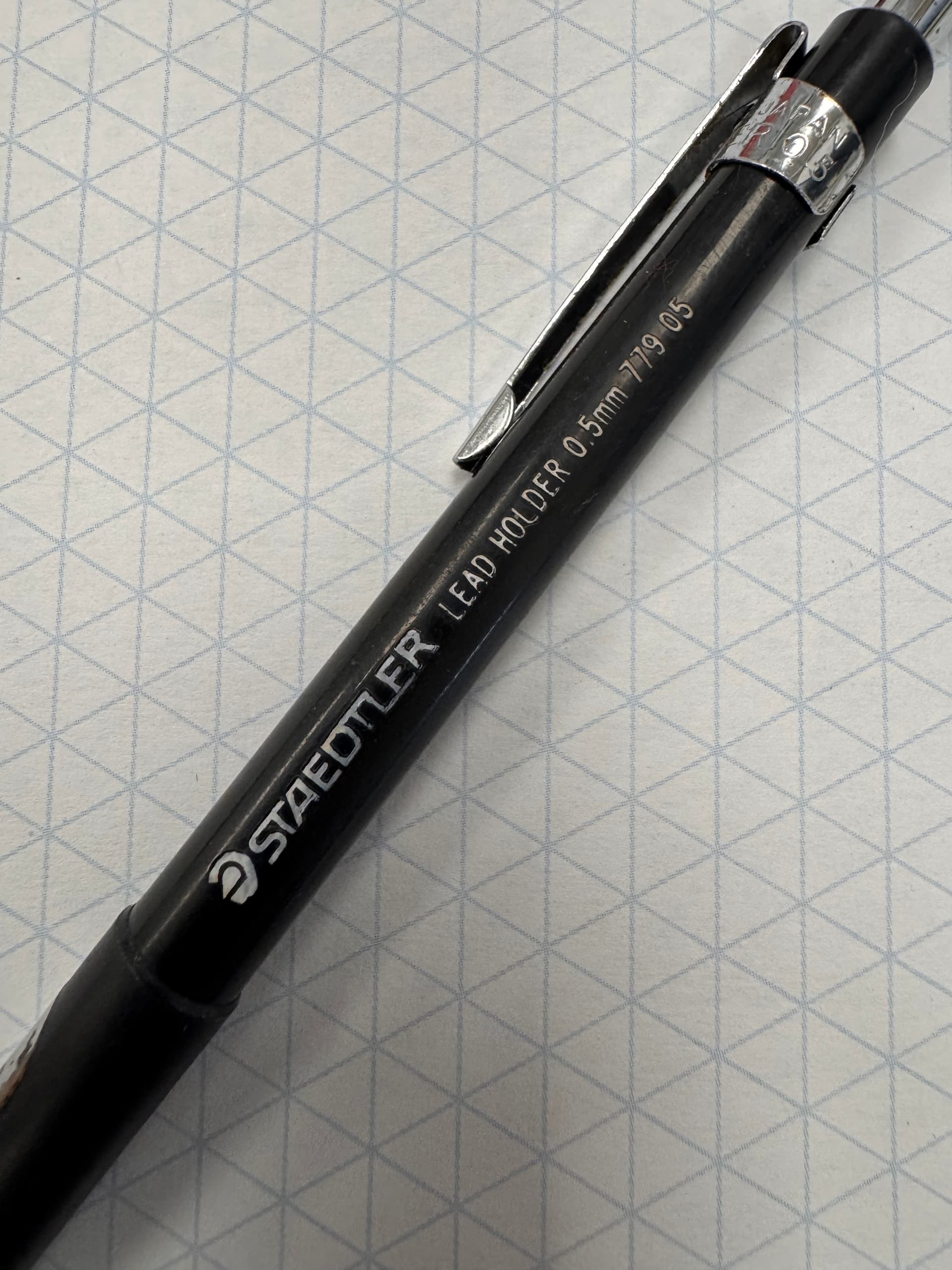
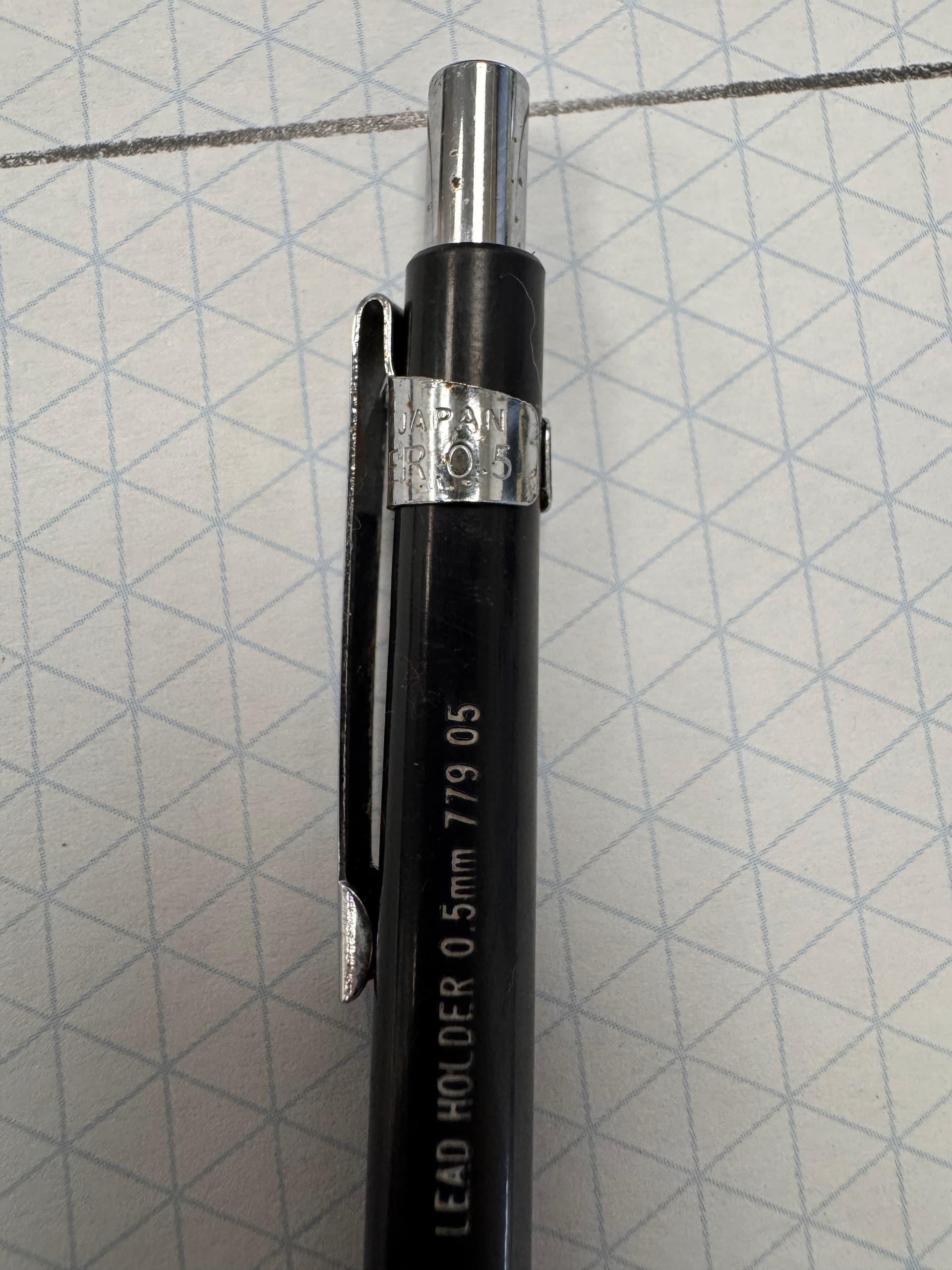
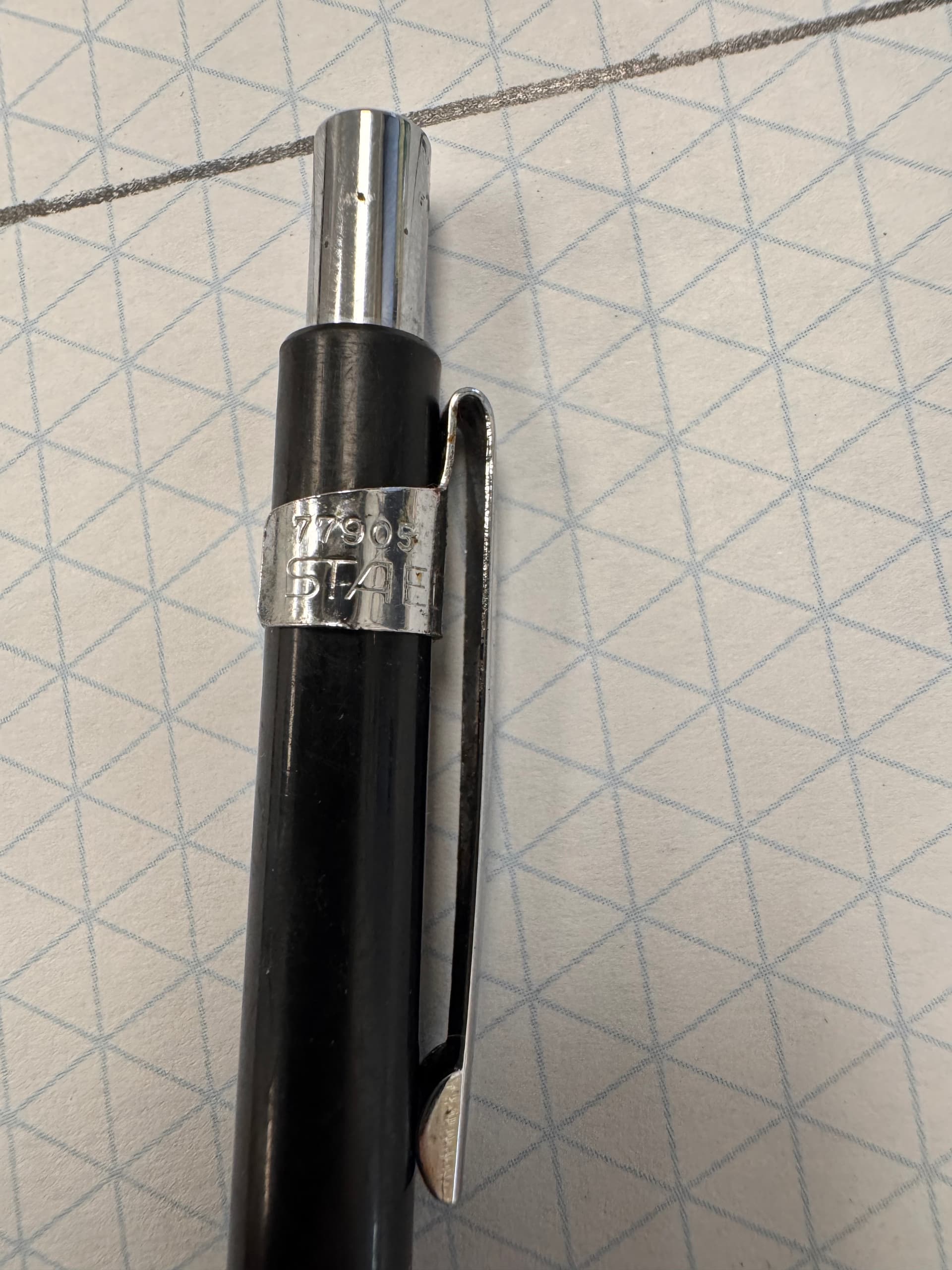
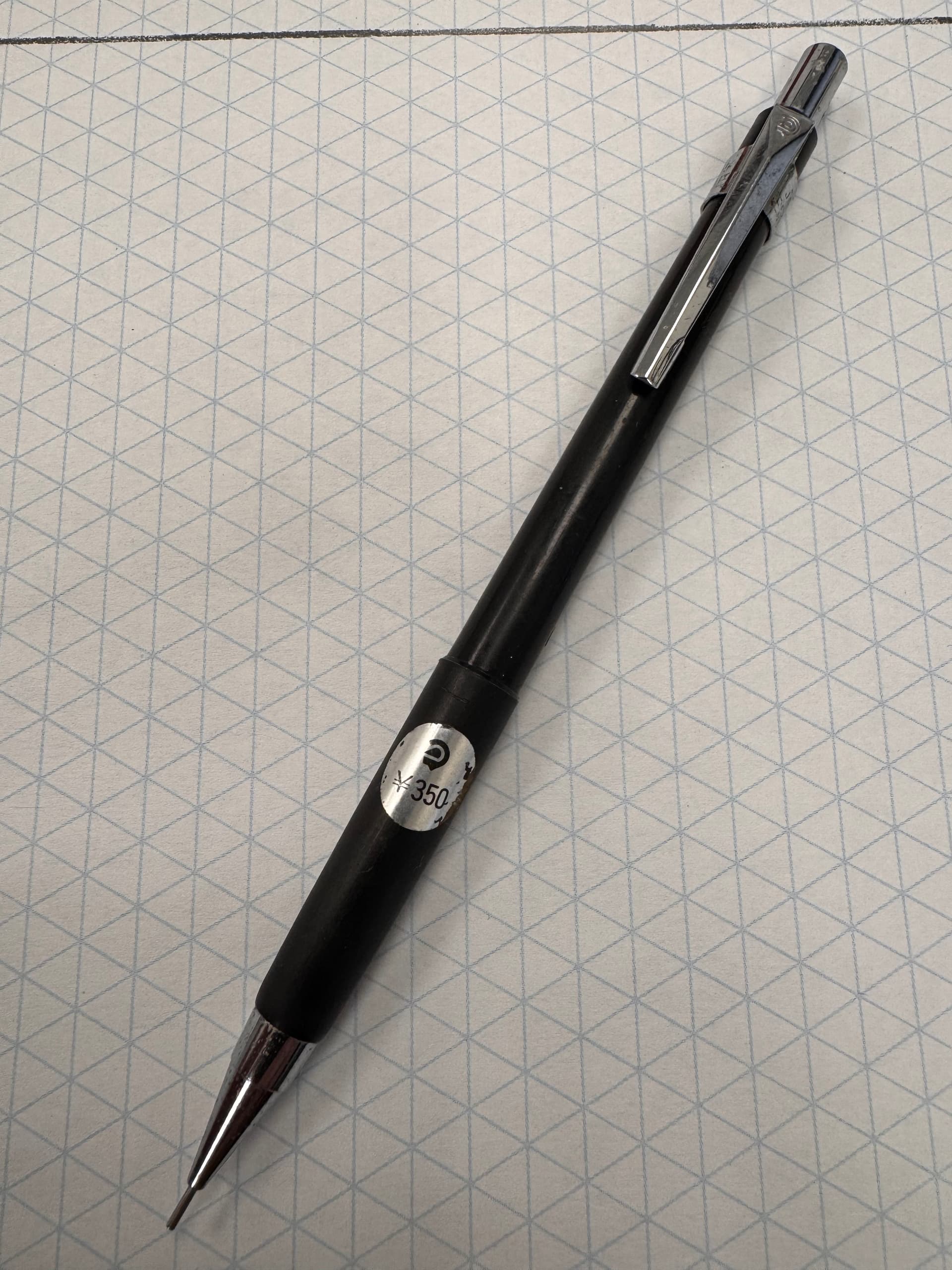
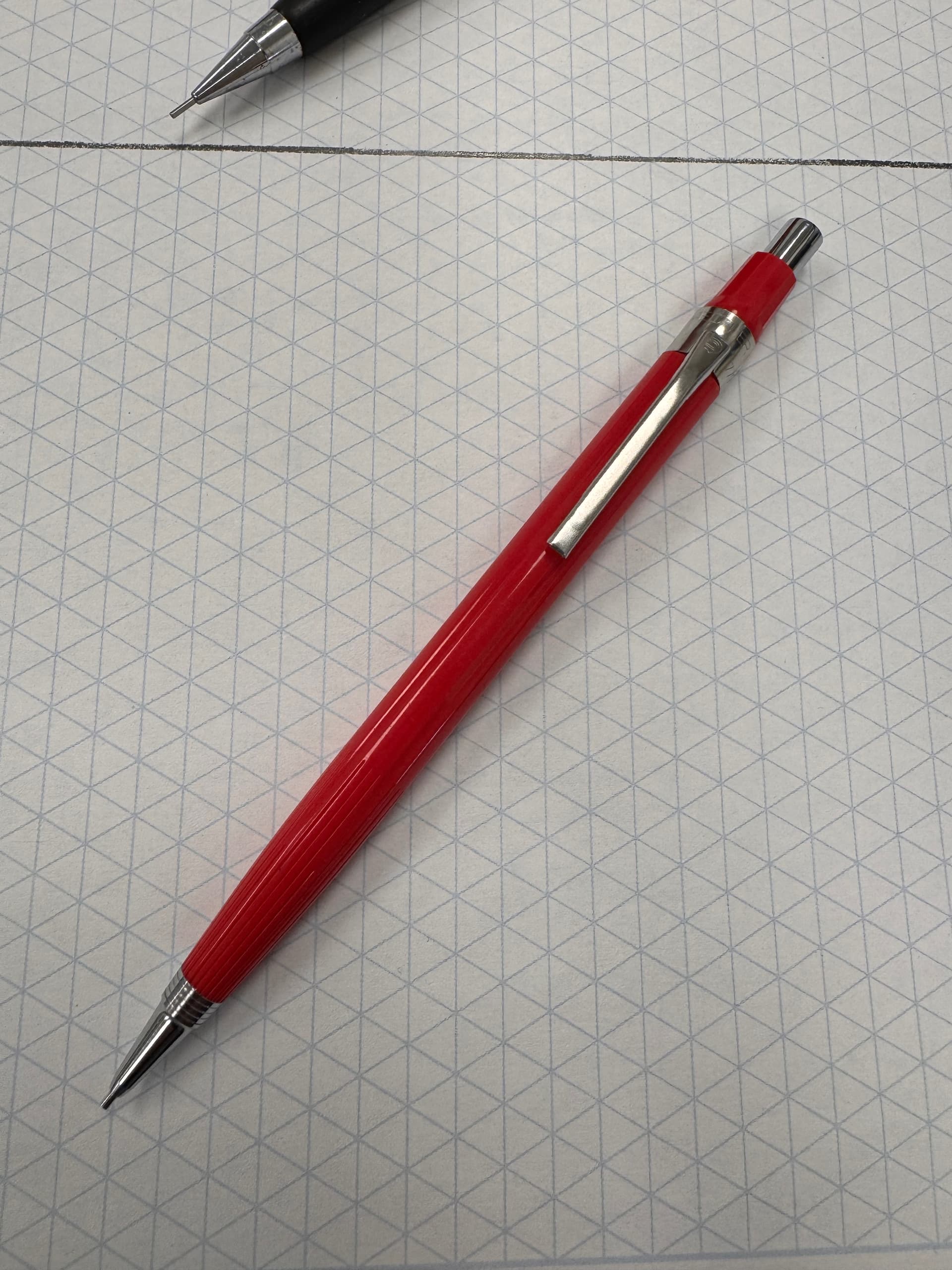
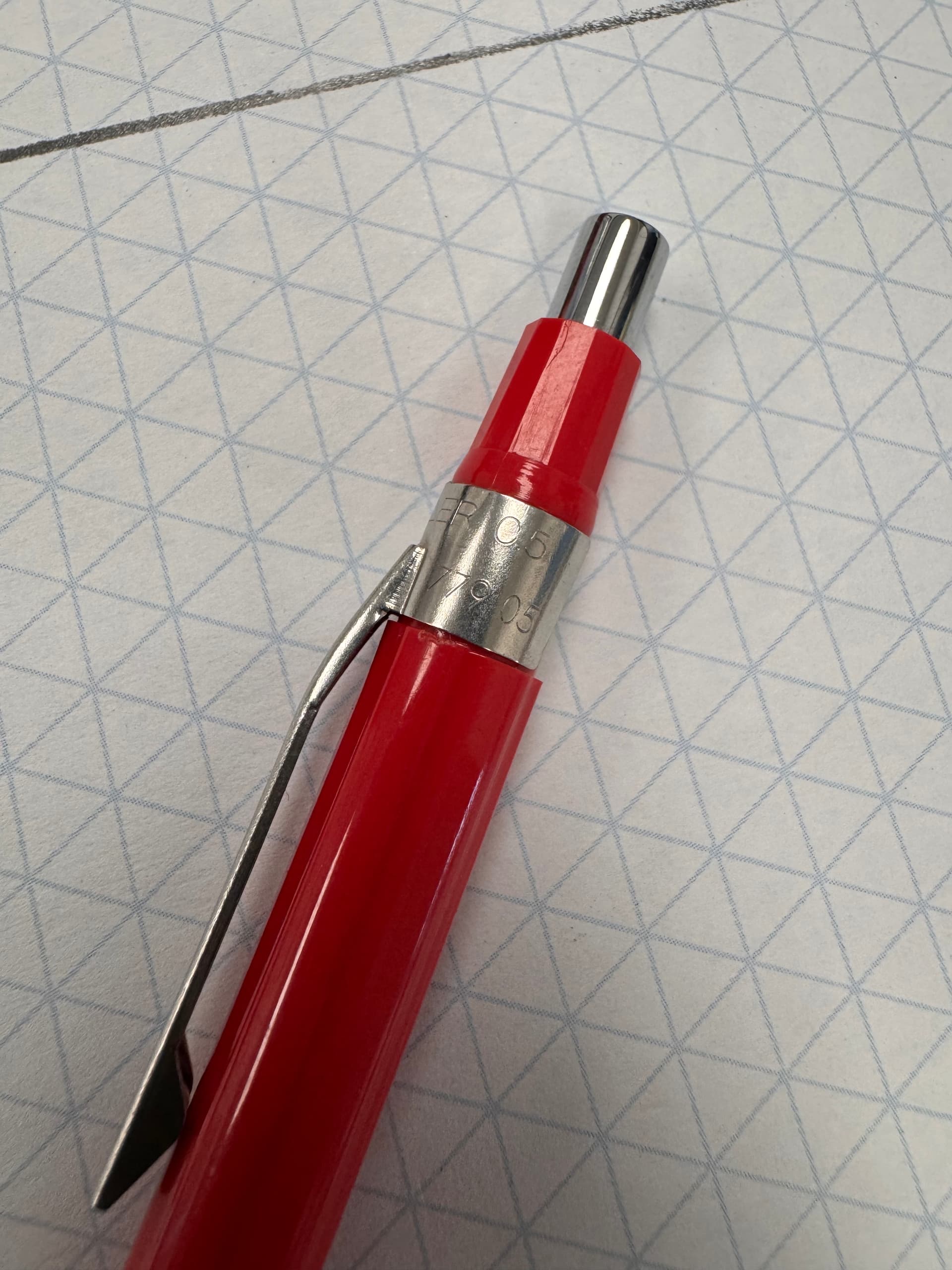
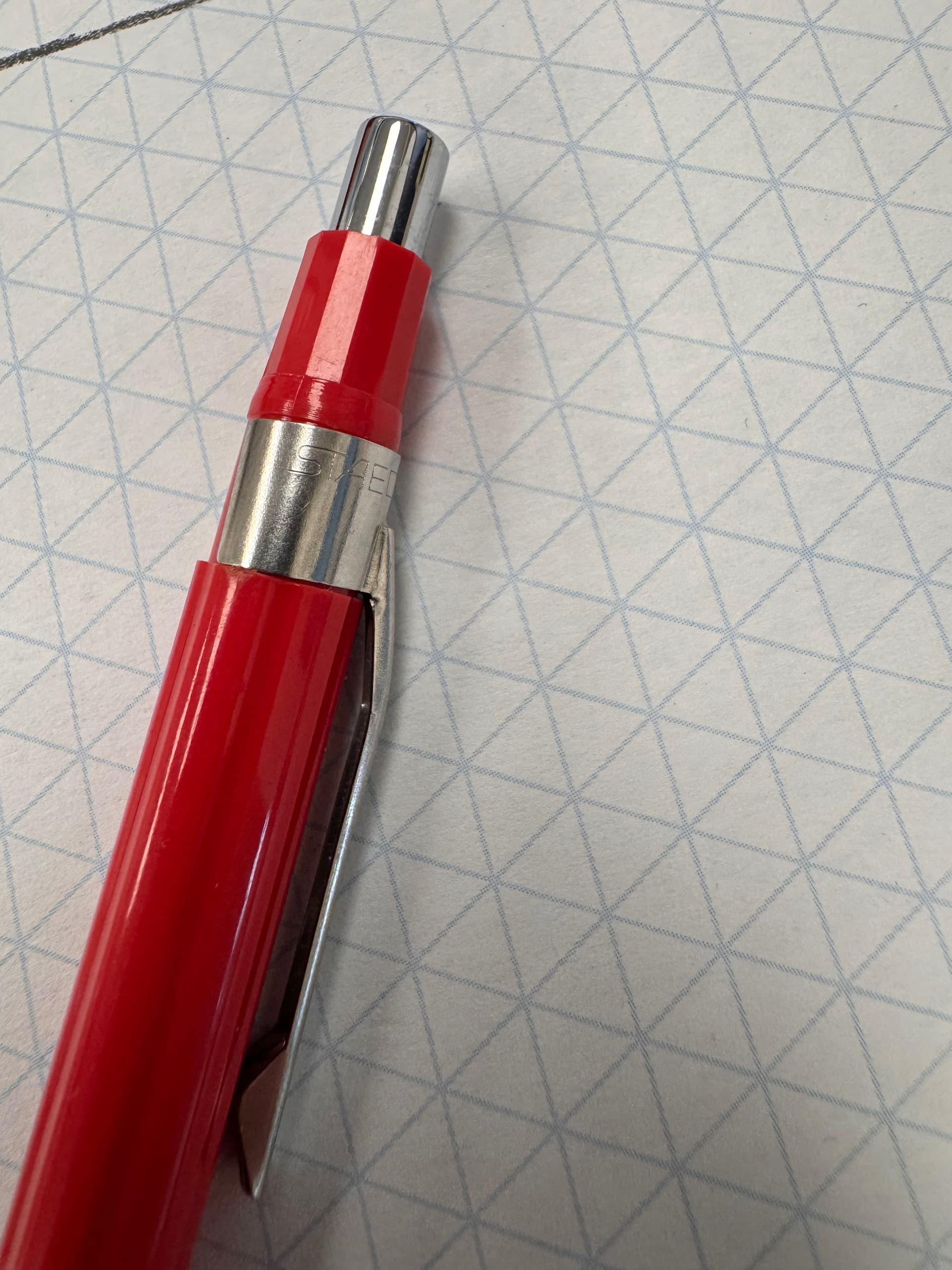
Staedtler 779 05
One of my favorite pencils to be honest is this black “lead holder”
There’s also a 779 05 that I have that is red but it’s a completely different pencil.
I love that they both have the model engraved on their clip and actually, with the red, it’s the only way to identify what that pencil is.
The sound and feel of the mechanism on the black one is so similar to the Mitsubishi MX-1052 and maybe the Hi Uni line but I won’t go that far necessarily.
14 Likes
If you like the Faber-Castell TG1, you should look out for the TG1-J (jewel) with synthetic ruby tip:
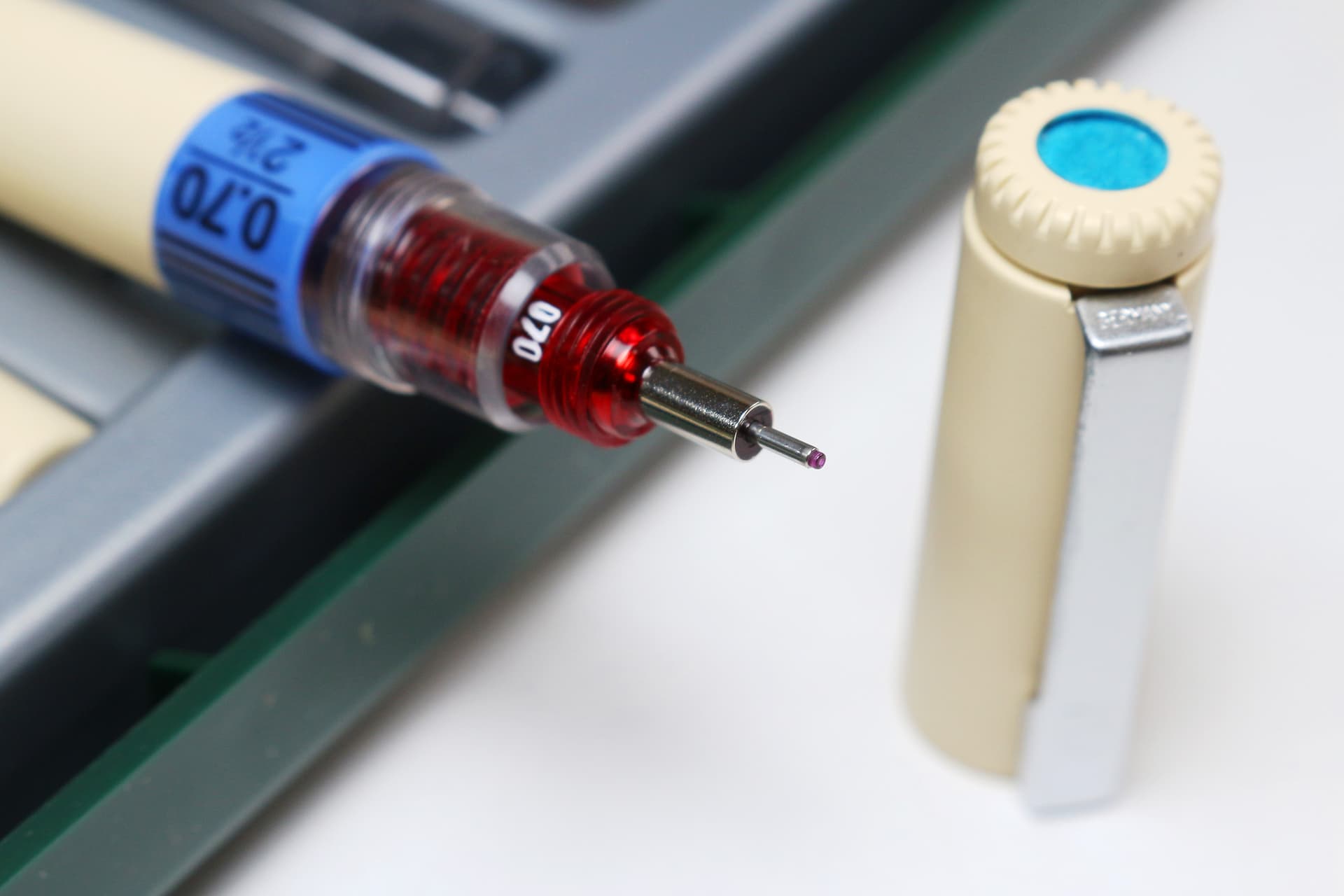
They were designed for use with mylar film, the roughness of which would chew through regular steel pens. In this sense, they are the ink equivalent of film pencils, complete with matching beige bodies.
However, they are also very smooth to use on non-film surfaces and will last almost forever, provided the tip is treated with care - sharp knocks can cause the ruby to become detached.
11 Likes
Thanks - I’ve been looking but you rarely see these. I really want to try one.
The Graphos is so fun and also annoying (whenever you need to fill it with ink or put it away) to use, a friend of mine gave me 3 (2 first version with rubber body, 1 newer with plastic body) along with ~30 nibs.
AAAHHH! Here it comes! Another rabbit hole! I should have known that the Isograph P and Rapidograph F were not the only models to be chased for their unusual robustness.
I love you all, but my wallet will never bury the hatchet when it comes to this community… 
4 Likes