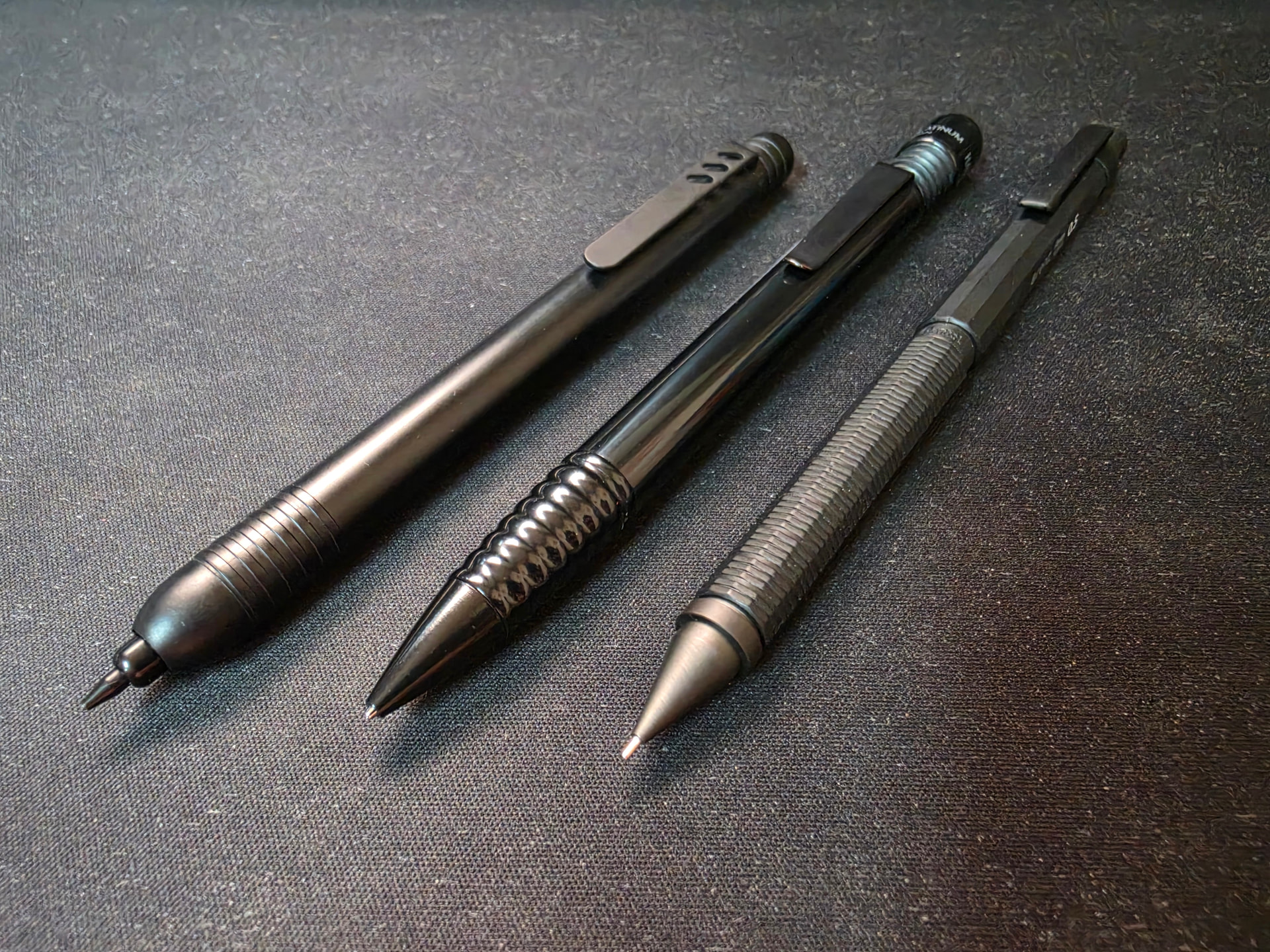
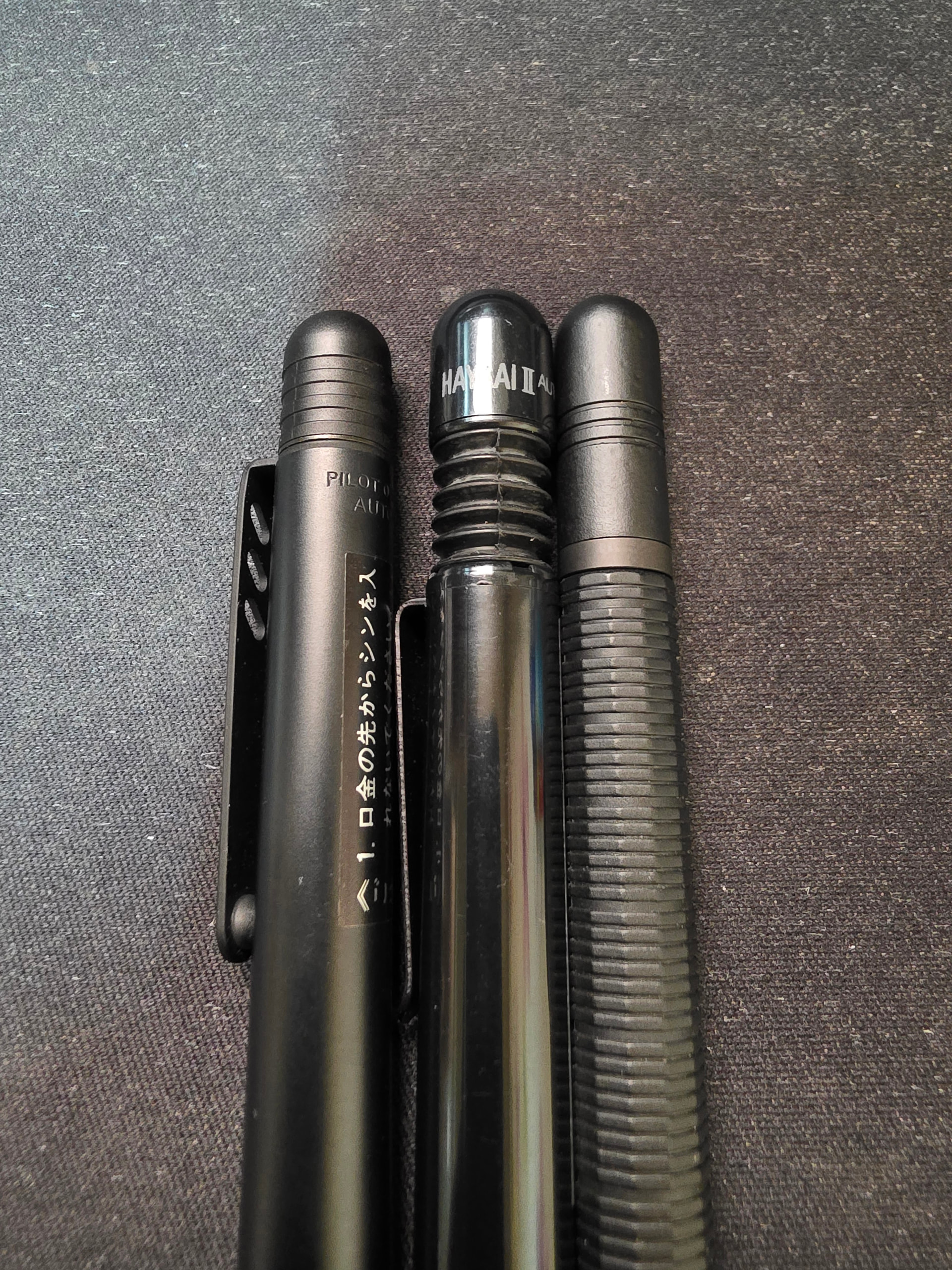
There’s one notable one missing that I’d love to get. Can you guess?
11 Likes
Qx / Technopress?
2 Likes
QX….
Honestly, I completely forgot about the Technopress.
1 Like
Do you have the ixi:z?
3 Likes
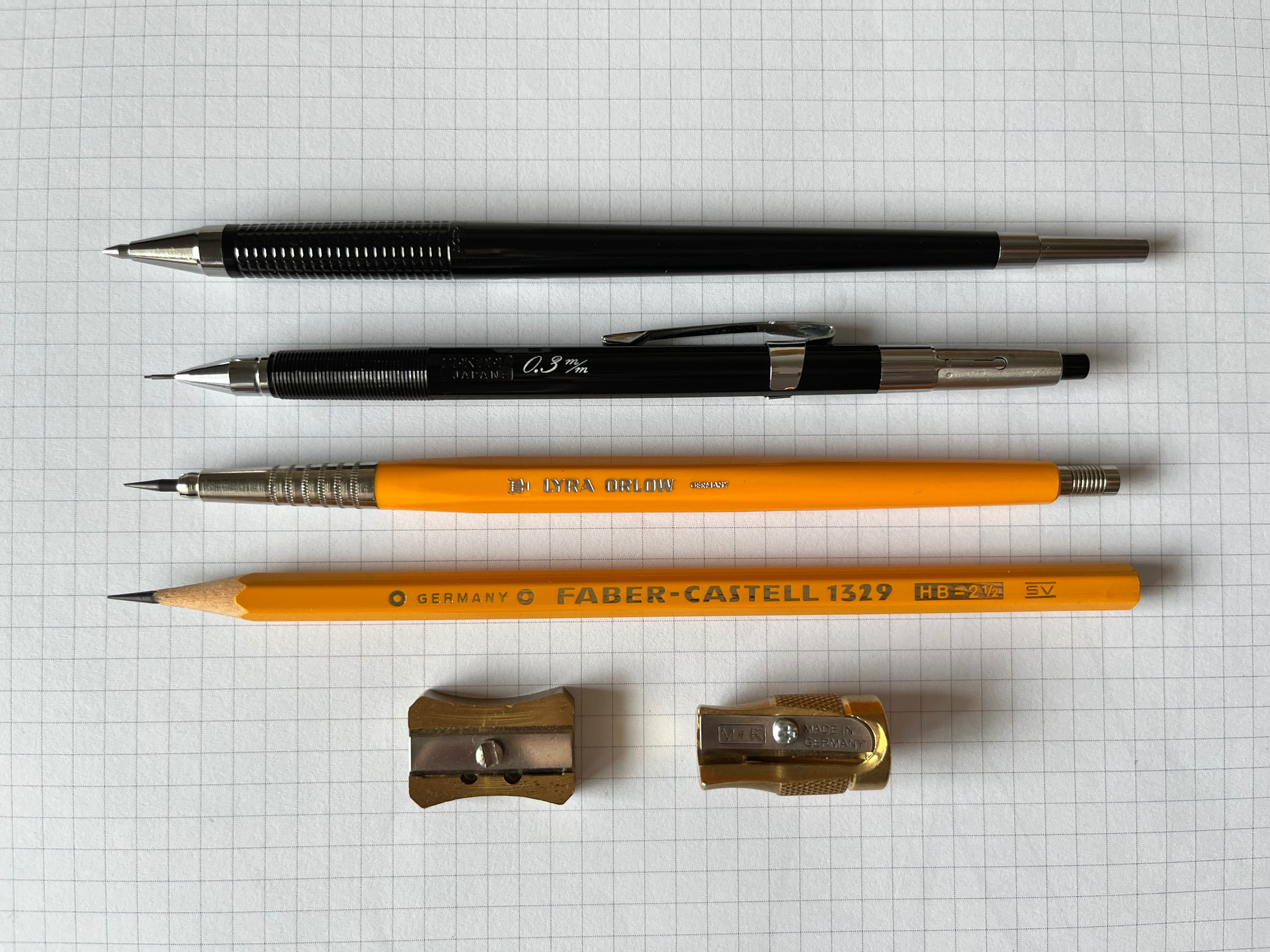
Amazing, I have never seen Japanese flat lead pencils before! Do you know if these are from the lofting era of technical drawing, or are they more modern designs for test scoring or similar?
I see that there are at least two Japanese patents for flat lead pencils, at least one of which is obviously a mechanical design, both dating from 1980:
JP000S56106896A 31.01.1980 NODA HIROSHI FLAT LEAD PROPELLING PENCIL JP0000S5782100A 08.11.1980 TAKEI IICHI FLAT PENCIL
It’s not clear that they relate to either of your pencils, nor can I find a matching patent for the number marked on your Tombow example. Now that I have seen these two specimens, I feel the need to know more!
1 Like
Flat lead holders are definitely for lofting.
In Japan people don’t actually use flat leads for marking exam answer sheets. A lot of public exams in Japan allow wooden pencils only, and even when mechanical pencils are allowed, people use 1.3mm or 2.0mm because the ‘‘answer slots’’ are circular or oval. In China and a bunch of other places where exam answer sheet slots are rectangular, flat lead clutch pencils are very common as exam pencils, but flat lead holders aren’t.
2 Likes
Not much info out there on Japanese made flat lead pencils—all i know is they’re from the '60s~'70s. Both brands only made them and the flat leads for a short run, and they definitely aren’t compatible with modern exam flat lead pencils.
3 Likes
Thanks for the detailed answer, this is exactly the kind of information that makes the world of mechanical pencils such a fascinating subject.
1 Like
Sounds like they were indeed for lofting then. Now I know that such things exist, I will be keeping a sharper watch for them!
2 Likes
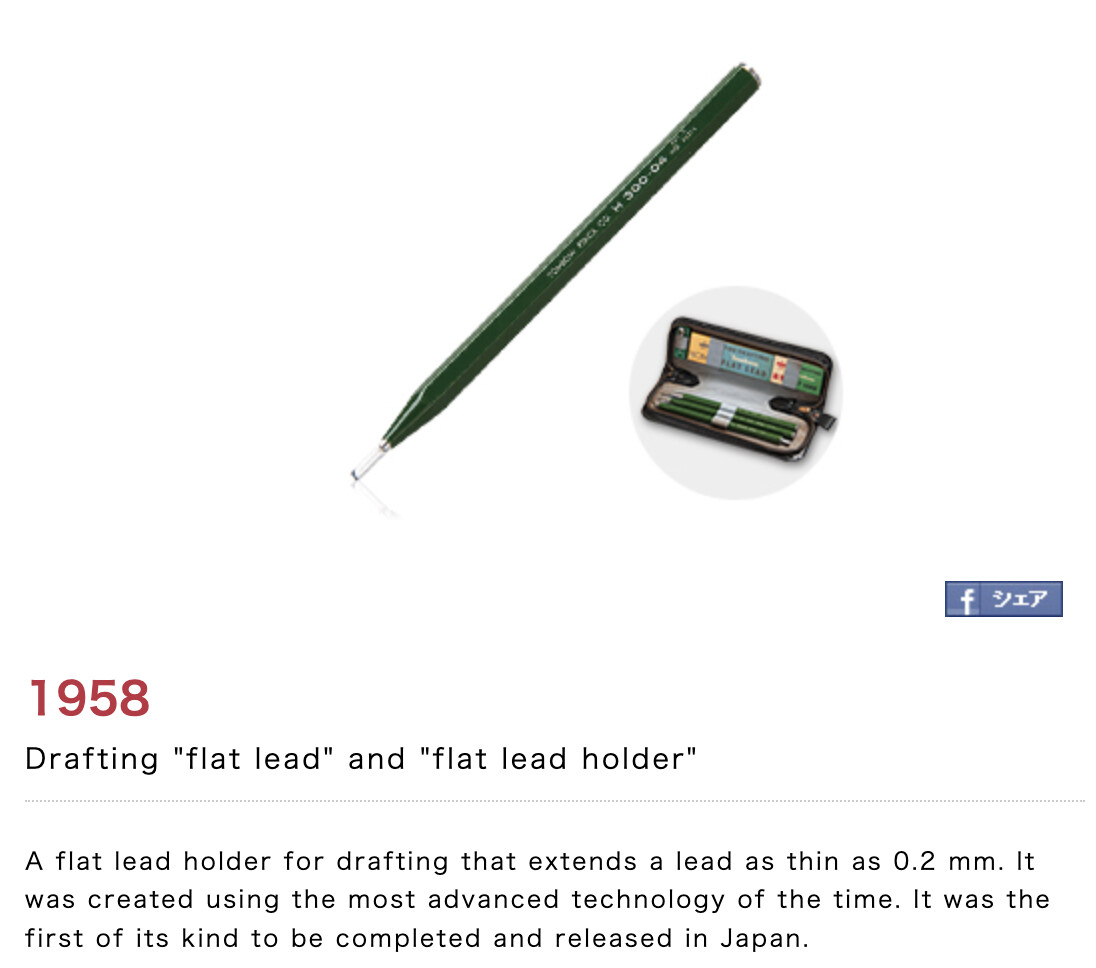
I love the zipper case set - can’t be many of those around!
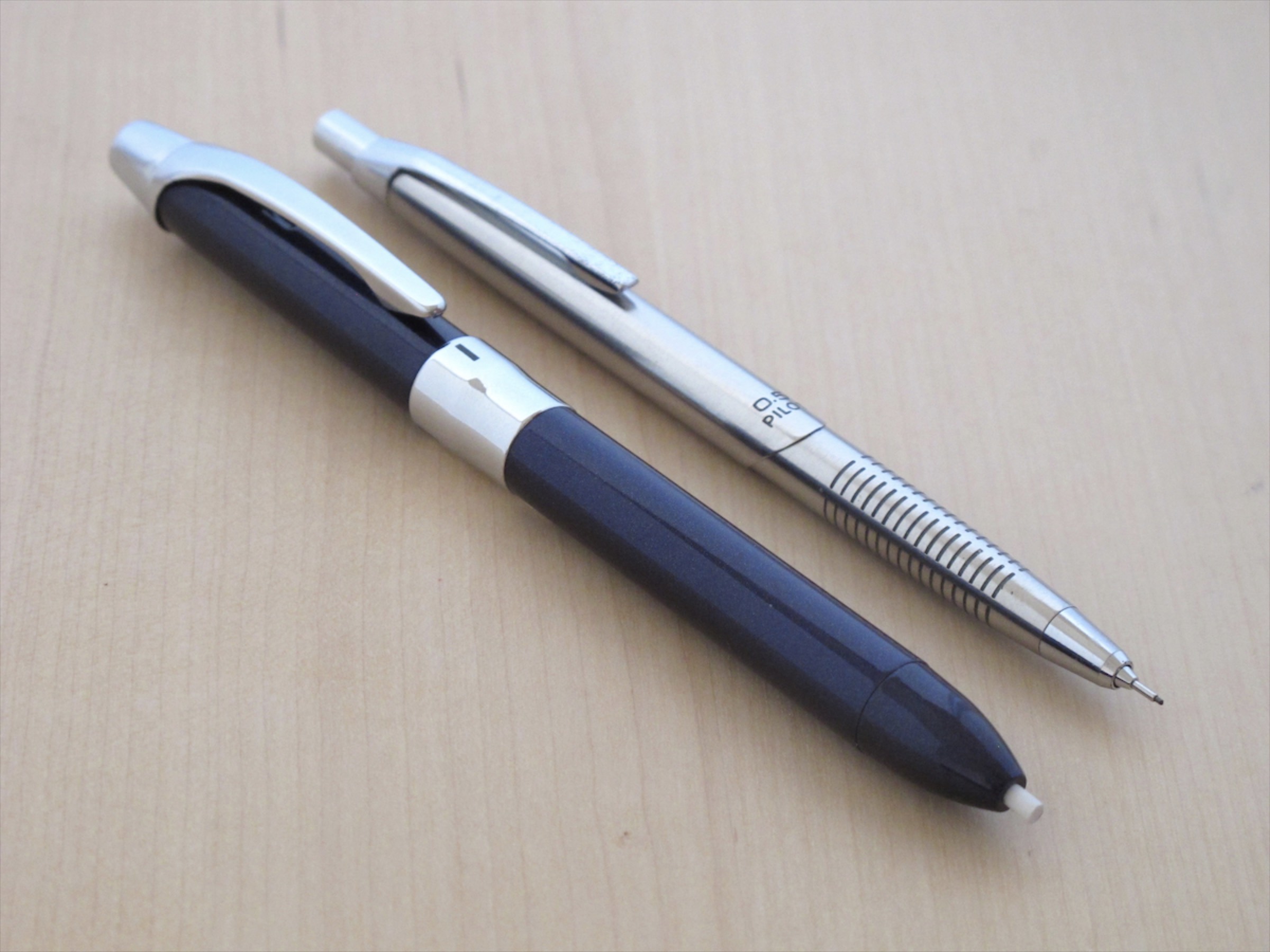
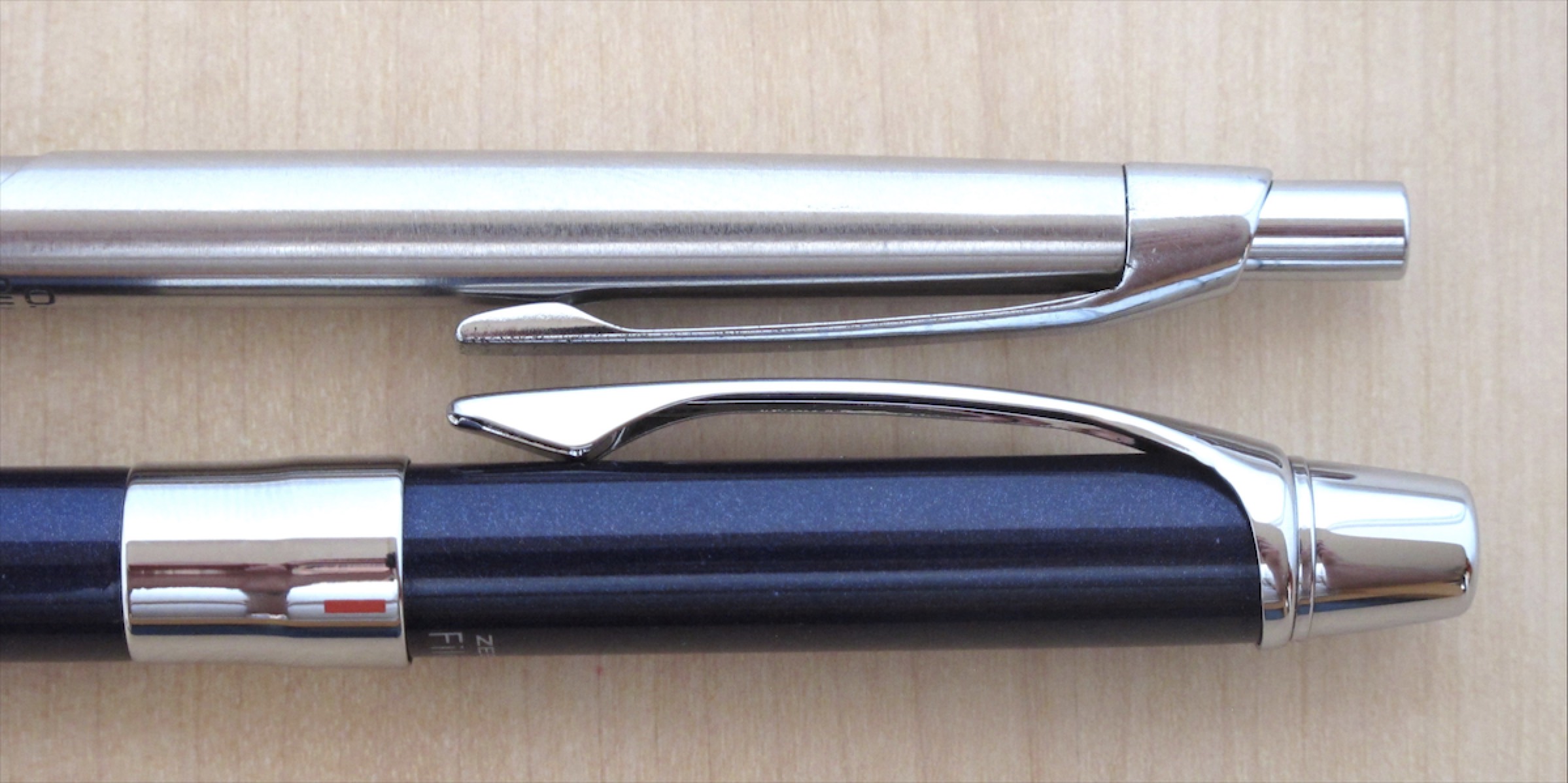
Not much in common between a recent mid-range multipen and an executive double knock from the 80’s… except maybe some inspiration in the clip area.
6 Likes
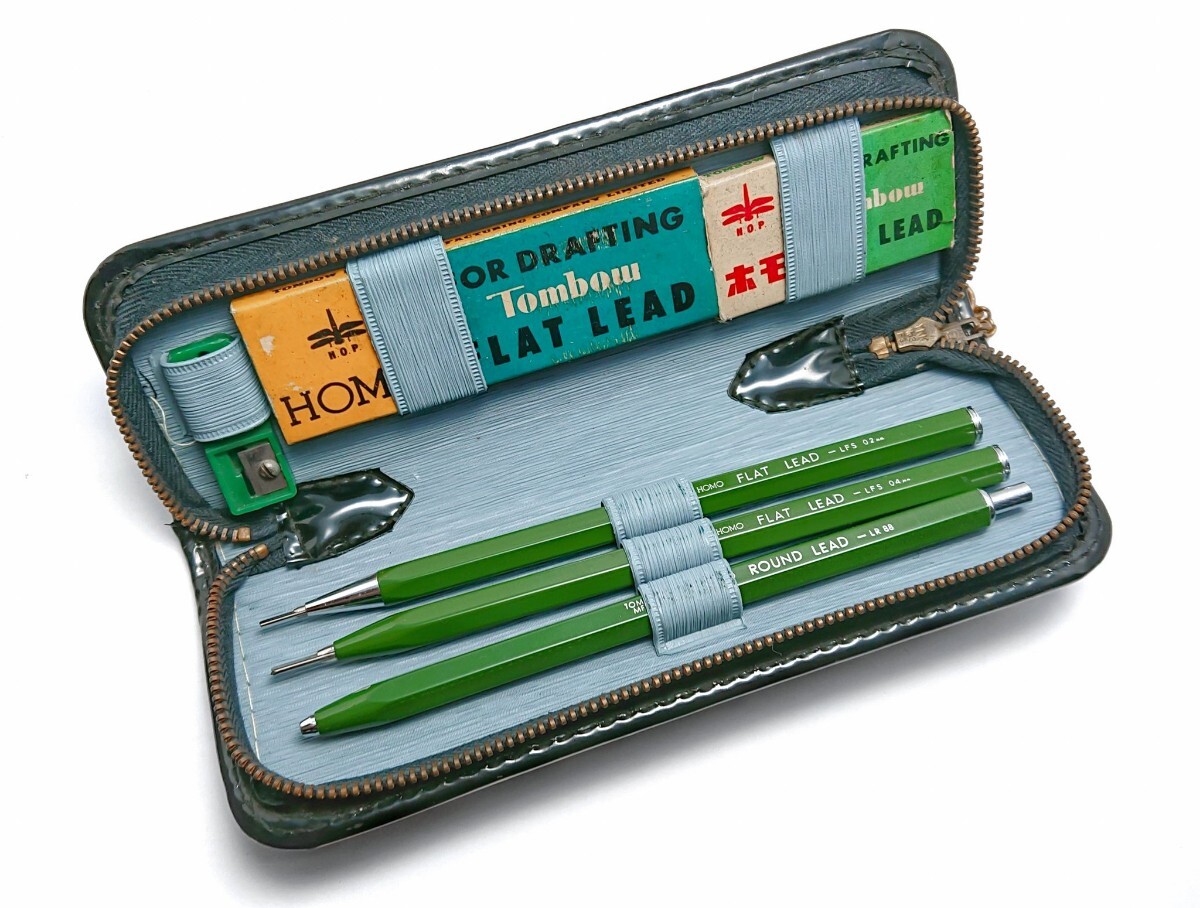
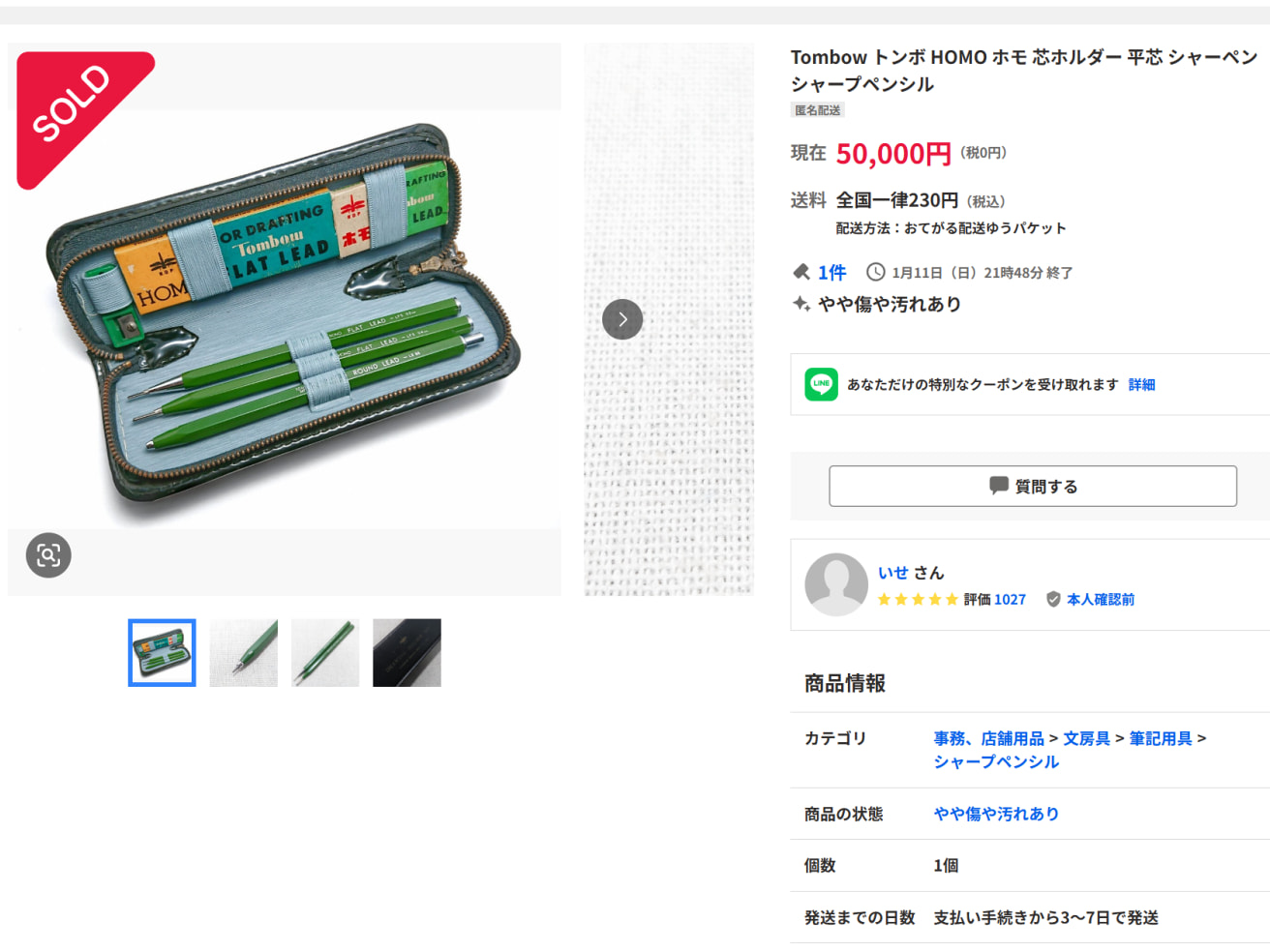
Very nice! I assume the pencil marked “round lead” would only have been sold in sets with the flat lead pencils, which probably makes it even less common than its flat lead counterparts.
1 Like
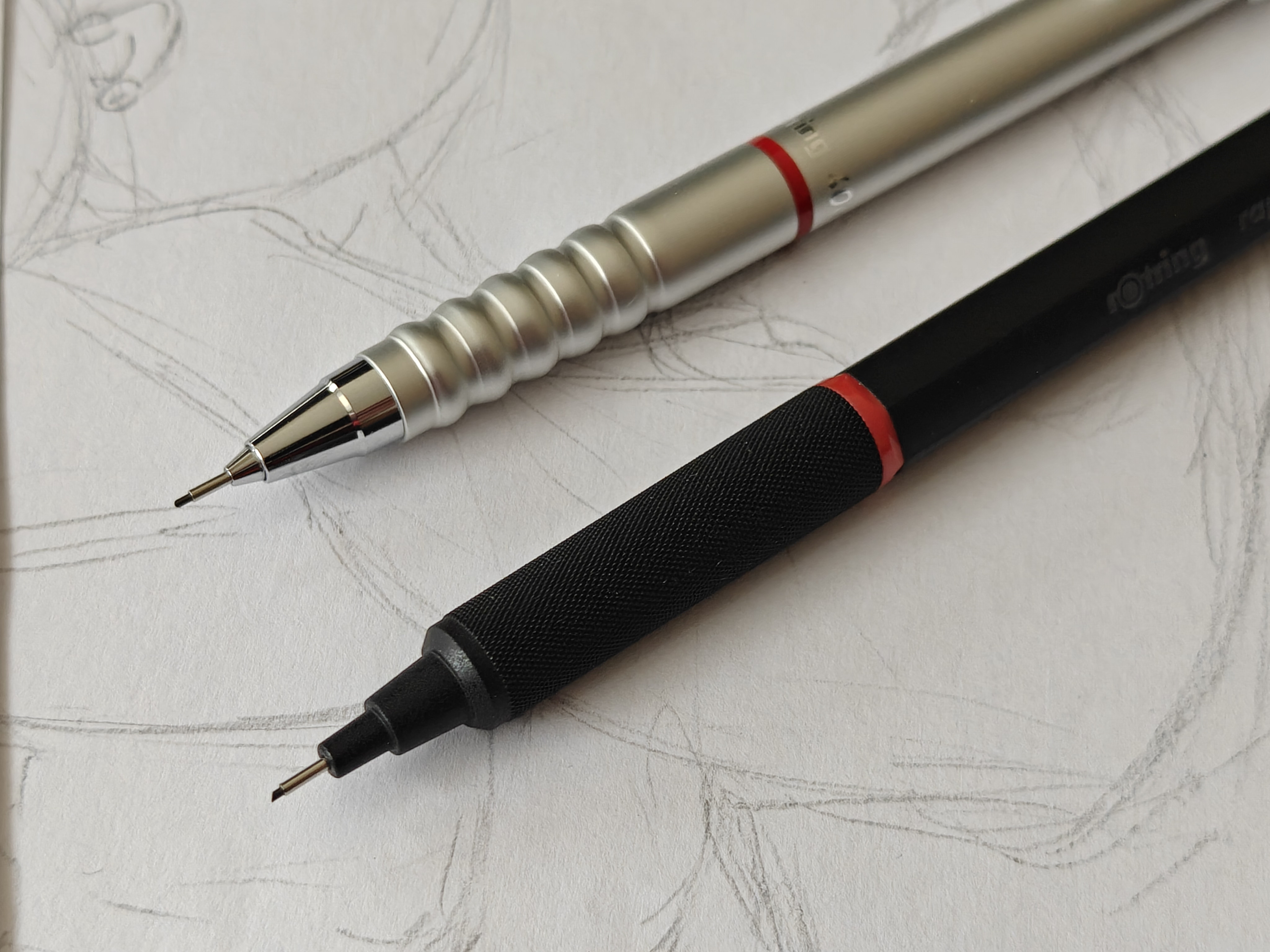
I’m a simple man. I see Rotring, I like
I’ve been enjoying the 400 with HB for sketches and light shading, and the Rapid Pro with B for darker spots and outlines
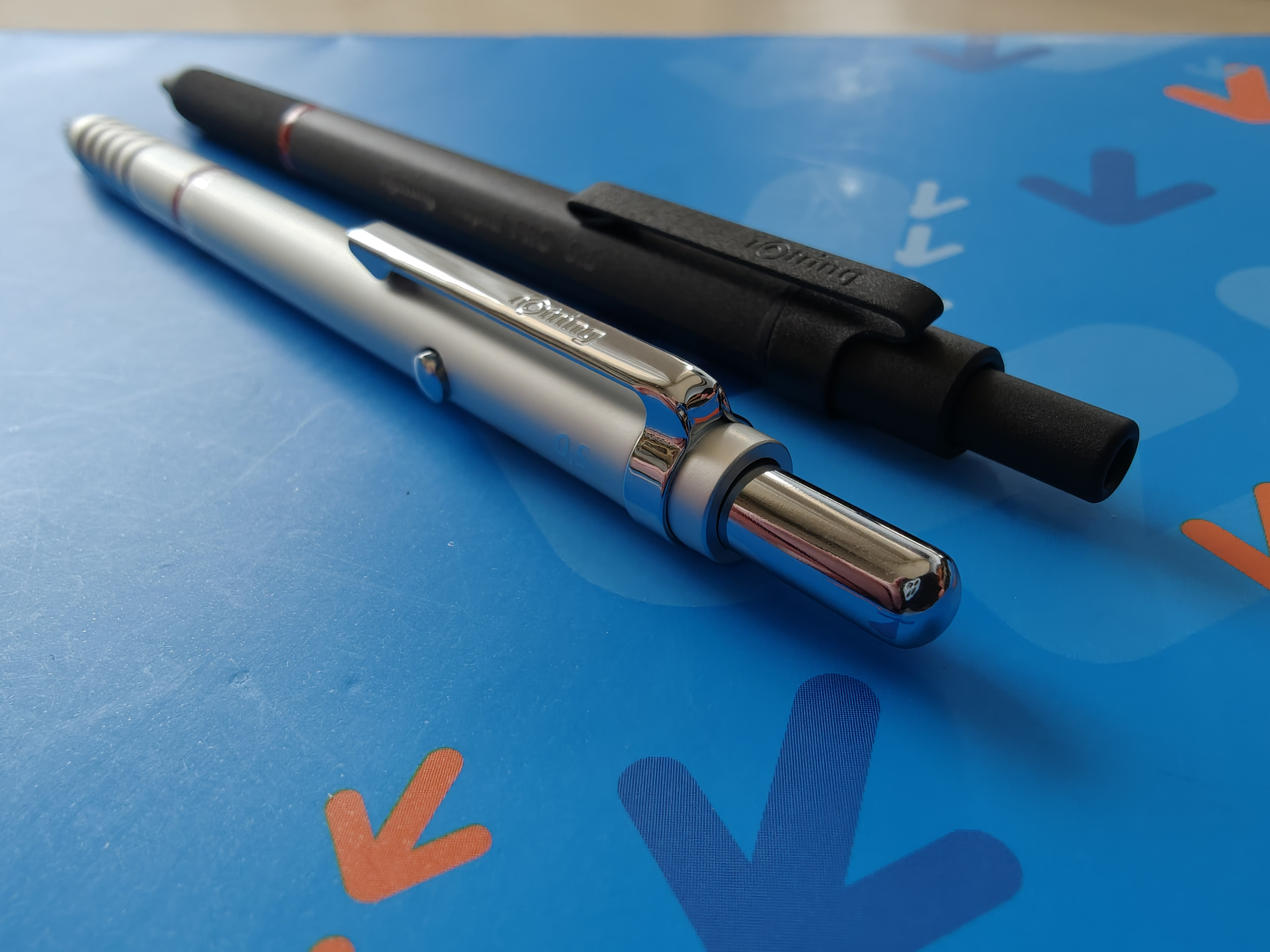
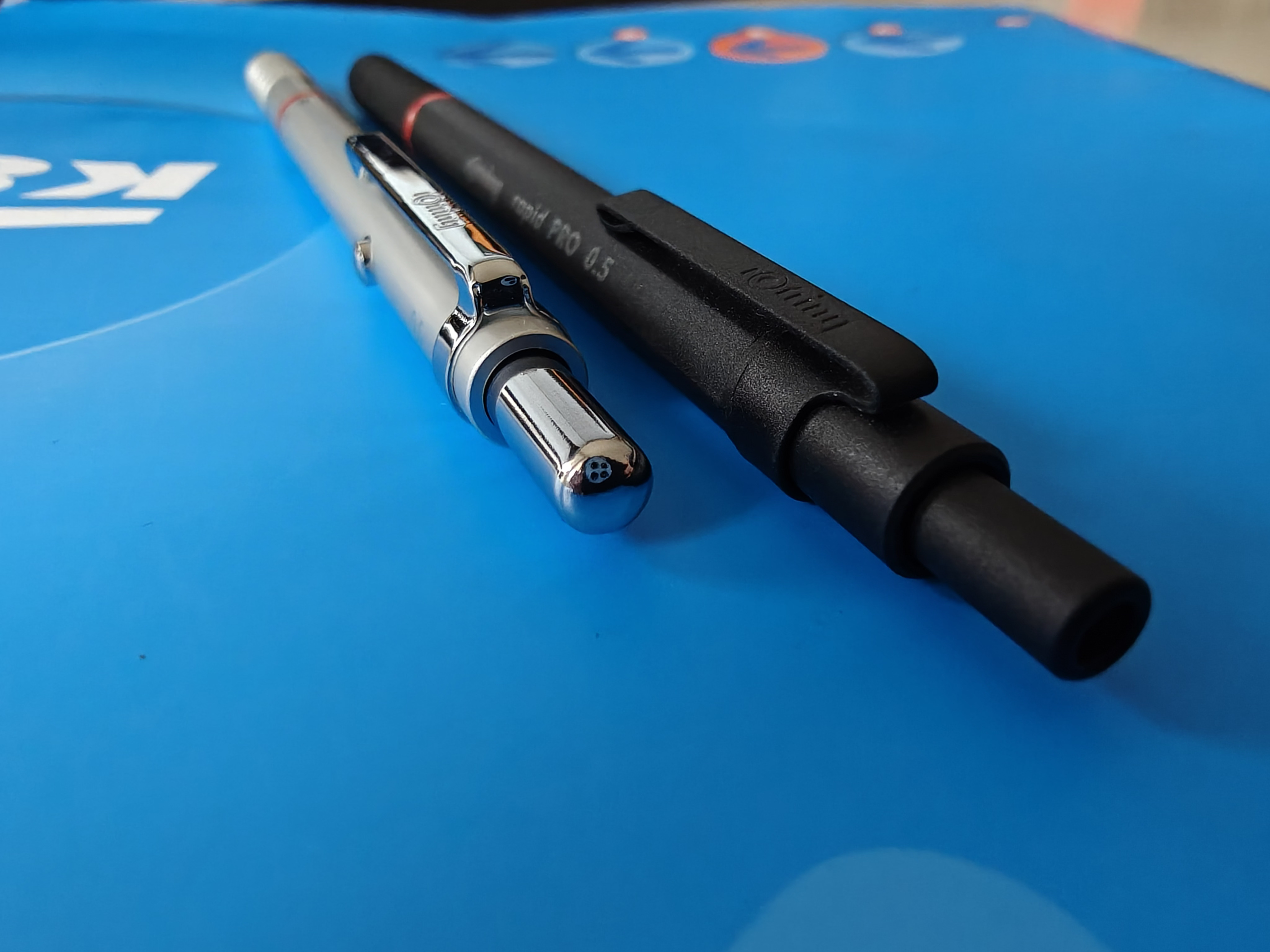
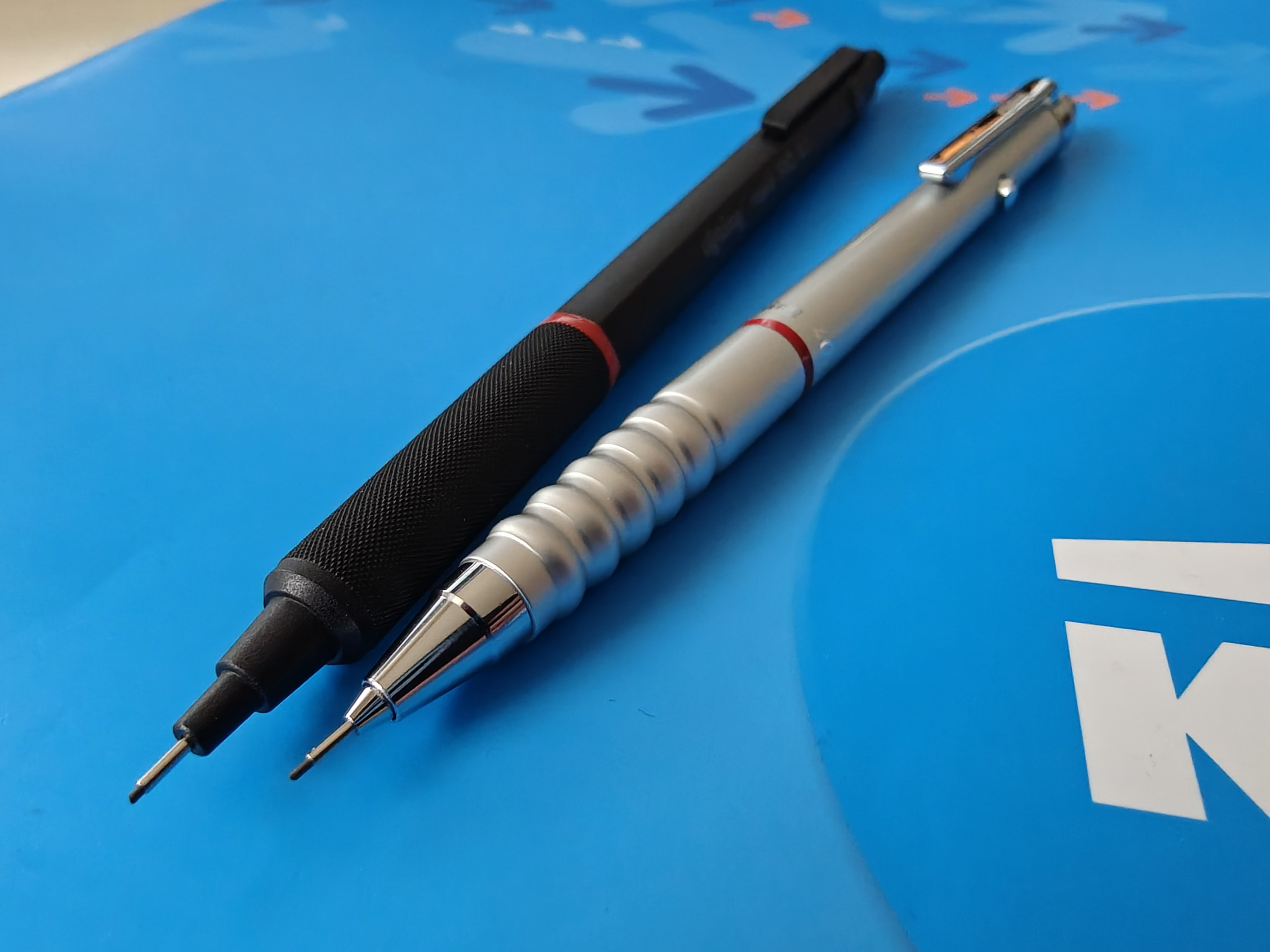
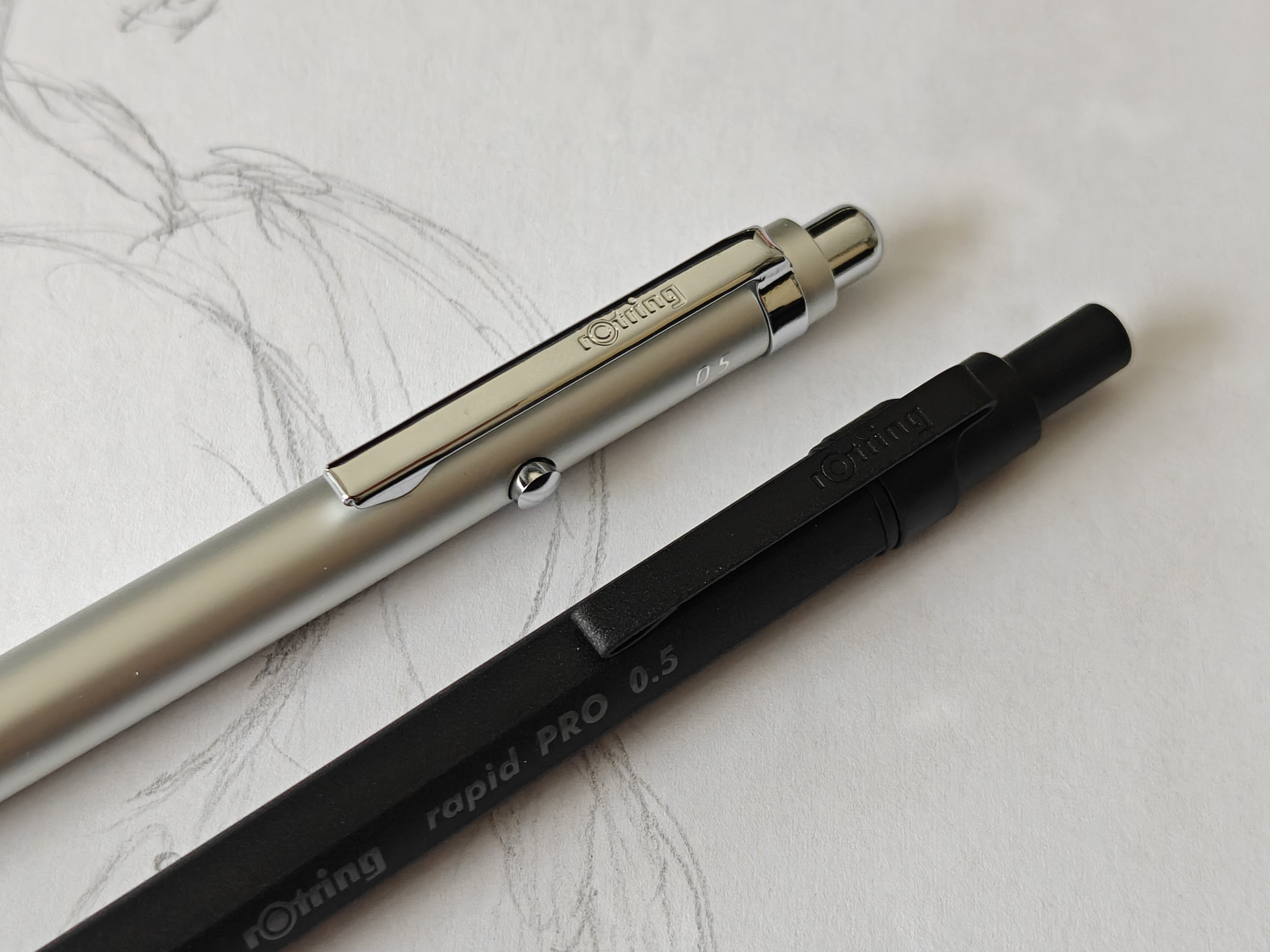
2 Likes
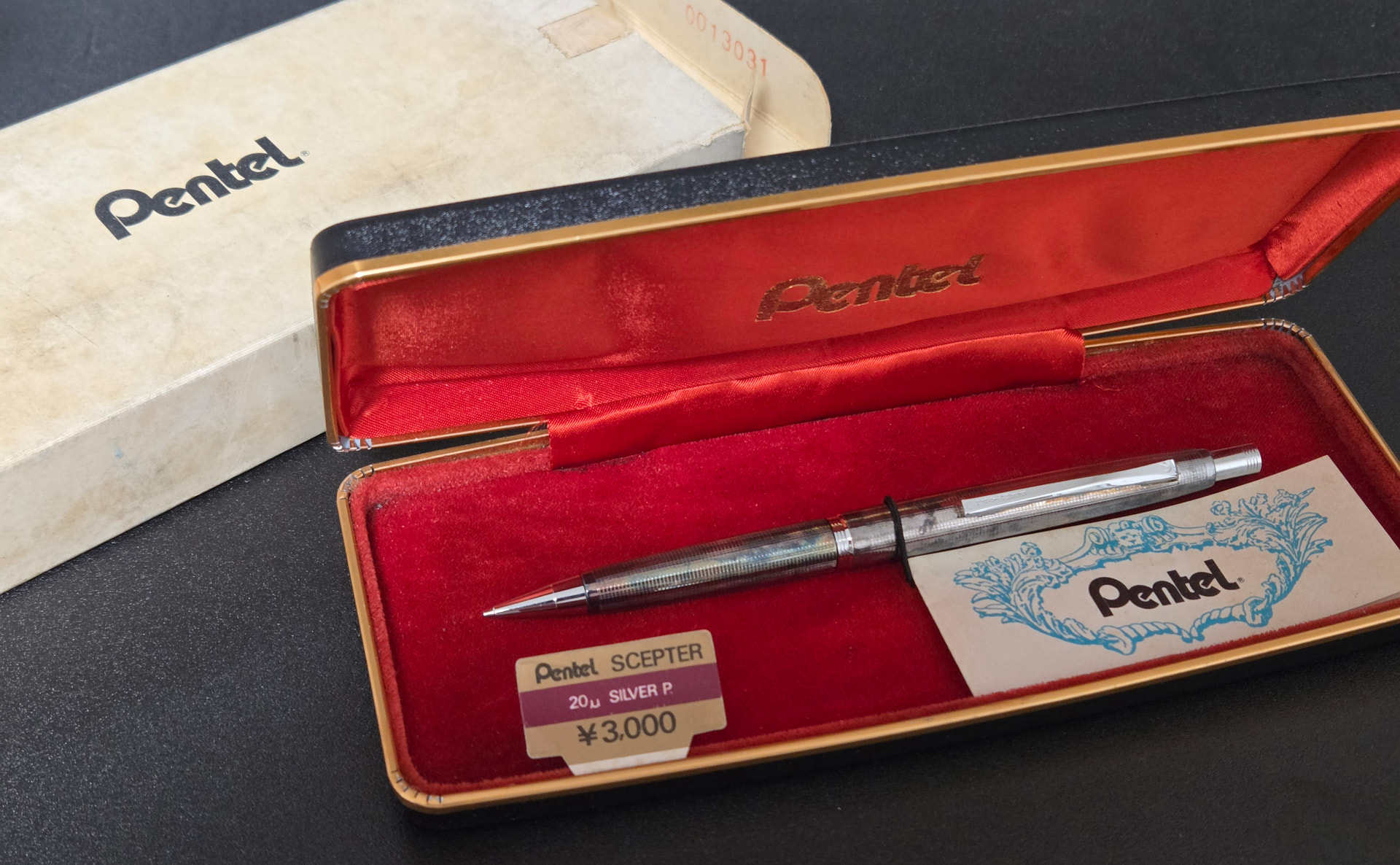
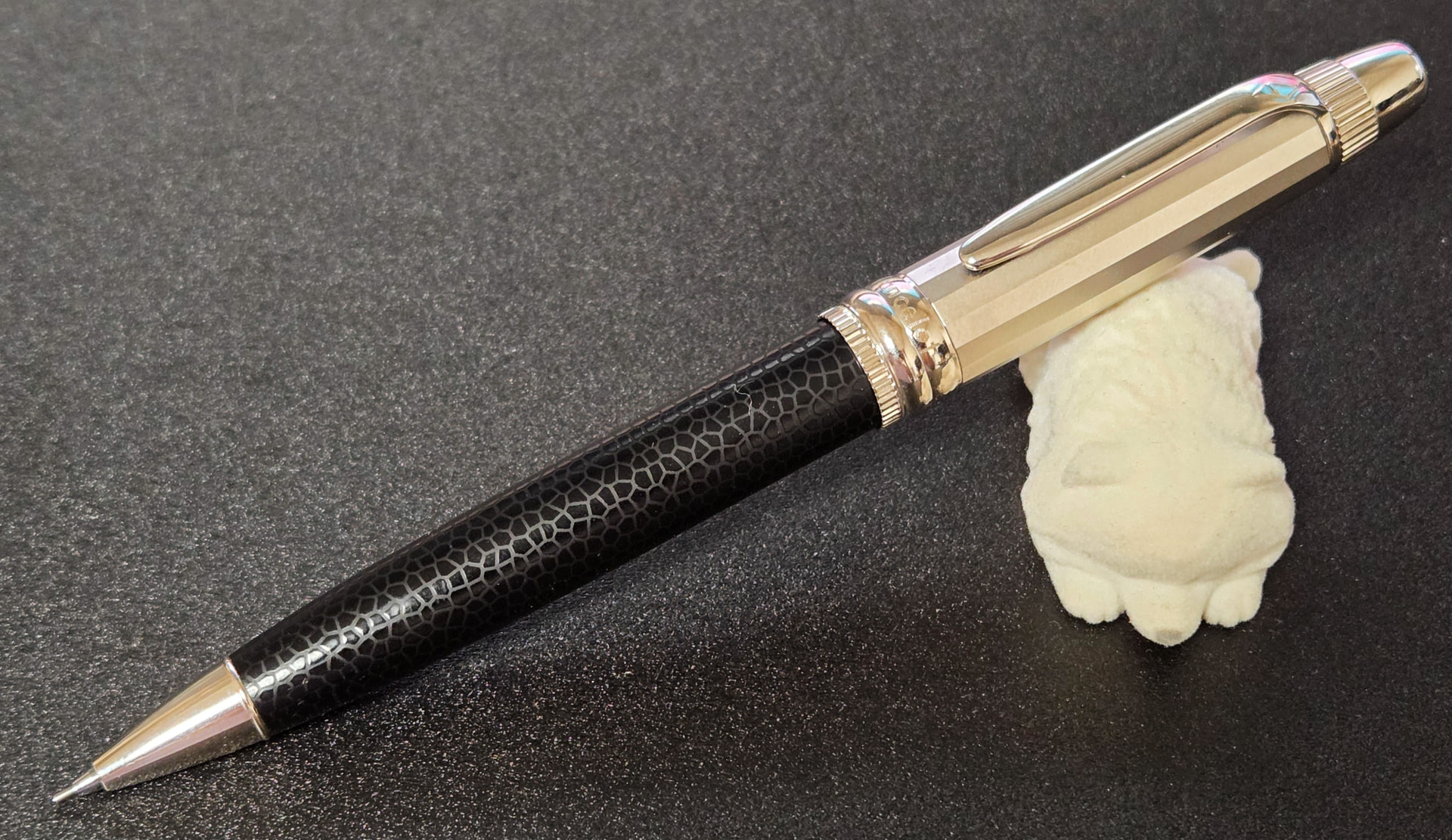
Pulled these two out to write a review.
Both feel premium, but you can definitely tell the difference between the 1970s and the 2000s.
7 Likes
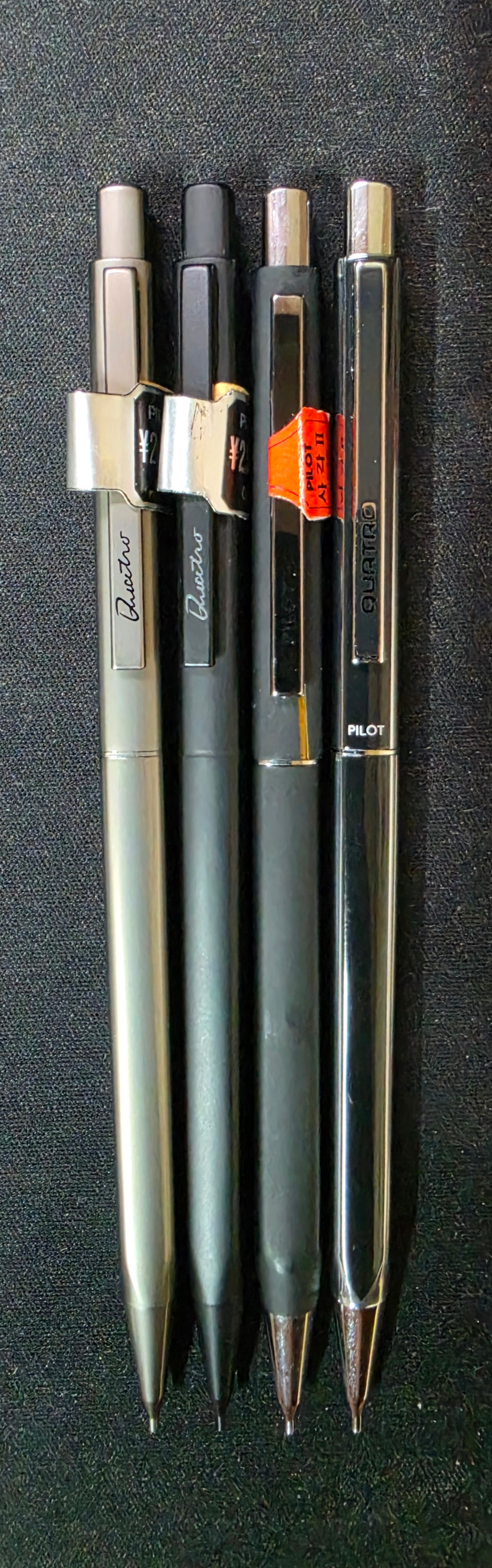
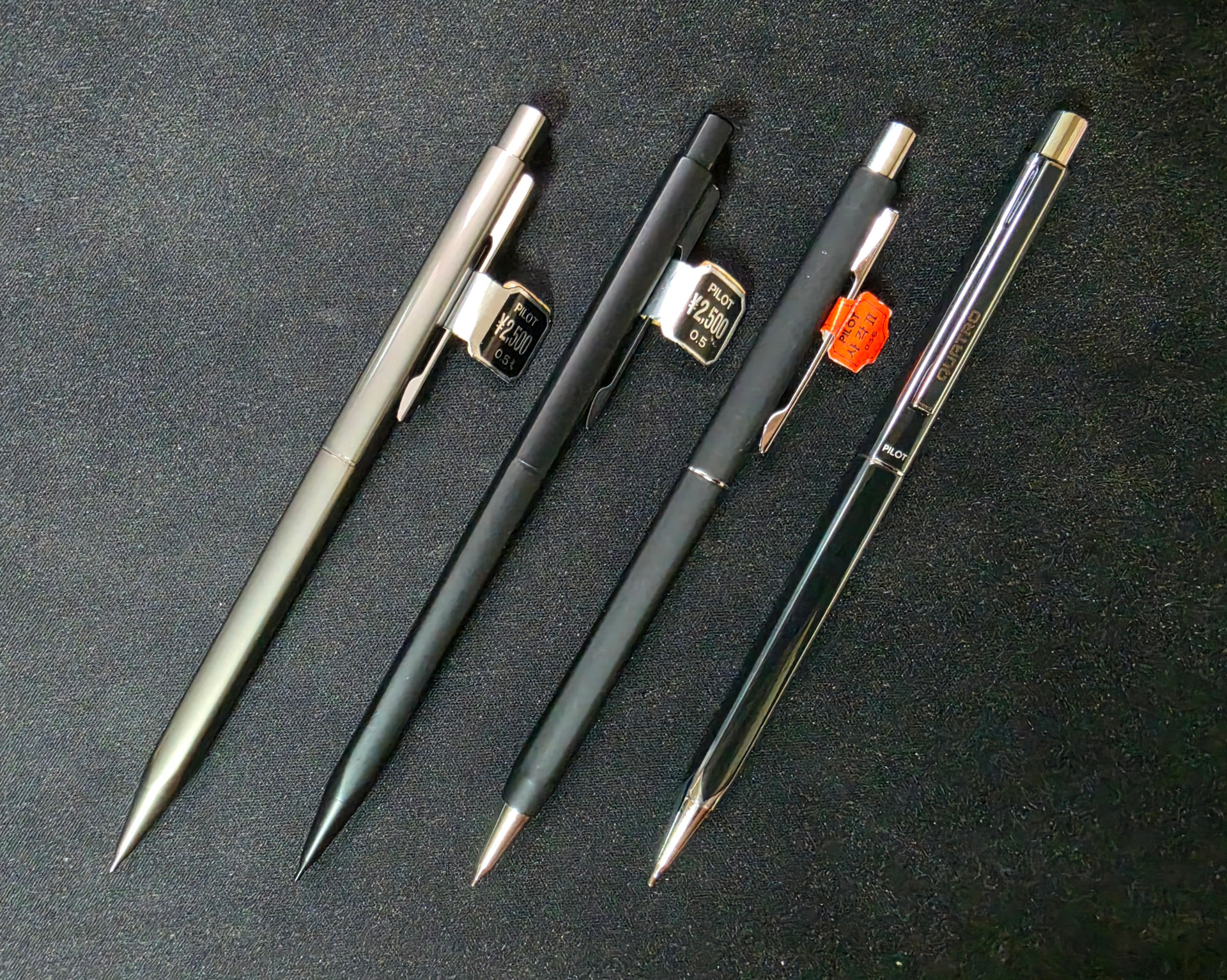
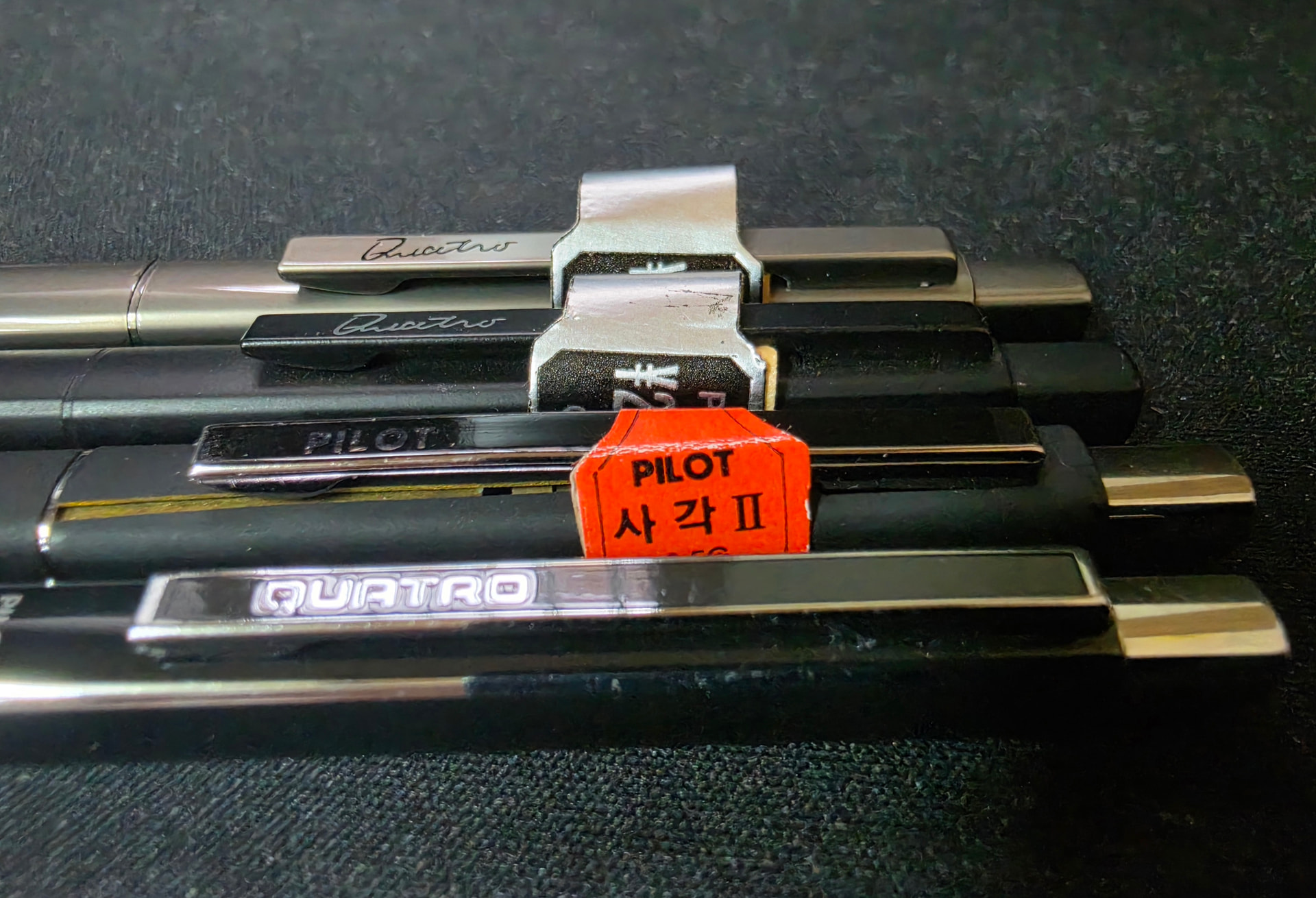
I have another Pilot comparison here. While Japan Pilot had the deep Quatro lineup, Korea Pilot named their version 사각, or “Square.”
This Square II I acquired is the only example I’ve ever seen and unfortunately the barrel was split when I received it. It still works fine and looks good, otherwise, though. I’ve thought about trying to apply some glue and binding it to let the glue cure, but I’m worried that I’d ruin the rest of the matte black finish with excess glue that squeezes out. I guess I could tape down those surfaces beforehand, but at this point I’m fine with just leaving it be. I don’t intend on using it.
Another thing to note, this model name implies there was a “Square I.” However, Korea Pilot skipped numbers in the past. They made some models called “Maria,” skipped the “Maria II,” and then released the “Maria III.” I guess until I see a “Square I,” this is all I can assume they made in relation to the Quatro.
9 Likes
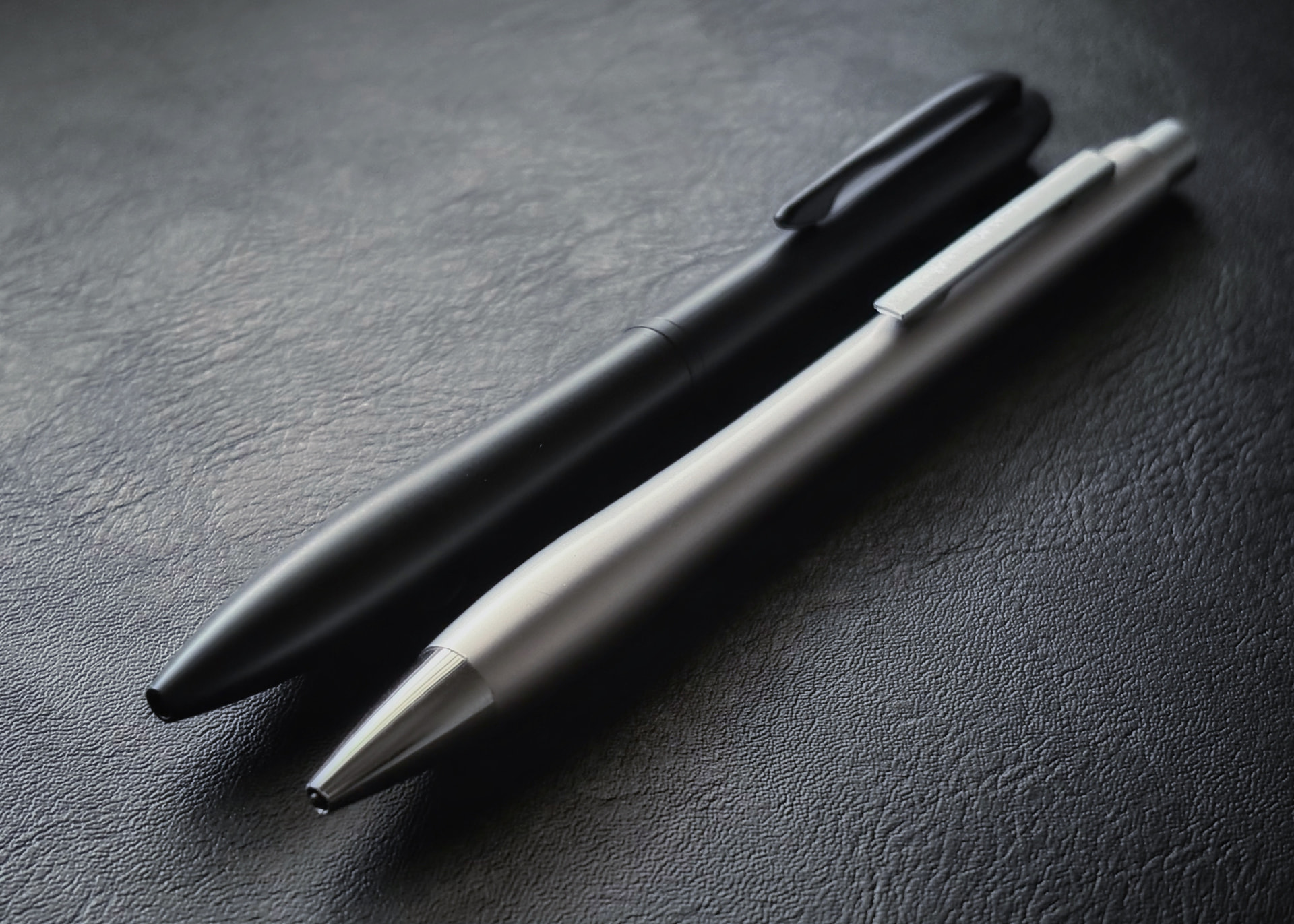
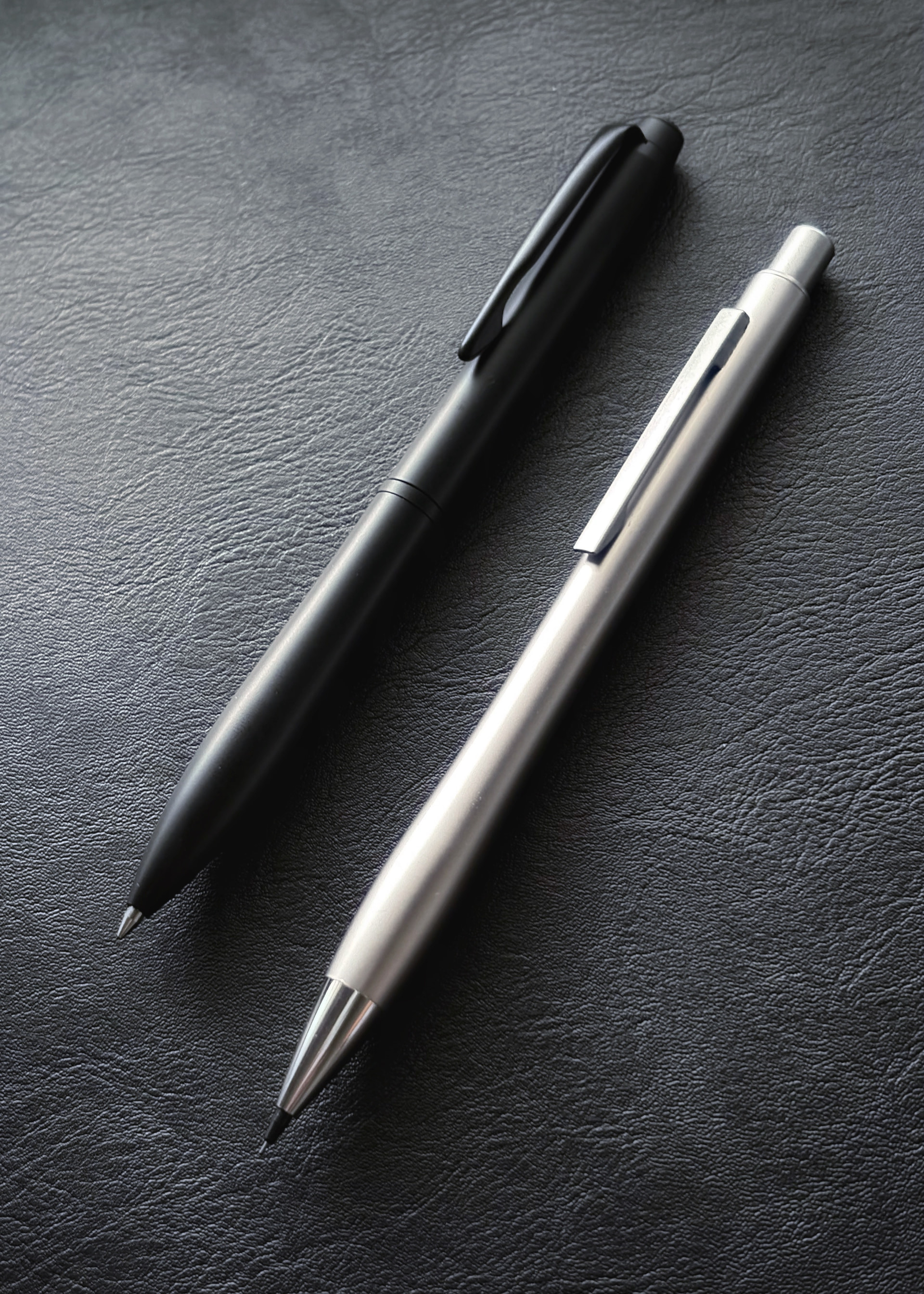
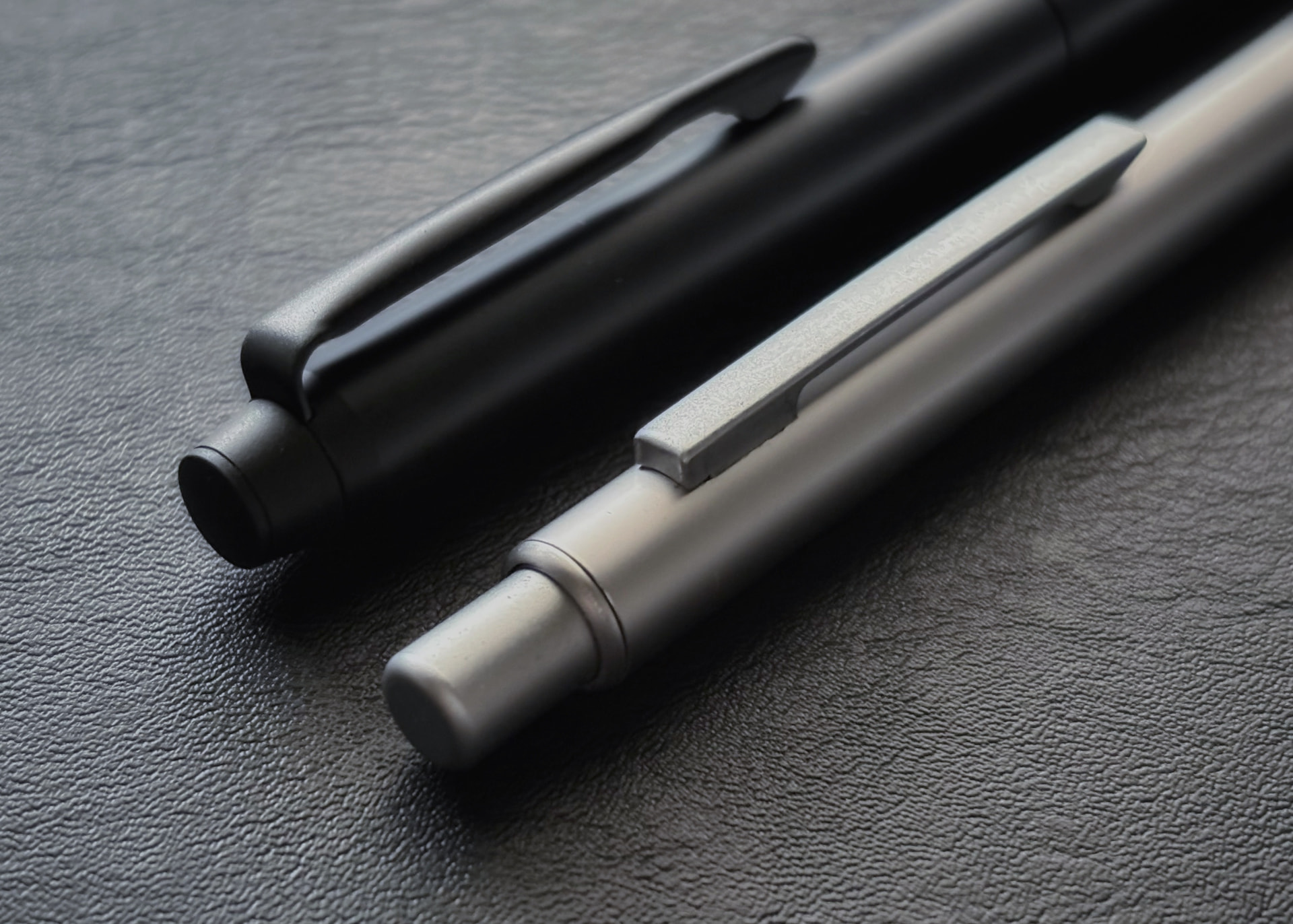
Pilot Eterlink x MUJI automatic lead advance pencil. I’ve wanted to get a Pilot Acro Drive pen for the longest time BUT I ABSOLUTELY DETESTED the font used for the ‘logo’ that’s printed on every pen body. I even got a hold of this OOP MUJI pencil in anticipation of a match up. It took until 2026 for Pilot to give up on their bad typography and go logo-less with the Eterlink rebrand.
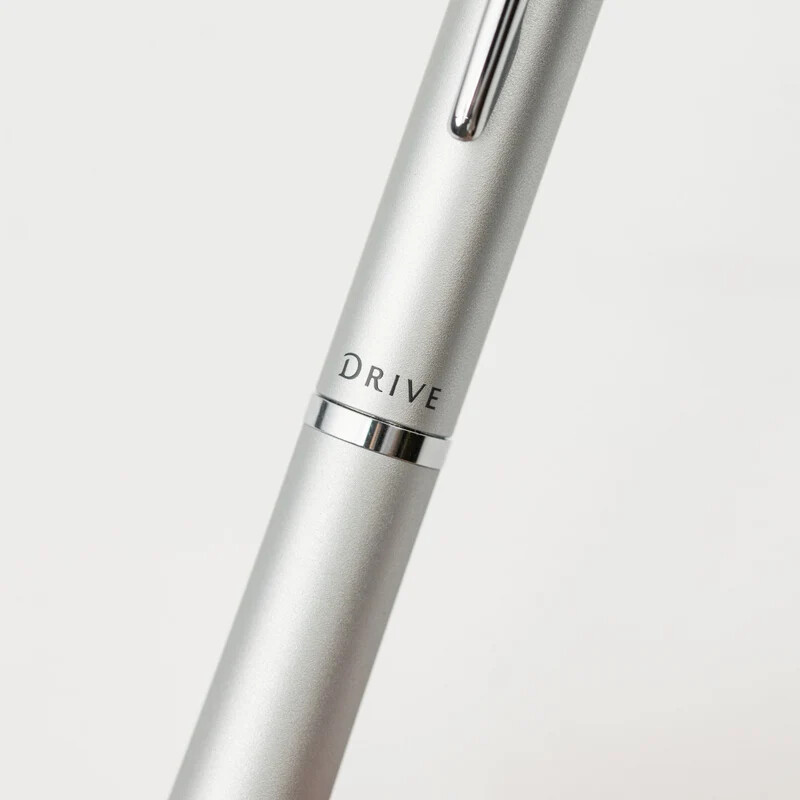
DRIVE… just one L away from DRIVEL
6 Likes
NPD.
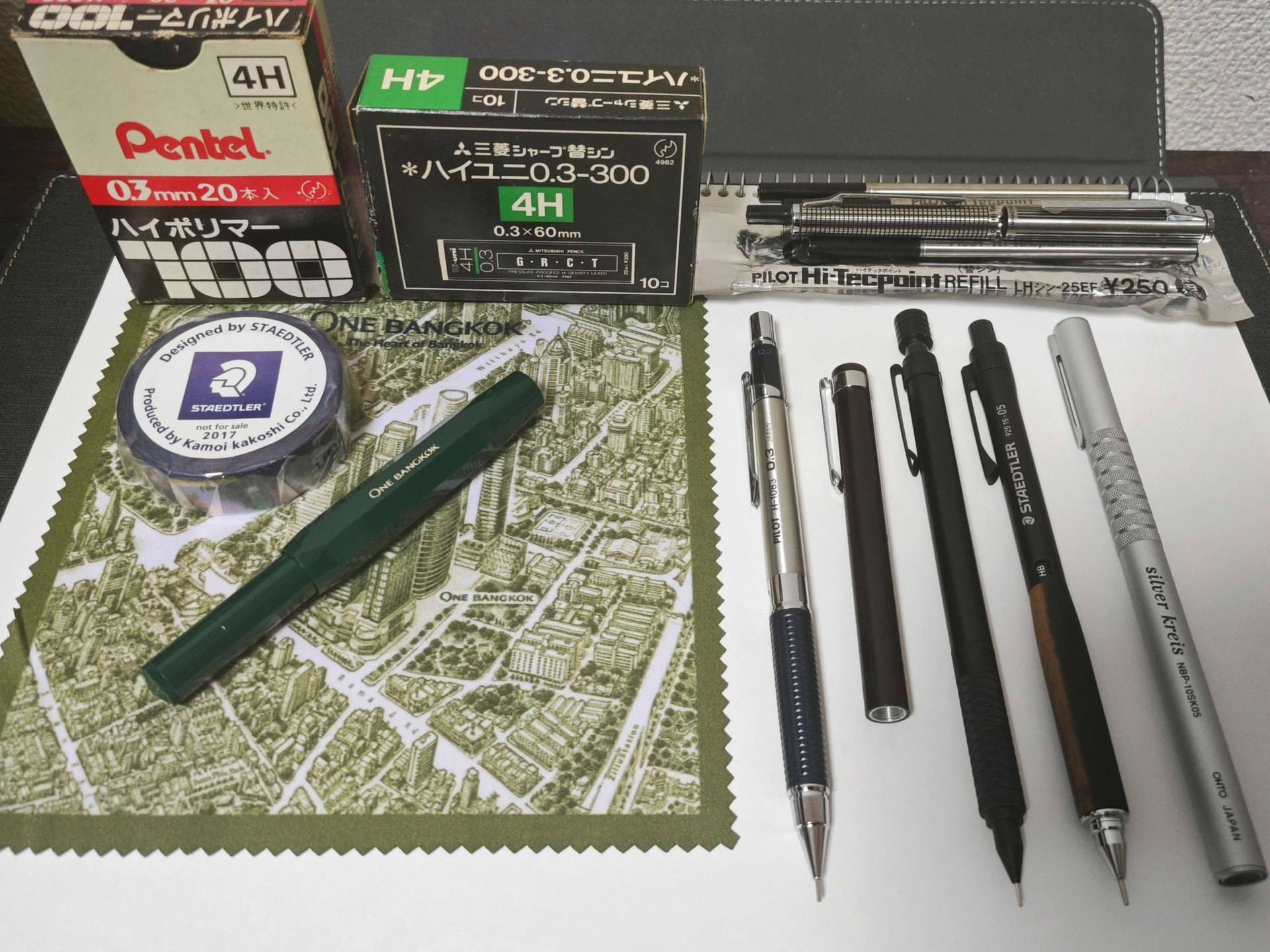
Staedtler Washi Tape - for decoration of a particular pen of mine.
Kaweco Sport rollerball One Bangkok 2024 Opening commemoration pen
I have always disliked the Kaweco Sport MP and BP due to them being too thick, not grippy enough and having too long of a cone (unusable for low gripper). I never knew the series had a rollerball, because ① rollerballs seems to be of poor popularity in Japan and most stores don’t sell rollerball pens at all, despite sometimes their FP, BP and MP counterparts being ubiquitous in every large store. ② I would imagine the Kaweco Sport body being too short to fit a standard rollerball refill, so I didn’t think it was possible.
Then one day I saw a Kaweco Perkeo rollerball and went “if the Perkeo can fit a C-300, so can a Sport right?”, and found out Sport rollerballs do exist. I kept looking and found this one in the Emerald Eve colorway. If someone knows my color preferences, they know I can’t resist a dark saturate green.
Turns out it CAN’T fit standard rollerball refills, and is instead running on G2 refills. Well I guess that makes things even more convenient. It’s called a rollerball simply because the original refill is a 0.7 gel ceramic roller that anyone can tell is an Ohto OEM.
Pilot H-1083
Yeah here we are. Unfortunately, the H-1080 series has identical internals and nosecone as the H-580, and if you want a replacement nosecone for your H-2080, nothing works but another H-2080.
Staedtler 925 25 custom wooden rear barrel
As someone who highly values lightweight, I was disappointed when I read that the Baumgraph is 2 grams heavier than the standard aluminum 925 25. So I got this instead.
The wooden barrel is a tiny bit thicker than the standard one, I couldn’t get the clip onto the barrel until I sanded the inside of the clip a fair bit.
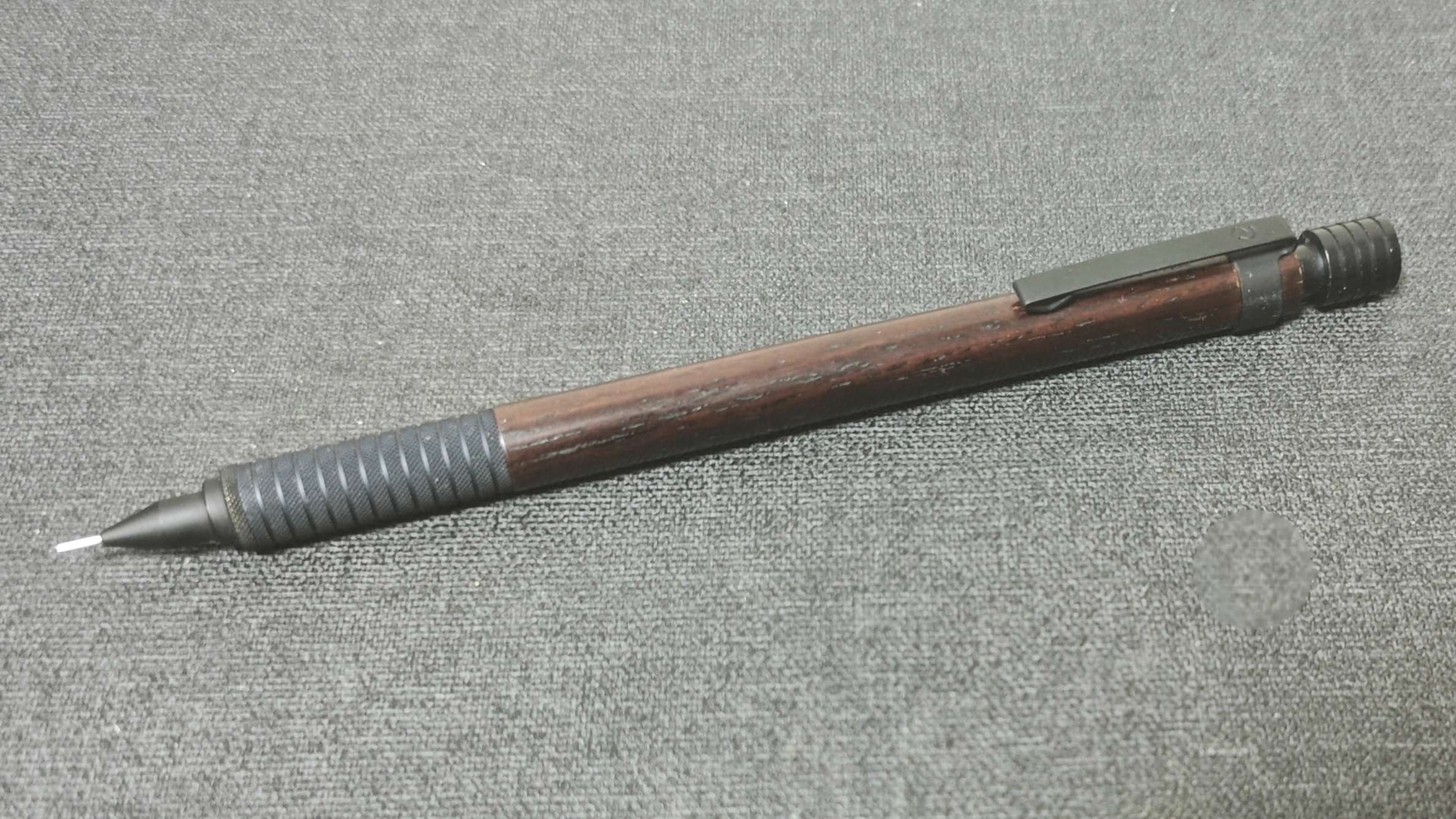
Staedtler 925 15 w/ custom wooden grip
Why Staedtler on this pen, went with a matte black clip, but a chrome nosecone, is still beyond me.
Ohto silver kreis NBP-10SK
…or knurling in general, on pens in general. With a brass knurled grip, a lightweight aluminum barrel and the right grip diameter, it has instantly replaced my previous daily gel pen.
An interesting fact about this particular version, it was officially sold as an empty body, so despite the serial number having 10 indicating 1000 yen, the pen actually had a sticker price of 700 yen, with 300 yen deducted from the C-300 rollerball refill that it came without. I put a Uniball One UMR-38S refill in it.
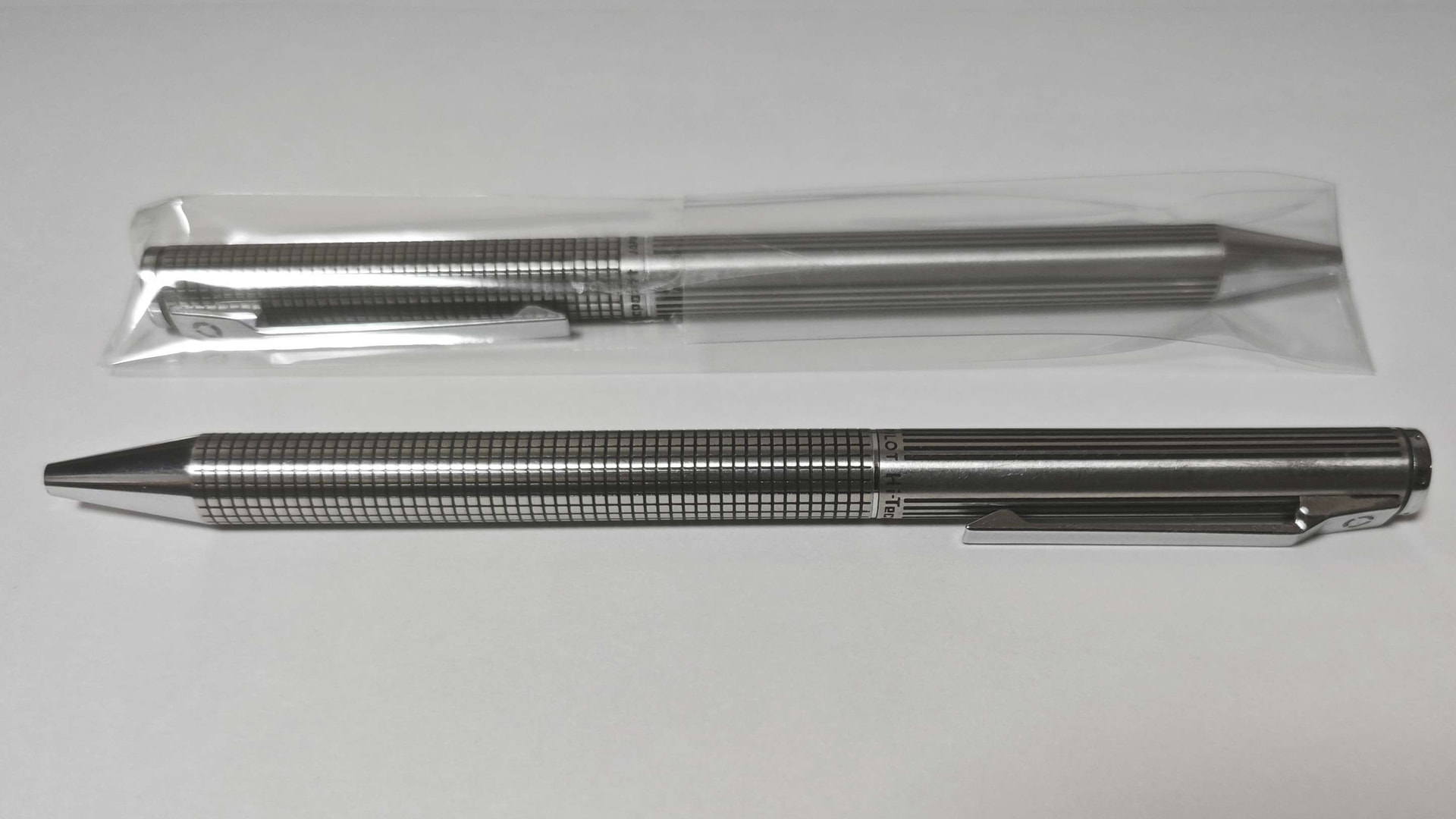
Pilot Hi-Tecpoint refills
The Pilot Hi-Tecpoint is a twist-retractable rollerball with a gate that shuts when the tip is retracted, preventing dryouts as it’s running on water-based ink. We don’t see this type of design anymore and Pilot has stopped the production of both the pen and the proprietary refills long ago.
Instead of a modern adaptation, I went and bought the original refills, for a more vanilla feel, also because I like the original ink’s modern shape[1]. These are pre-1989 refills[2], I unpacked 5 out of 6 refills and all 5 do write. 4 out of 5 dry out under hard endurance scribbling, and are only suitable for situations where I don’t write large amounts at once. The other one was perfect no matter how I write.
Fun fact, the Hi-Tecpoint pen I use is an etched grids front merged with an etched stripes rear, because I need the grids to provide enough grip traction, but full grids are too mature for a kid.
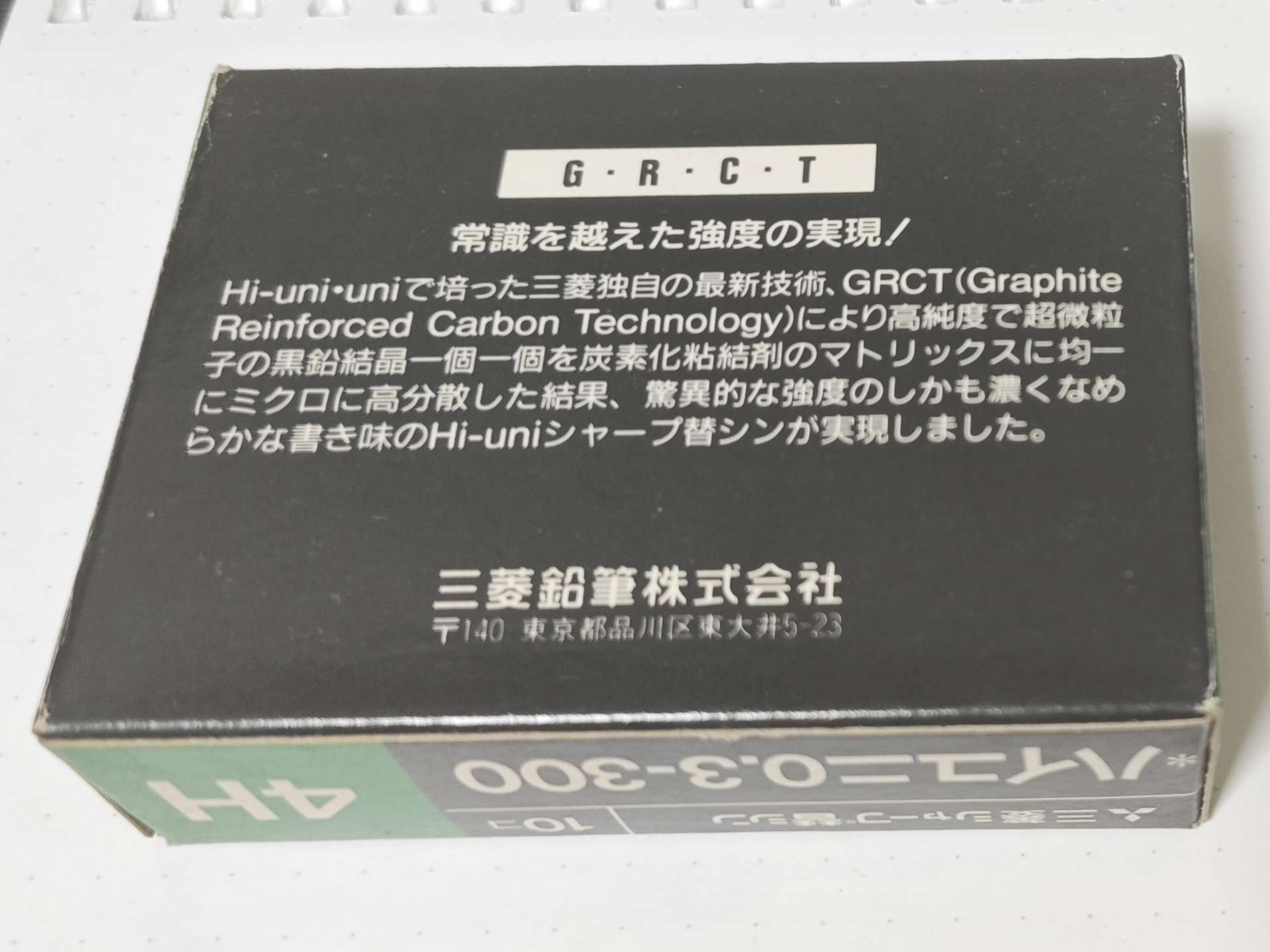
Pentel Hi-Polymer 100 and Mitsubishi Hi-Uni, both 0.3mm 4H
The final piece of puzzle to complete my lead collection, as well as the first time I’ve actually had a Hi-Uni leads cardstock packaging.
GRCT stands for Graphite Reinforced Carbon Technology but it always sounded like nonsense to me since graphite literally is carbon. By reading the packaging I finally understand what it means. Basically the “reinforcements” for the graphite is carbon as well.
Background info
Pencil leads consist of graphite and an adhesive, originally clay was the adhesive and early leads suffered heavily from breakage, smearing, and graphite dust coming off just from drawing against rulers. The “Hi-Polymer” thing Pentel has been marketing for decades, as well as all the “polymer” leads by other brands, refers to the leads instead of clay, using large synthetic polymers as adhesive, optimizing lead structure and mitigating aforementioned problems.
GRCT means these leads use carbonized adhesive, resulting in unique lattice structures and high overall carbon concentration.
The water-based ink has aged to develop a slight hint of blue, not too blue that it goes into blue-black territory, more like the Sakura Ballsign iD “Nuance Black” series that are 90%+ black but still has characters ↩︎
The packaging has the old Pilot logo and パイロット萬年筆株式会社 written on it, indicating they were produced before Pilot’s rebranding in 1989. Post-1989 refills do exist ↩︎
6 Likes