Just wondering is there a category specifically for leadholders on Knockology?
4 Likes
I think not.
3 Likes
Please share your leadholders. Though I love the technical wizardry and modern aesthetics of thin lead mechanical pencils, I think leadholders are unmatched in the elegance department.
5 Likes
@Thomas Thoughts? Category for lead holders
3 Likes
Great idea! It is done
6 Likes
Great, nothing like a quick decision! And at least 5 interested so far…..
1 Like
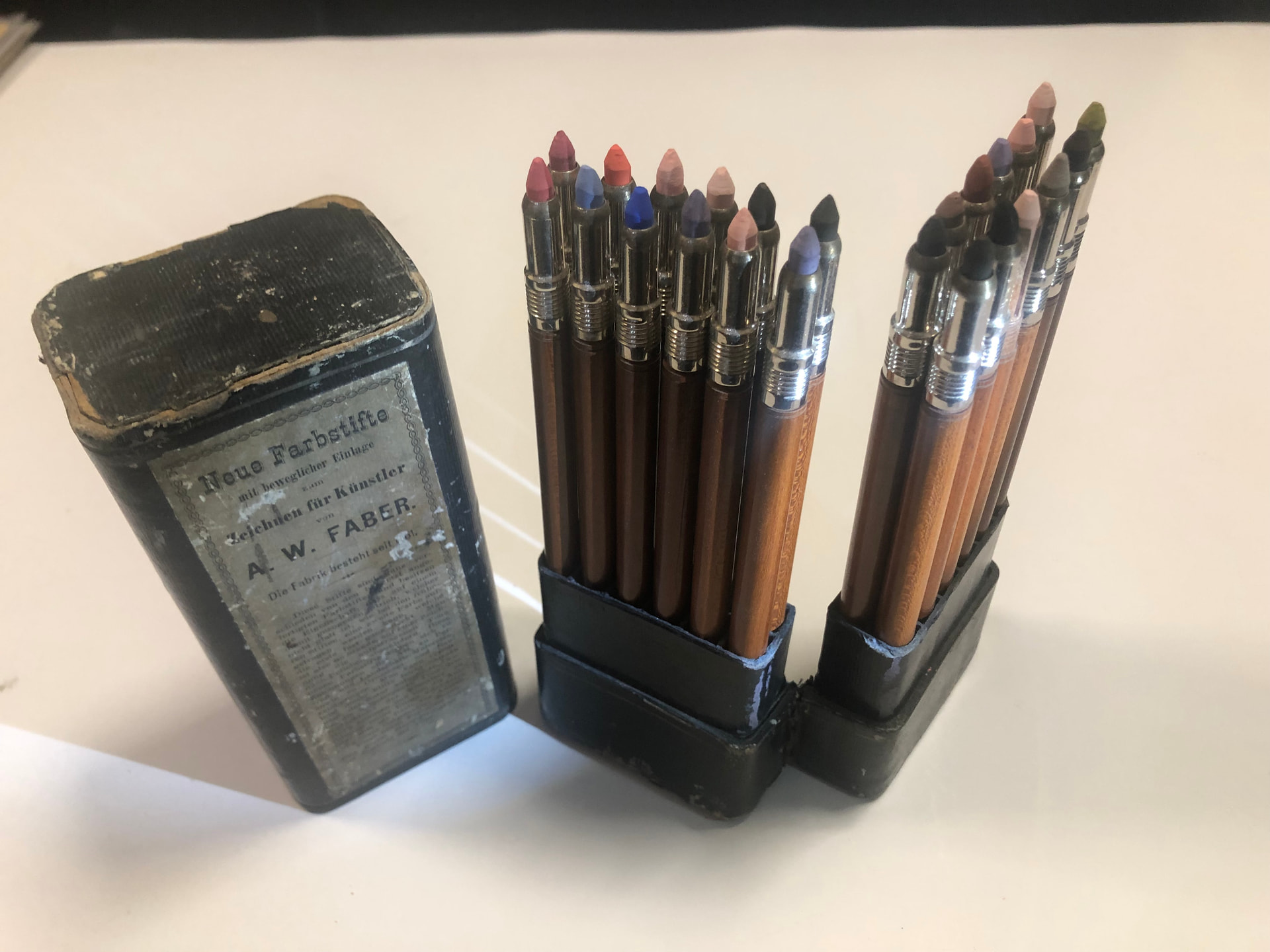
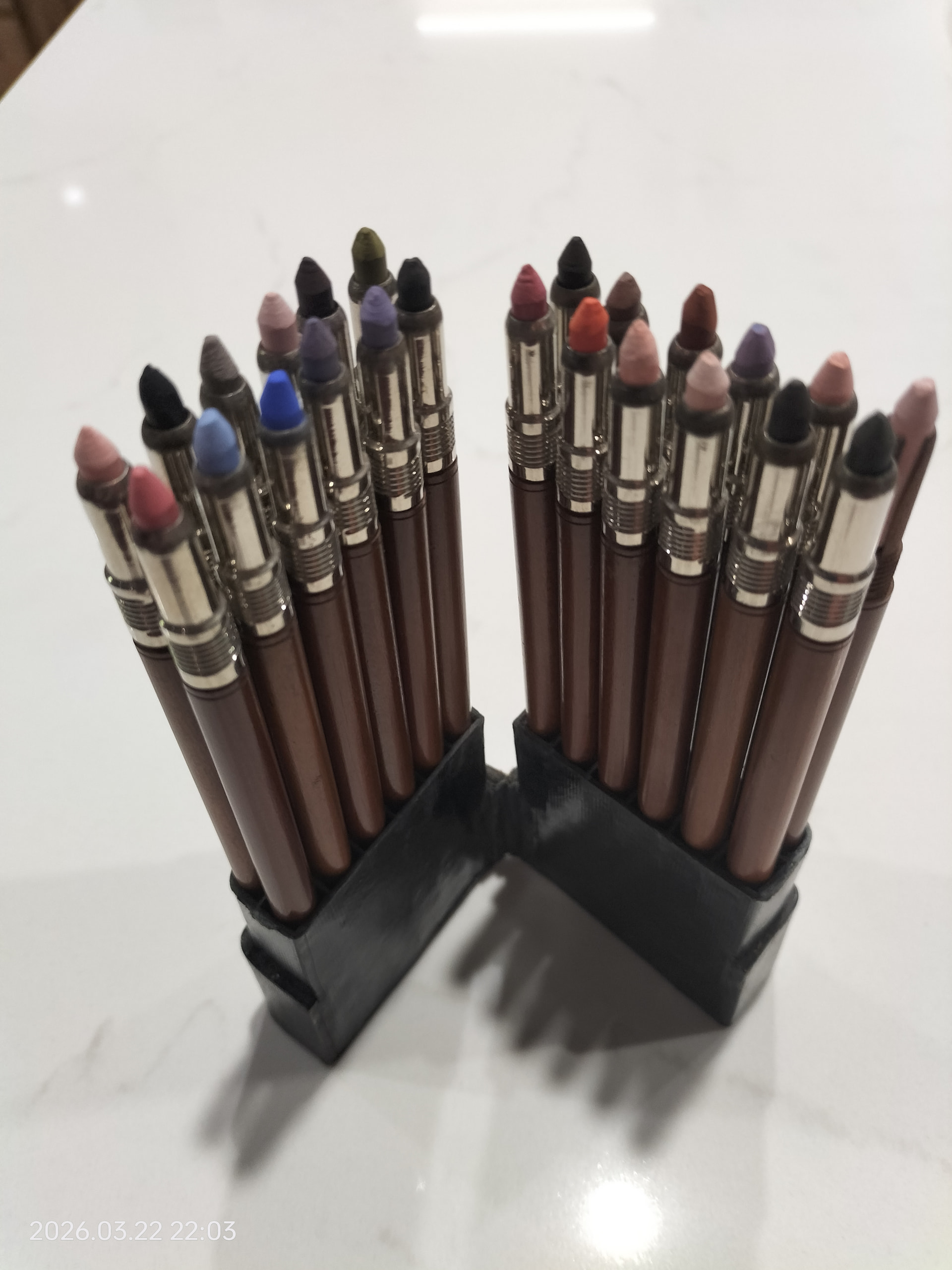
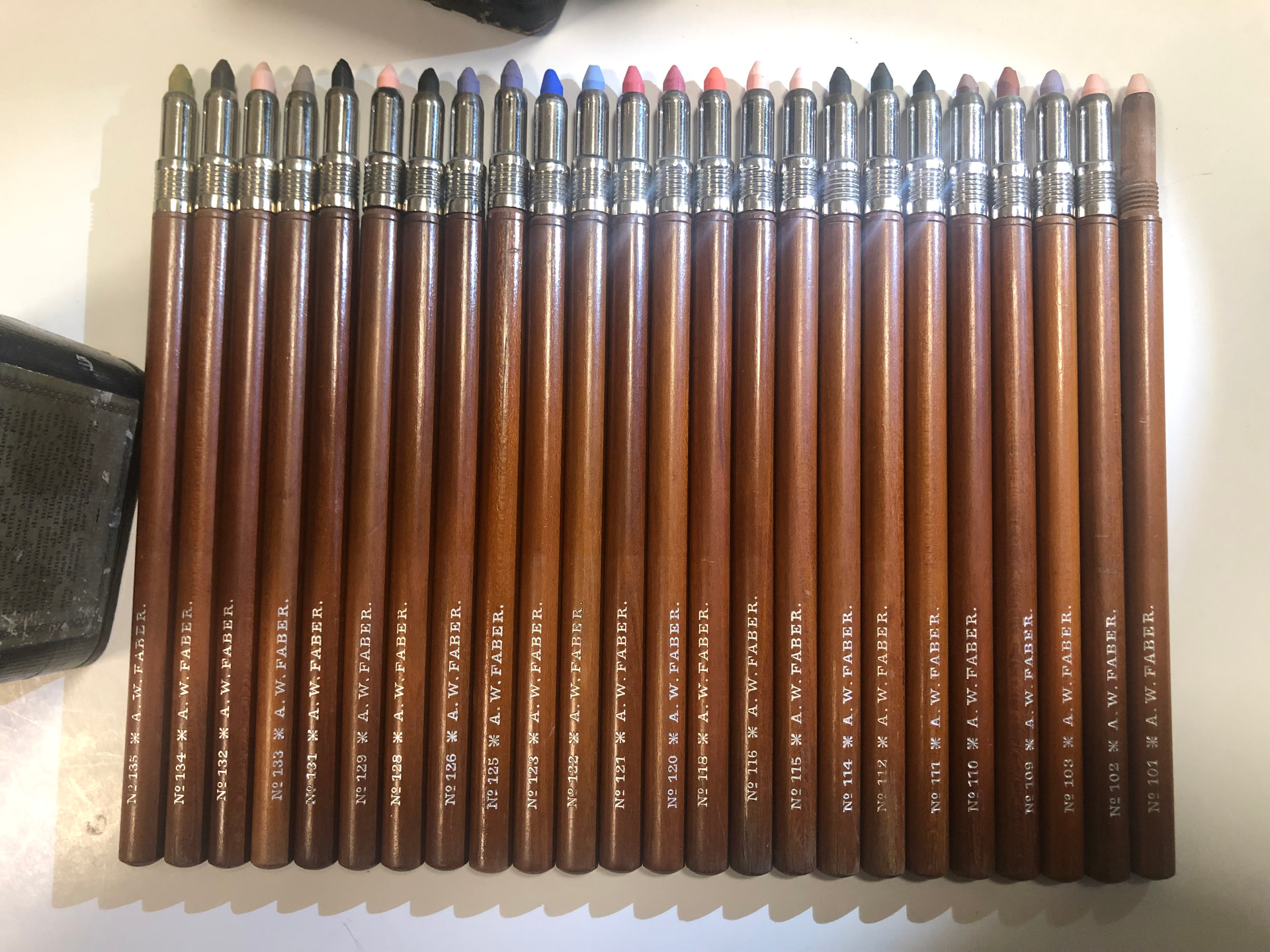
OK I’d better lead with something spectacular, probably the pinnacle of my collection. This is a A W Faber set of Chalk Holders from 1890 and they still have the original chalks in them. Only one chrome-plated nose-piece is missing. I’ve only ever seen one other set which was used and missing about three pencils. It was for sale many years ago by Andrey’s Pencils. Feaast your eyes folks!
15 Likes
Beautiful colors. And the pristine wood handles!
2 Likes
That belongs in a museum!
3 Likes
How are they held in place? Is it a screw-on clutch type I assume?
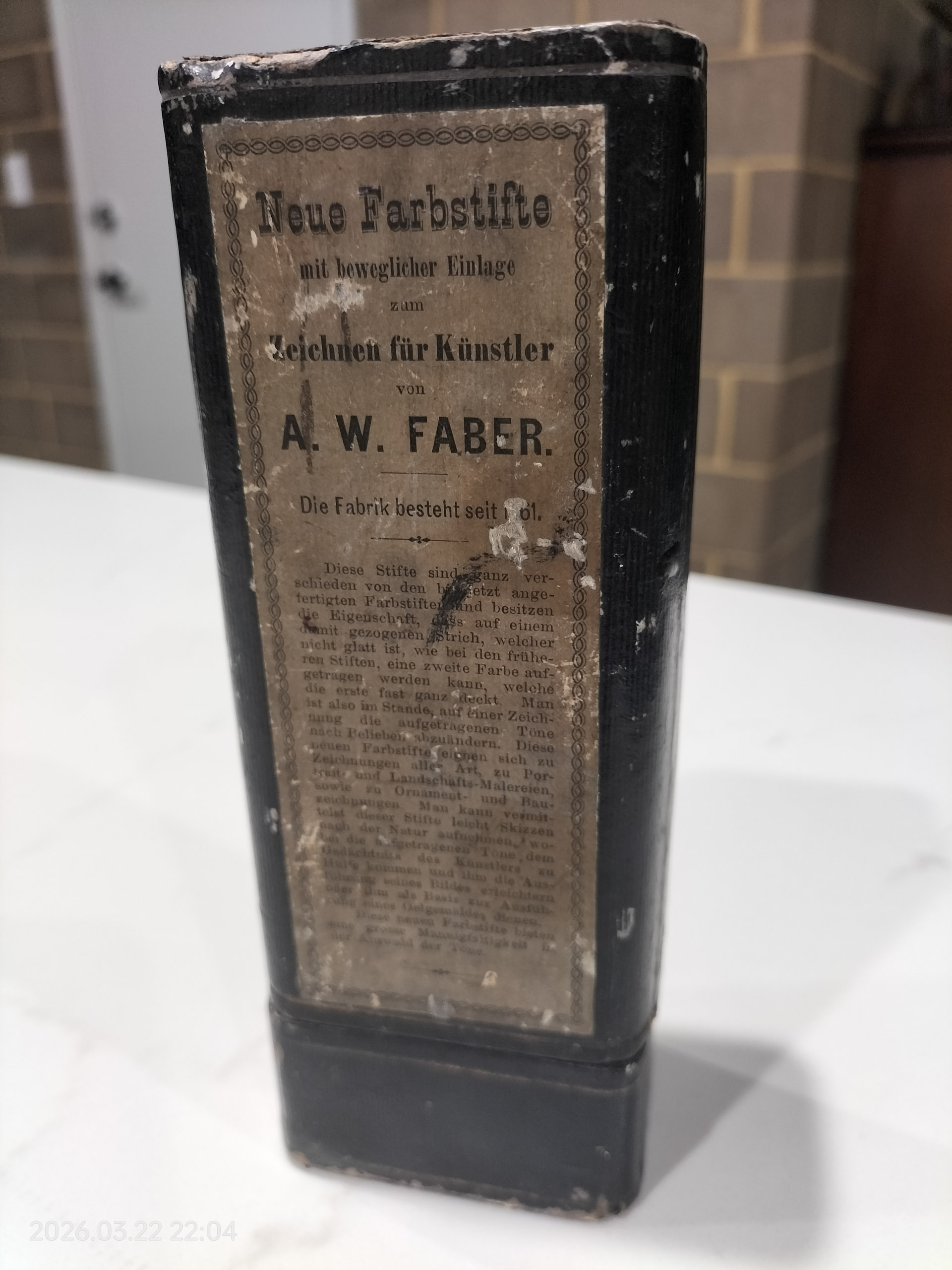
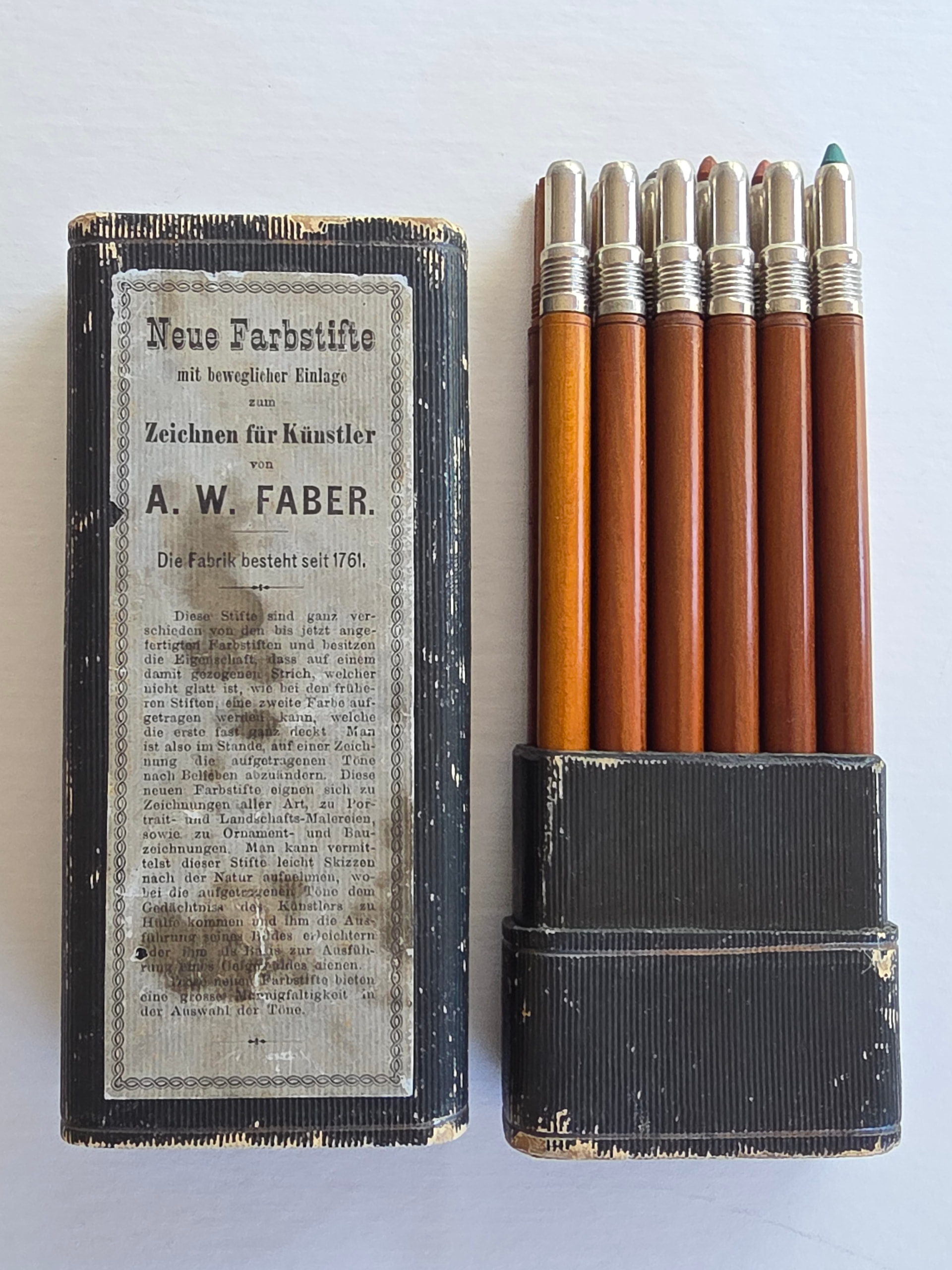
Also I wrote down what’s on the box just for anyone wondering
Diese Stifte sind ganz verschieden von den bis jetzt angefertigten Farbstiften und besitzen die Eigenschaft, dass auf einem damit gezogenen Strich, welcher nicht glatt ist, wie bei den früheren Stiften, eine zweite Farbe aufgetragen werden kann, welche die erste fast ganz deckt. Man ist also im Stande, auf einer Zeichnung die aufgetragenen Töne nach Belieben abzuändern. Diese neuen Farbstifte eignen sich zu Zeichnungen aller Art, zu Portrait- und Landschafts-Malereien, sowie zu Ornament- und Bauzeichnungen. Man kann vermittelst dieser Stifte leicht Skizzen nach der Natur aufnehmen, wobei die aufgetragenen Töne dem Gedächtnis des Künstlers zu Hülfe kommen und ihm die Ausführung seines Bildes erleichtern oder ihm als Basis zur Ausführung eines Oelgemäldes dienen. Diese neuen Farbstifte bieten eine grosse Mannigfaltigkeit in der Auswahl der Töne.
English translation:
These pencils are quite different from the colored pencils produced so far and have the property that on a stroke made with them, which is not smooth as with the earlier pencils, a second color can be applied which almost completely covers the first. One is therefore able to alter the tones applied in a drawing as desired. These new colored pencils are suitable for drawings of all kinds, for portrait and landscape paintings, as well as for ornamental and architectural designs. One can by means of these pencils easily make sketches from nature, whereby the applied tones assist the memory of the artist and facilitate the execution of the picture or serve as a basis for the execution of an oil painting.These new colored pencils offer a great variety in the selection of tones.
5 Likes
Yes, screw on nose piece. In the fourth image you will see the missing piece and the clutch jaws are made from the wooden (cedar) barrel.
The translation is helpful, thanks.
2 Likes
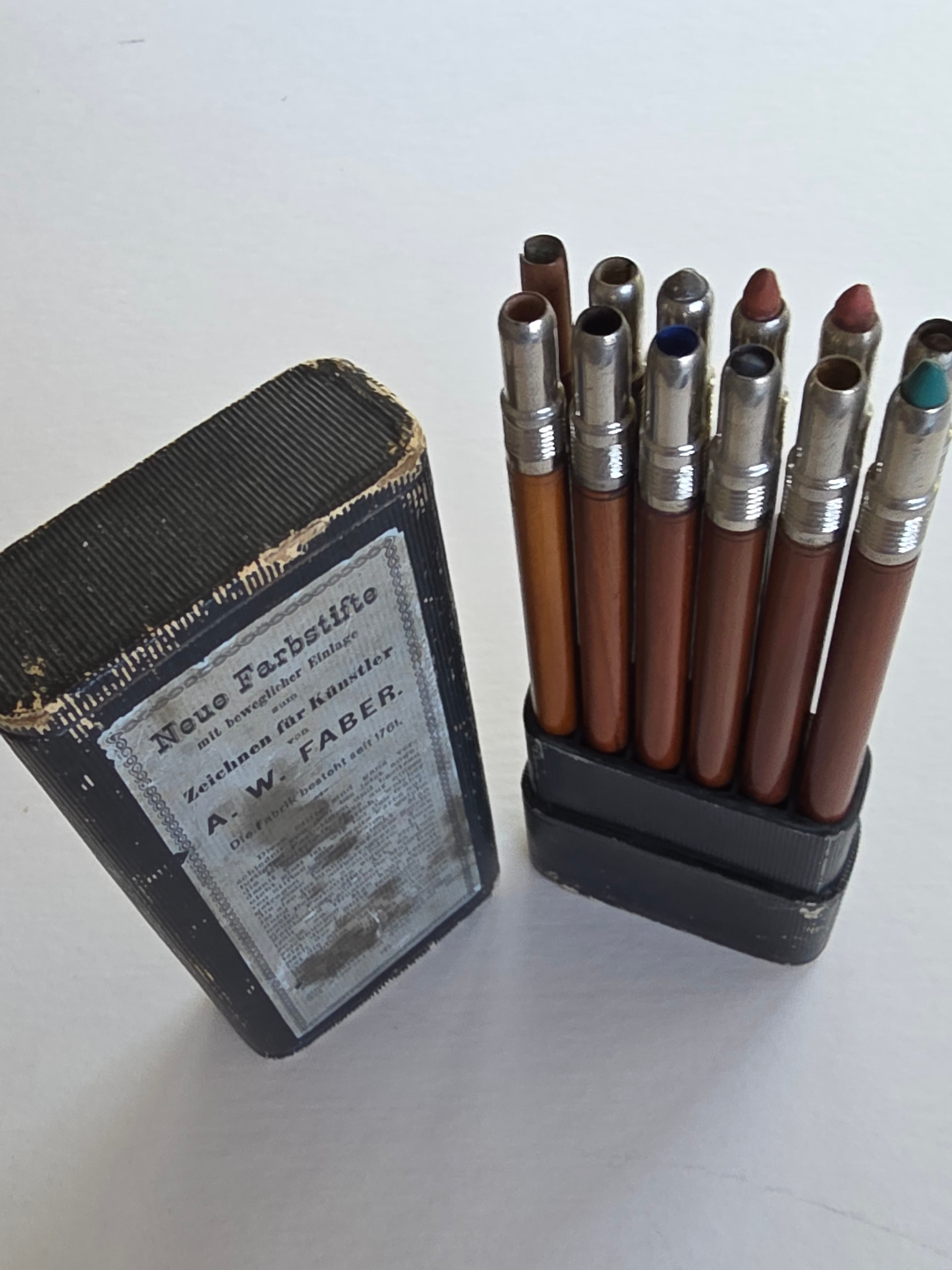
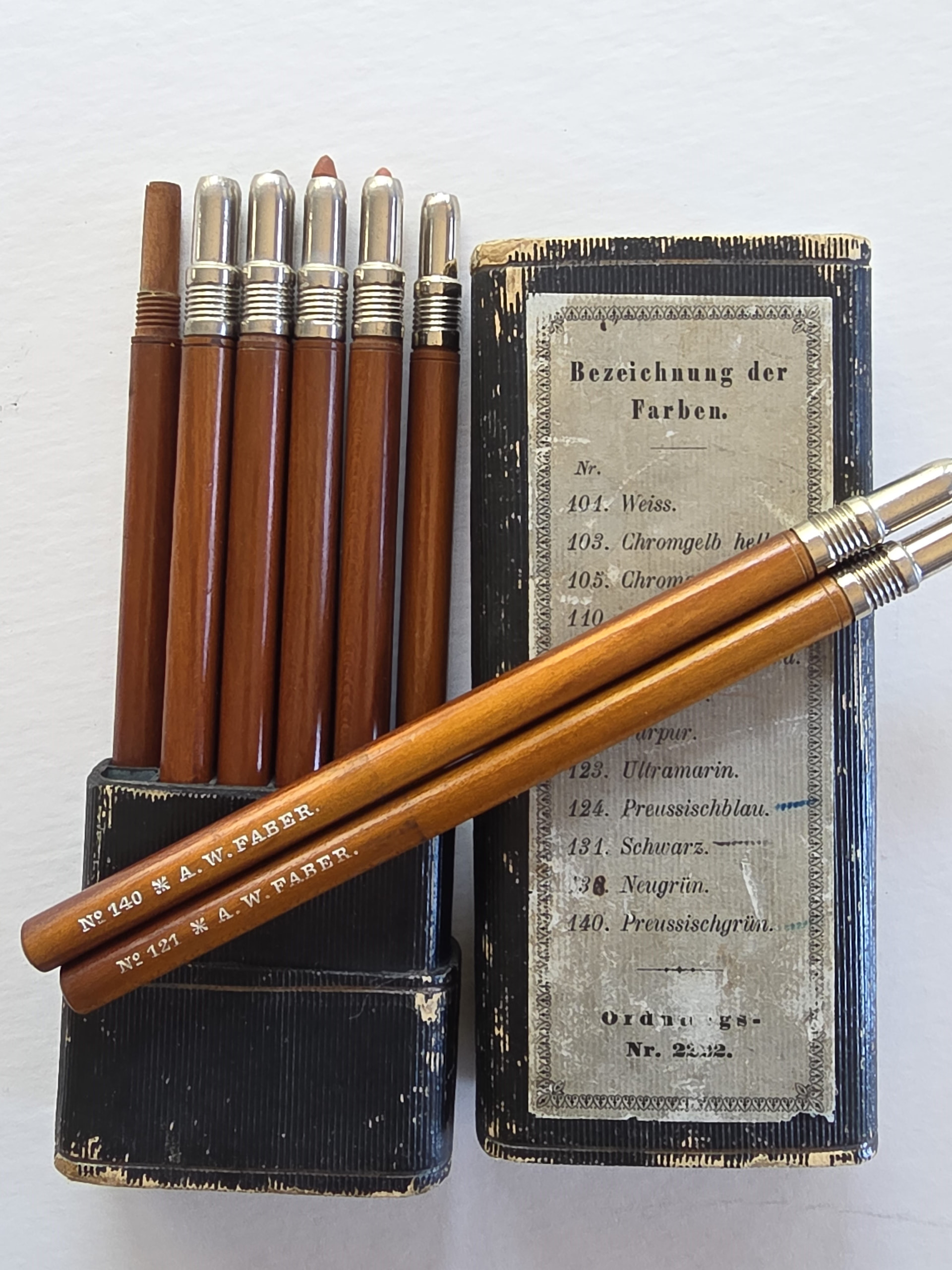
It’s very interesting that it’s also “missing” 1 nose piece.
I wonder if that was actually intentional.
2 Likes
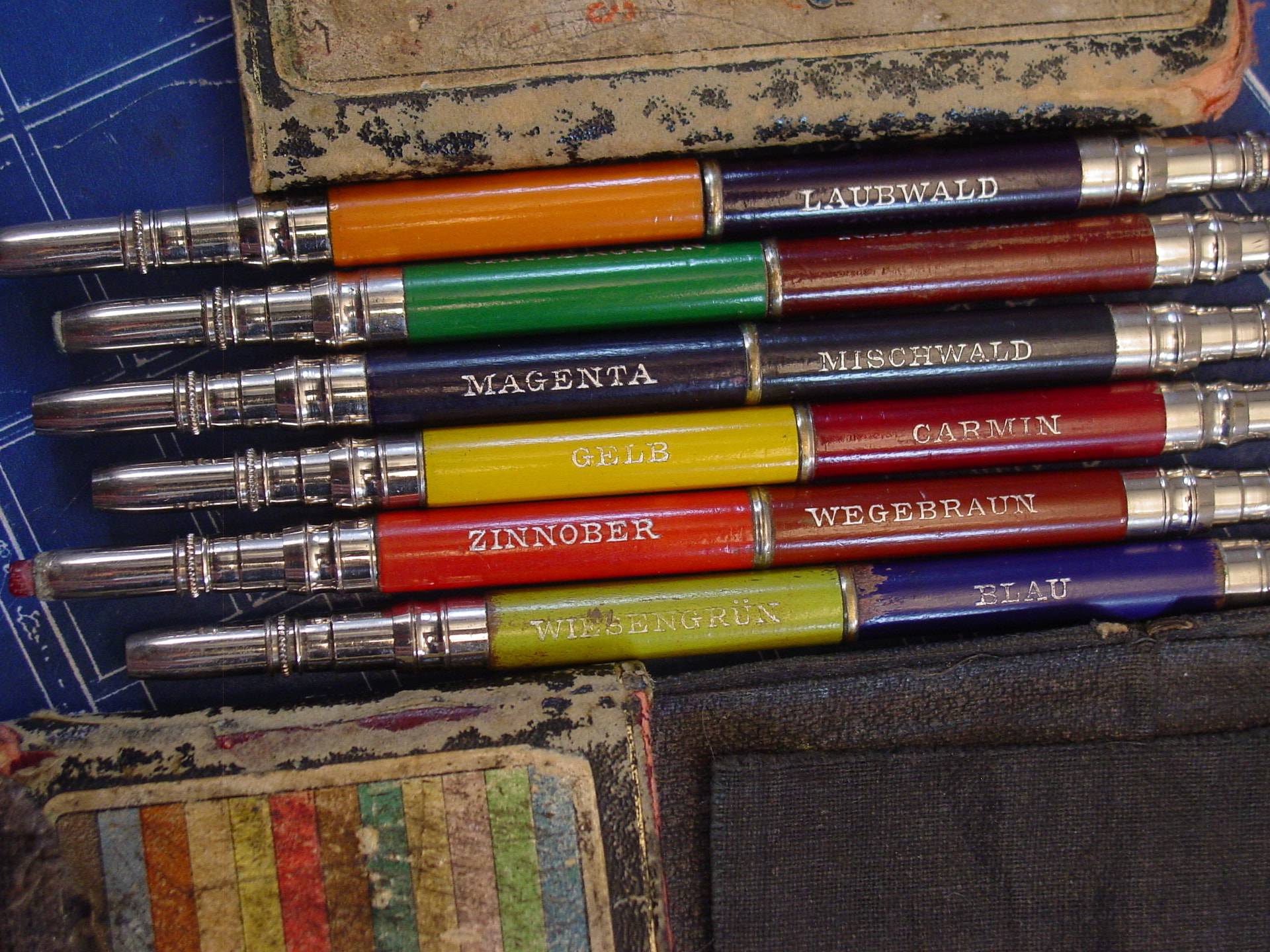
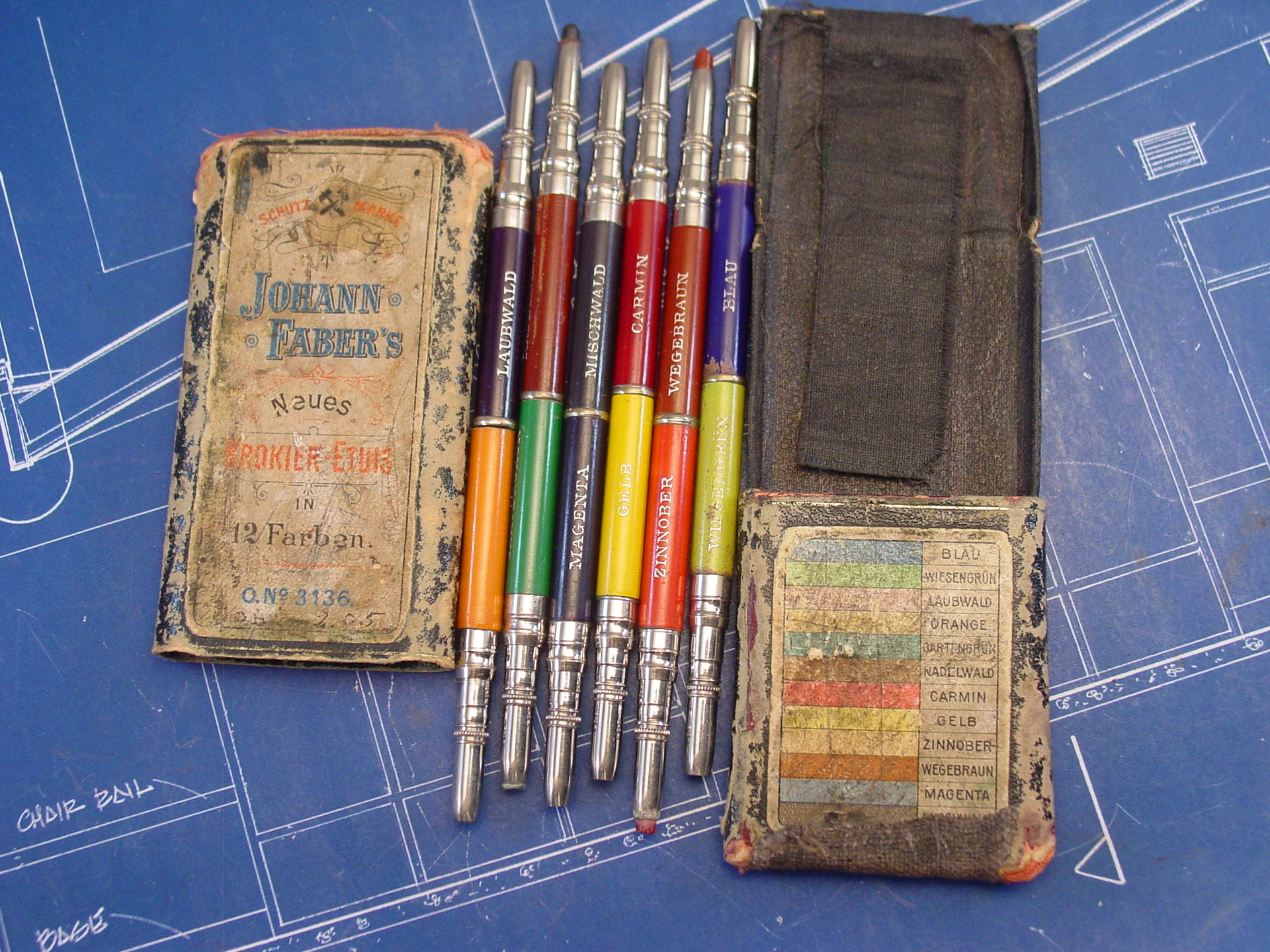
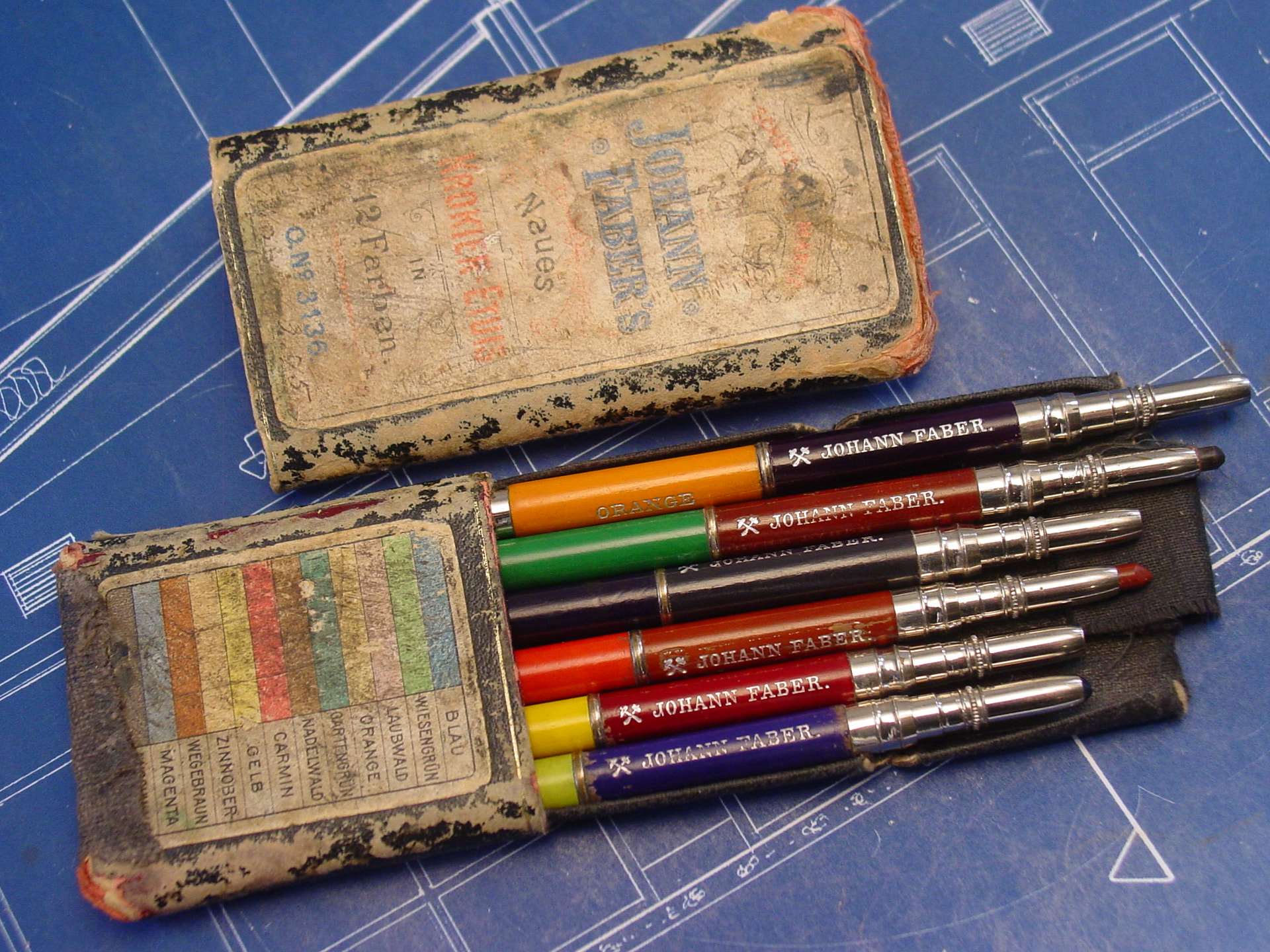
Very colourful indeed and the the forever sought after double-enders too. Not sure I’ve seen a set of wooden double enders together like that.
1 Like
I have to tell you that this website are famous! And now I mainly mean functionality. Great job!
3 Likes
Thank you so much! This is indeed a great place for all of us to share, learn, and hangout.
8 Likes
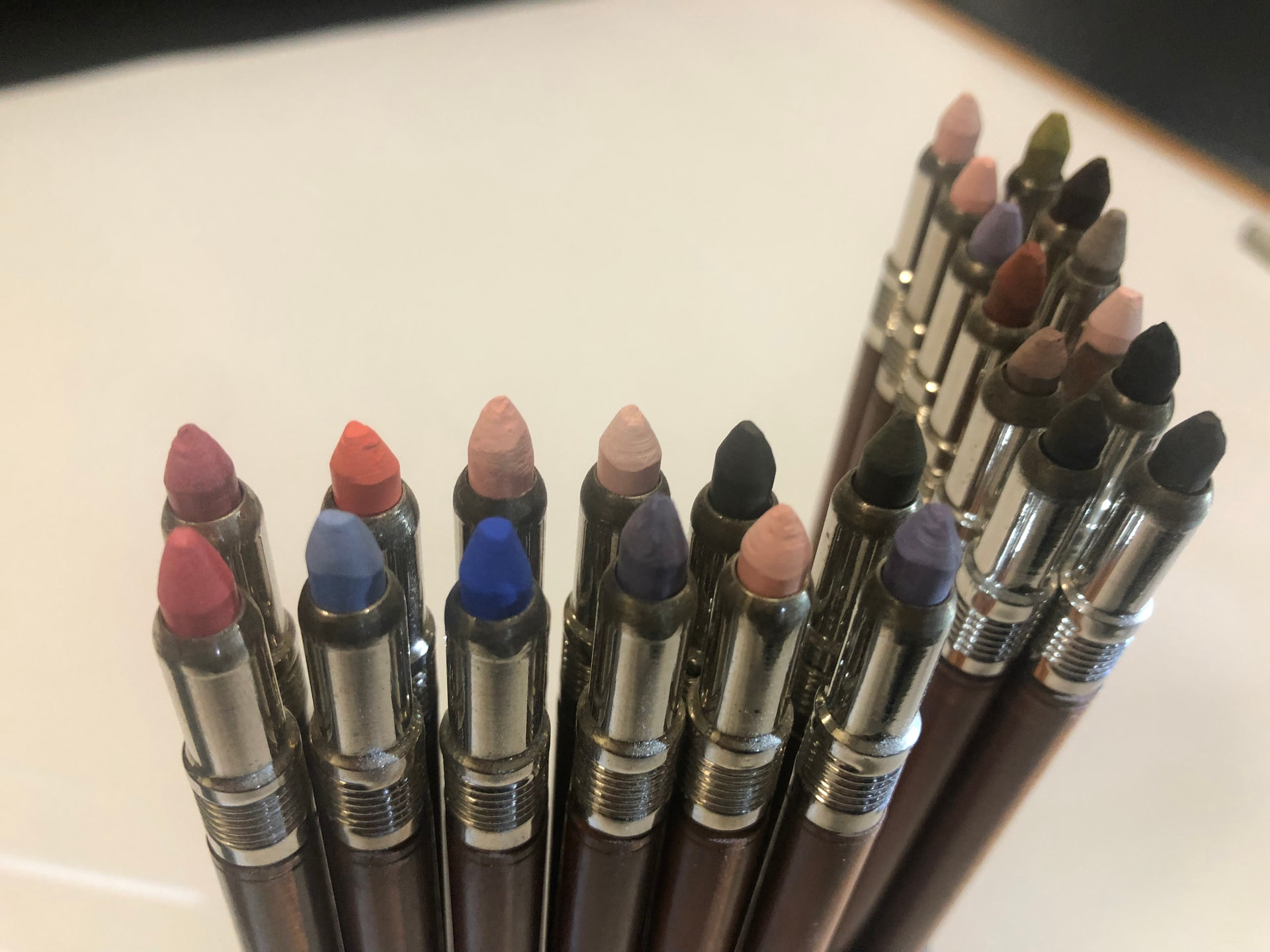
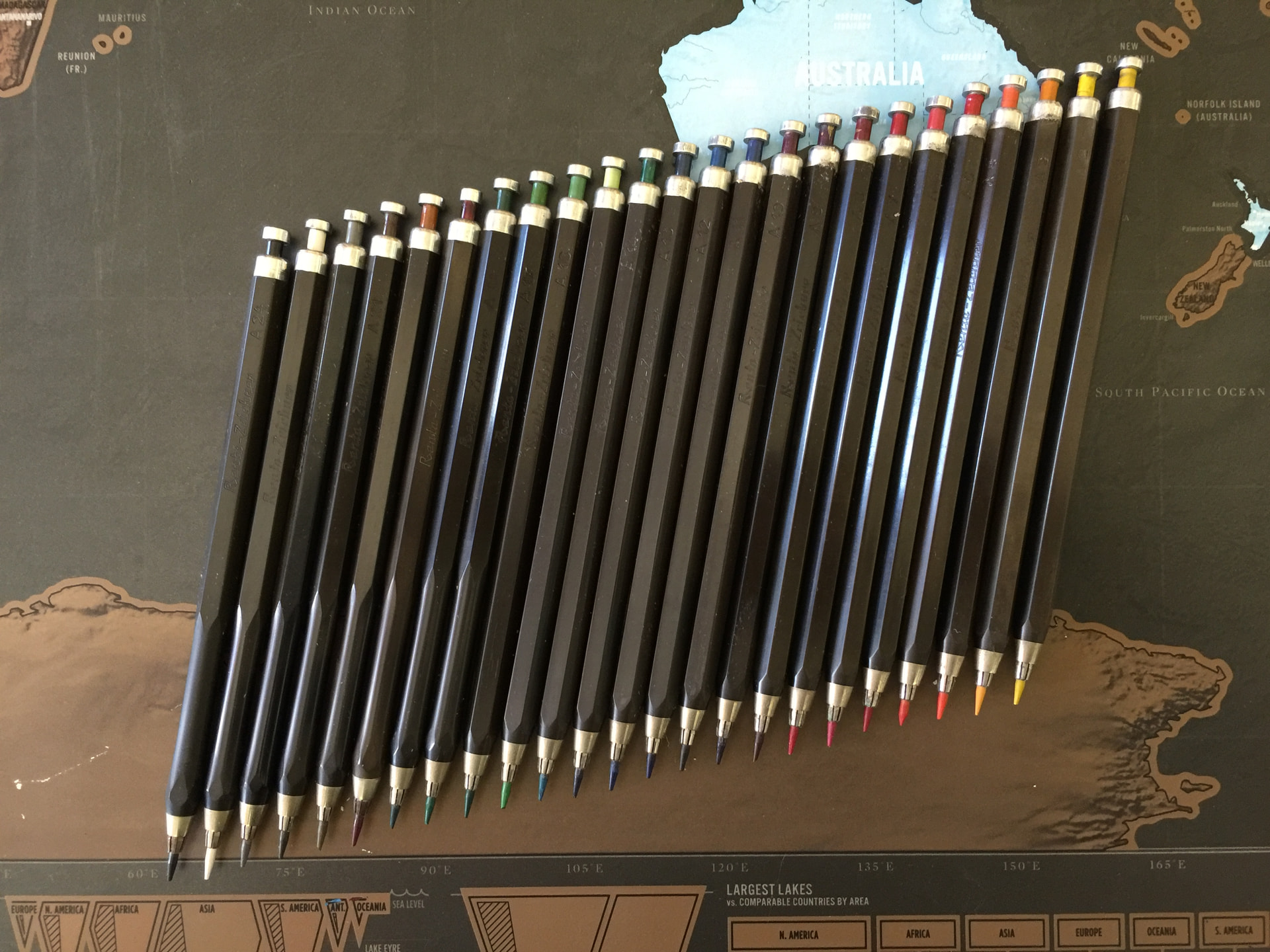
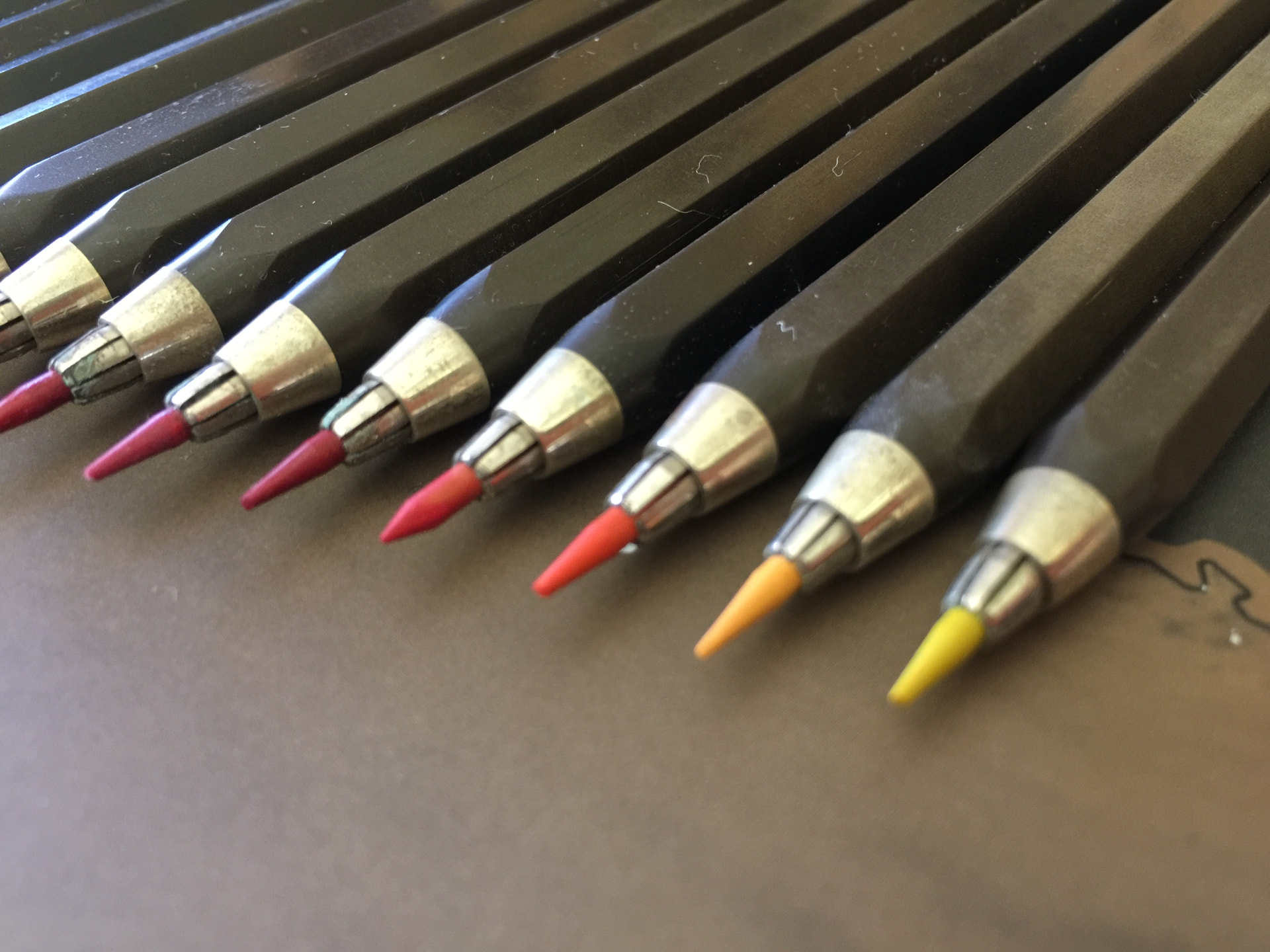
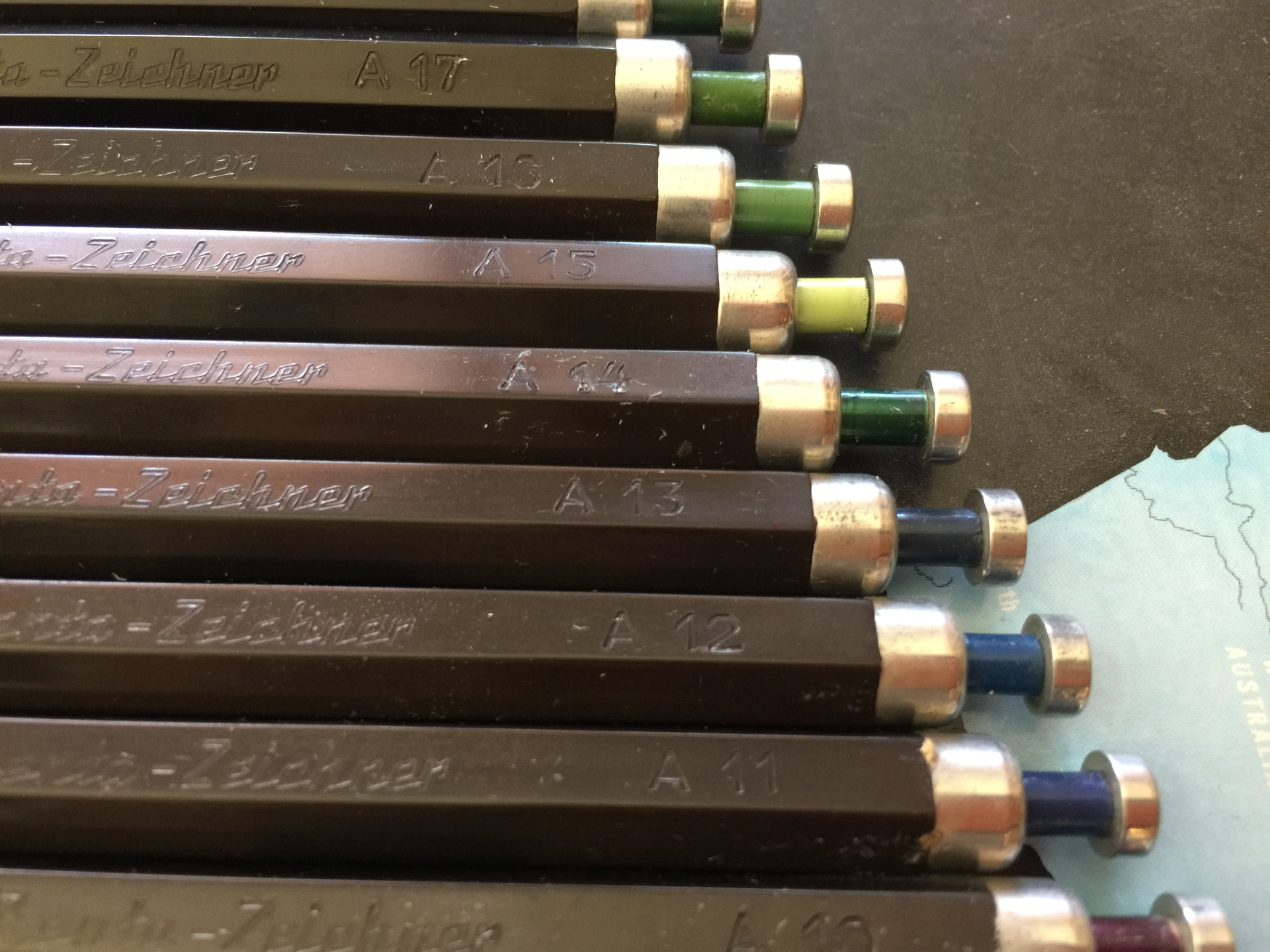
Renta Zeichner Colour Leadholders.
Basically I’m just showing off - someone asked to see more… so here’s some more!
The ‘completist’ type of collector could easily spend years trying to find all the different colours of the Renta Zeichestifte. Here’s a group of 24 that came to me as a bunch many years ago so I’m not sure that they were ever a set as such. They have a great system of little colour sleeves that slide onto the push buttons. Curiously some have tapered barrels and some are straight so I think the two types were concurrent.
It’s a shame these type of rubber barrels are prone to fading and/or discolouring. Does anyone know of a non-abrasive method to restore thhe colour?
8 Likes
The different numbers on the barrel, together with the coloured sleeves — or even the explicit name of the colour imprinted on the lacquered wood — is such a bold move: it tells the story of an era when the manufacturers were not afraid to adhere to the principle “one pencil for every lead core, one lead core for every pencil“. So powerfully meticulous; so deliberately expensive to make; so over the top. I mean, Staedtler’s coloured caps system is obviously an impressively clever invention in order to optimise resources, but Faber’s set is so much cooler…
The subtle boundary between production runs at early industrial scale, and artisanal makers working at top speed to fulfil the needs of the market. This, to me, is magic.
[Notice as well that, of the 24 Renta Zeichestifte, 8 have a slightly different form factor, so they might belong to a different set, or era; colour (wooden) pencils typically came in sets of 6, 12, 24 and 36 in Italy — progressively adding more shades or exotic hues as the number of items added up — and I would not be surprised if more of these Renta’s, with other ID numbers, cropped up; still 24 is a good “highest figure“, so it might as well be it.]
4 Likes
Thanks @Leonov for the detailed information. A couple of my others were shown here on Drafting Leadholders: Renta | Leadholder - The Drafting Pencil Museum many years ago.
1 Like