Any idears? Have unjammed many, but not yet had to fuss over one with the “correct size” lead. Have it pushed in as far it will go w/out breaking, yet… 
2 Likes
are you sure it’s not 1.3mm?
3 Likes
if I may ask, what pencil is ti??
Absolutely…it is a vintage Eversharp 4 Square, it is the only one I have seen in a short size- 4 7/8" and in a rare color combination.
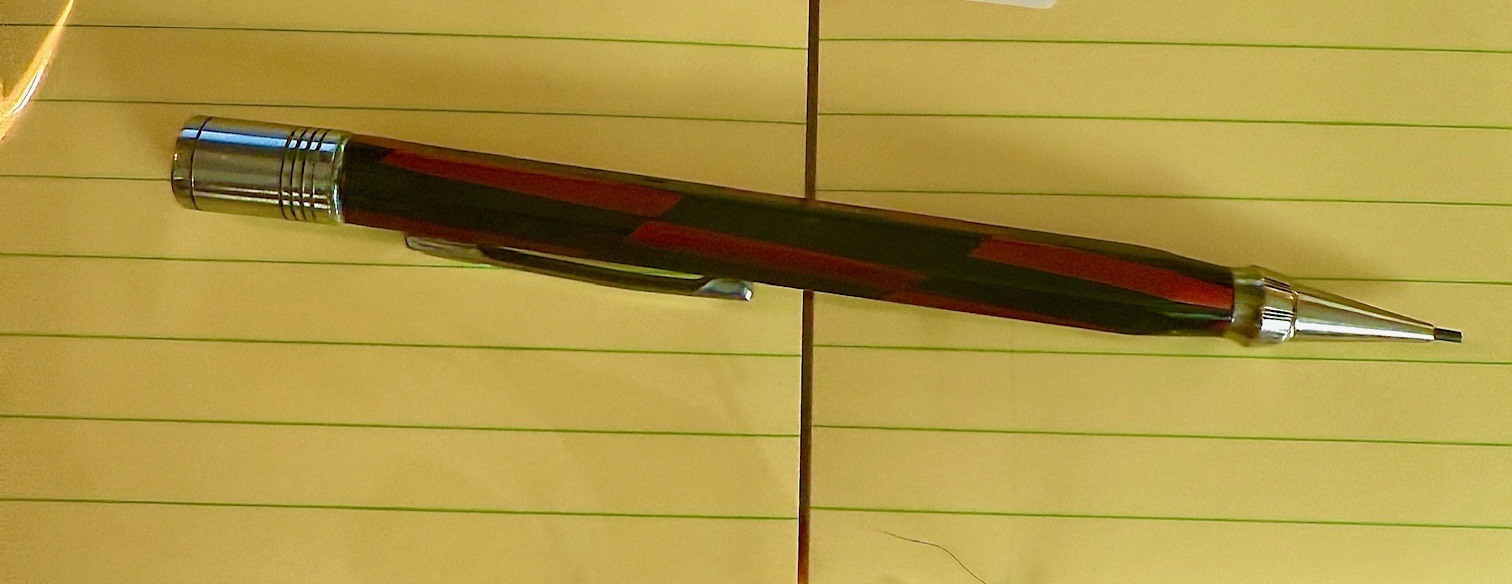
2 Likes
definitely sure its not 1.3mm…
1 Like
They take 1.18 lead. 1.2 is also viable.
2 Likes
10-4…, that is what is in it. I pretty much buy most of my vintage lead from Jonathan Veley 

1 Like
Jon is a dear friend of mine. He is also selling leads that fit antique pencils (very difficult to find).
1 Like
I think I actually have a few sticks ( in a tube…) of Four Square lead…I will dig…
2 Likes
These take proprietary 4 square leads that are manufactured with a slightly square profile (apologies if you knew this) so likely they are the only leads that fit.
2 Likes
See the leads patent on J Veleys post here- The Leadhead's Pencil Blog: Making Sense of the "Square 4"
1 Like
The difficulty you’re having is due to the Eversharp 4 Square being designed to work with the company’s proprietary square leads (these were not exactly square, as shown in this 1933 patent, but a square with rounded corners).
The pencil’s internals and point were shaped to accommodate this unusual cross-section (see 1933 pencil patent), the idea being that the lead would be less liable to slip or rotate, as well as presenting a smaller surface area to the paper when writing.
The instructions that came with my British version of the 4 Square pencil are unequivocal on the matter:
IMPORTANT.—The improved Eversharp 4 Square refill leads are made to fit this pencil—ROUND LEADS SHOULD NOT BE USED.
Given this inability to take standard leads, it seems amazing that the 4 Square remained so popular for so long. It would be interesting to know if the initial cost of the pencil was subsidised by the follow-on lead sales, much like a modern-day cheap inkjet printer.
4 Likes
Ha! Apologies, you got there first!
One thing that I would be interested to know about the 4 square leads is how they were manufactured. Did they start with a square lead and round the corners off, or take a round lead and plane the sides off? (or did they do neither, and just used some kind of mould/extrusion?)
1 Like
At the Stein Faber Castell factory, the old lead press is on display with the dies that were placed at the nozzle to shape the soft graphite/clay mix as it was forced out before firing in a kiln. It’s basically like pasta making, as far as I could see, in that respect!?
2 Likes
Wounderful research!
I have a theory here, not necessarily to be accurate or true, but the Square leads from Eversharp were the same as the round leads, with no difference to be observed. I doubt I saw a slight difference between the two leads; all the differences are in the company trying to advertise for something different. I think this was just a marketing strategy from Eversharp to promote the sale of more leads. I know that my opinion is subject to high debate, but I will be convinced otherwise if I see a practical or an observable difference between the round and square leads.
1 Like
Actually yes and no The link you posted I saw years ago and read, but could never find it again. I have the 1.18mm lead in my other 4 Square pencils with no issues (I have 5-6 of them).
Thanks for sharing this link again…!
I’m an older collector who has been collecting vintage fountain pens since my late teens (45 years +/-) and vintage mechanical pencils for 25 years.
You certainly have some stories to tell!
Favourite model? Favourite lead diameter? Best pencil you have used? Piece you would advise to get?
Are you a thin-lead guy, or more of a 2.00mm aficionado?
TY Alan for sharing your knowledge and instruction- learn something new everyday 