I also collect various vintage drafting tools like old technical pens, and lettering sets. I thought it may be fun to make this post to see what else you guys collect.
This was a very recent eBay purchase- I have to admit that prior to seeing this I had no idea it existed.
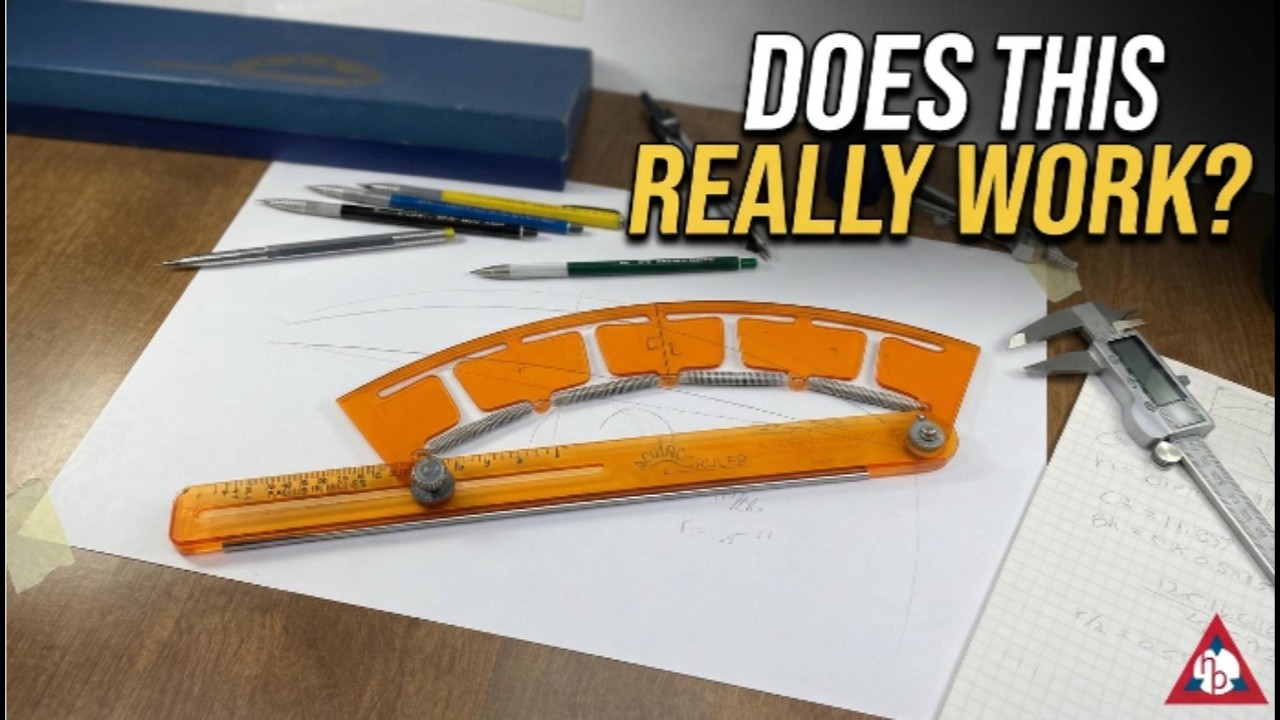
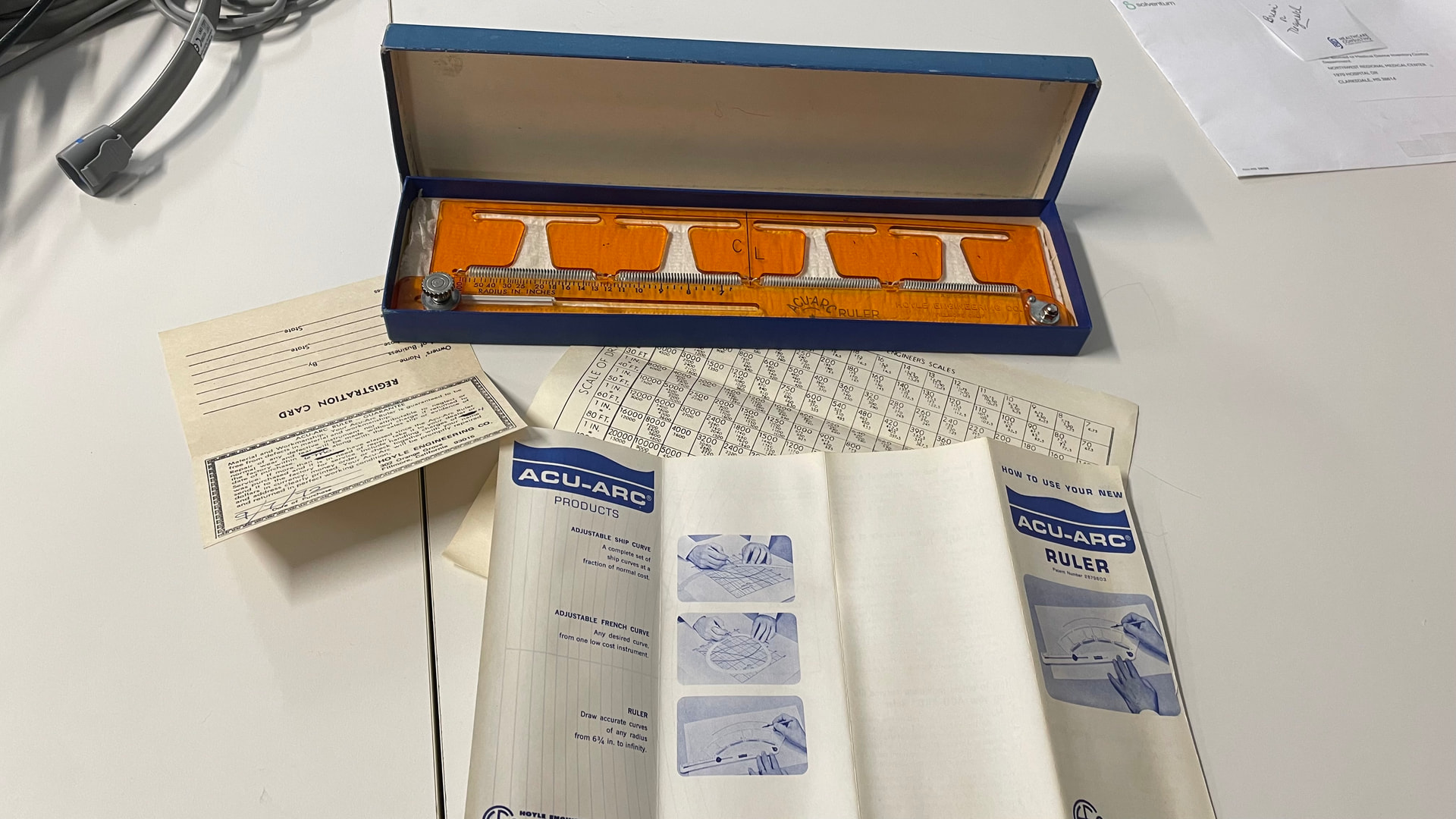
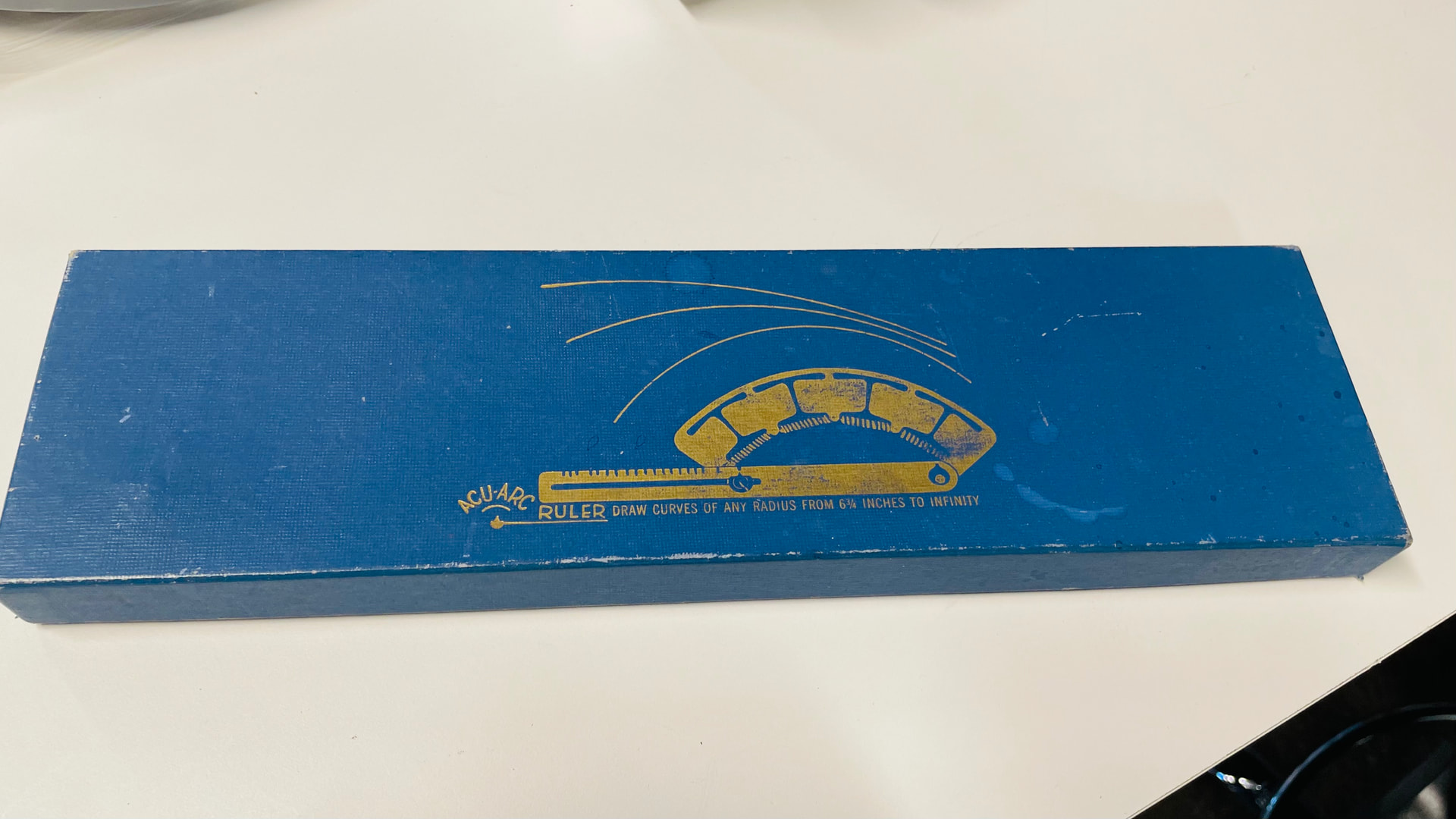
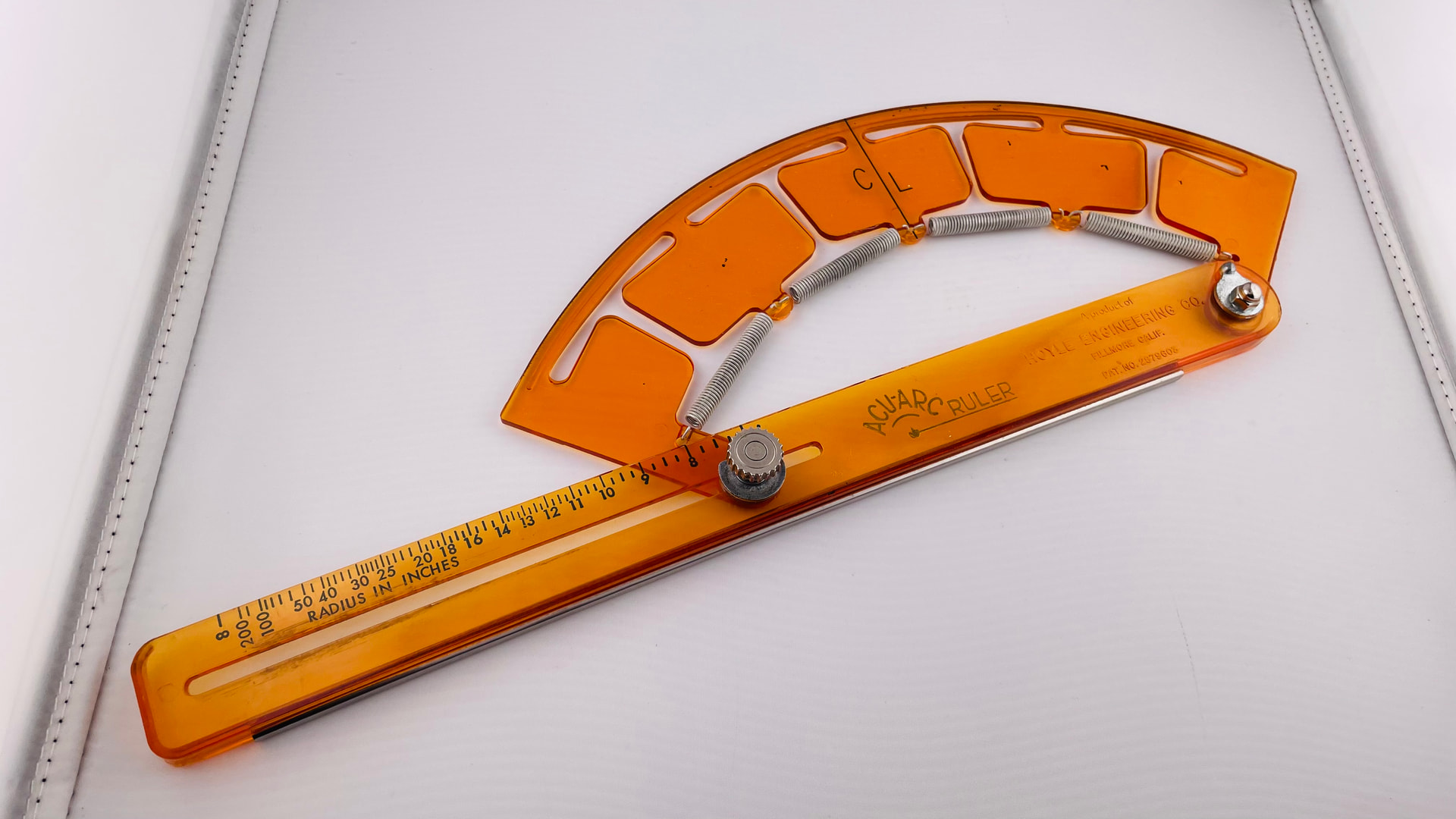
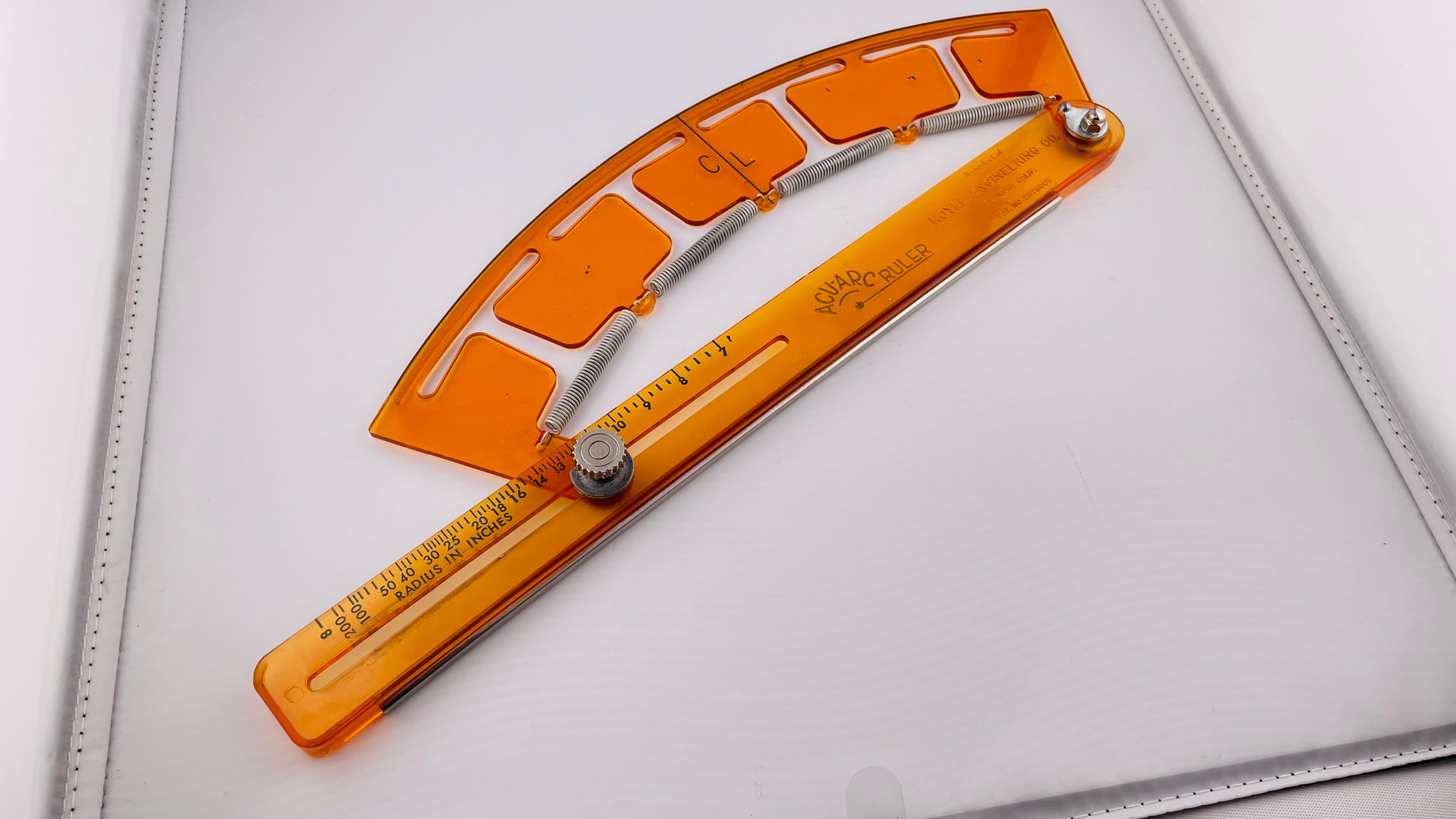
This is the ACU-ARC ruler by Hoyle Engineering. The instructions say it can be used to draw an arc of any radius from 6.75 to 200 inches. It came with a case, instructions and warranty card dated 1972.
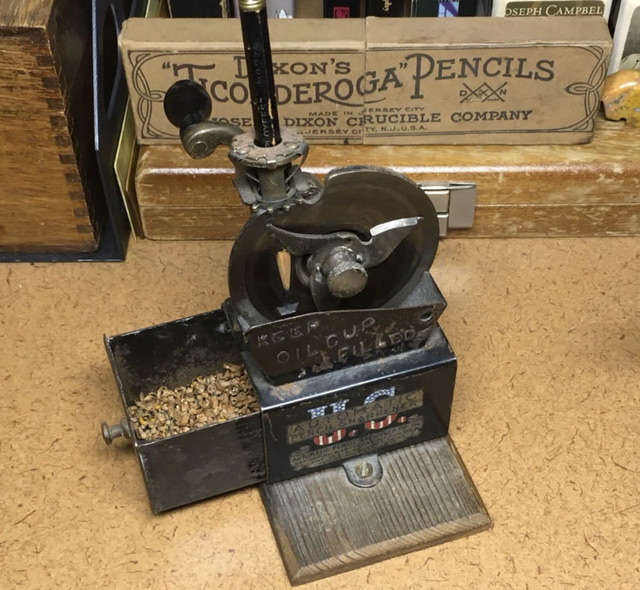
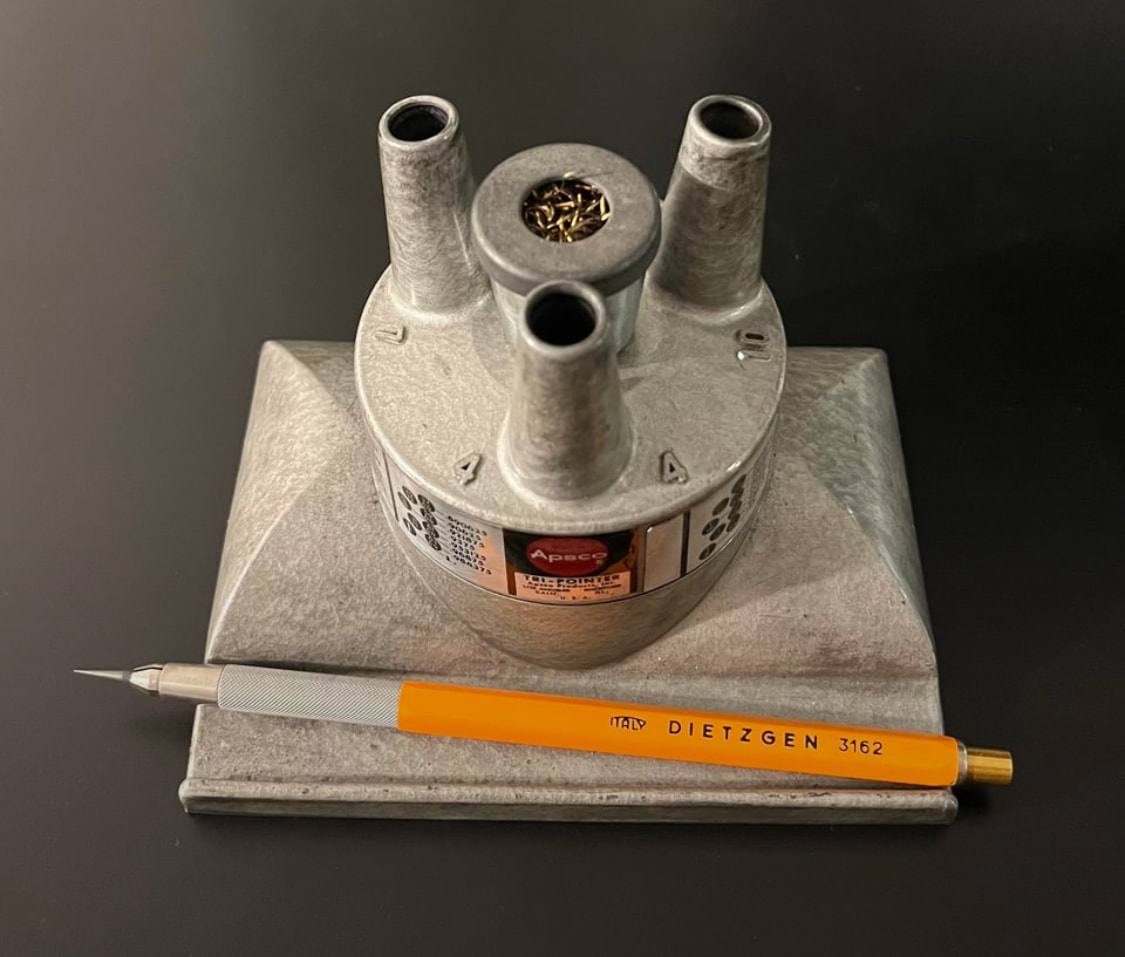
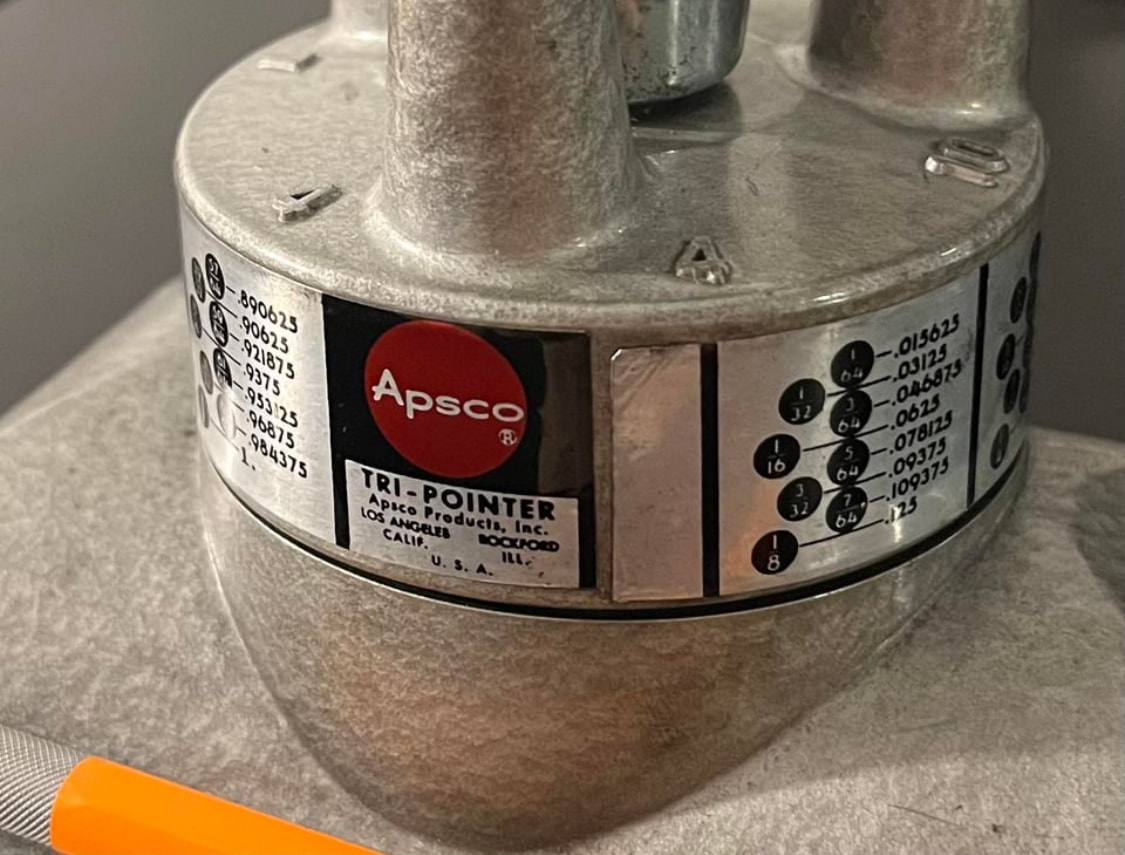
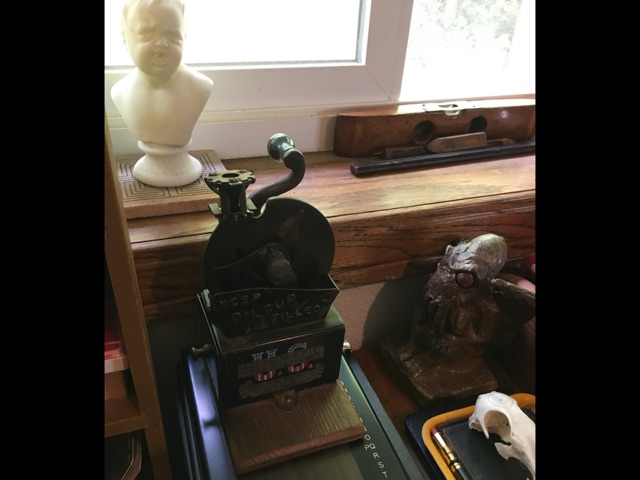
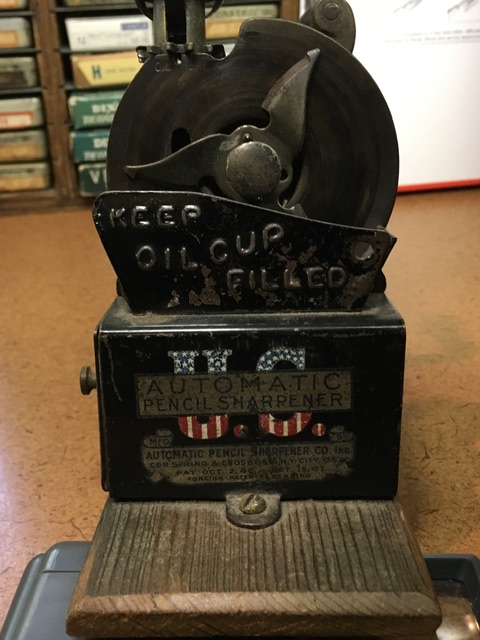
I looked up more info on your sharpener. Pretty legendary. I learned from this article that Automatic Pencil Sharpener Co. was abbreviated APSCO, which rang a bell in my head. I recalled I have an outlandish item from them: Tri-Pointer.
Glad you liked it. My favorite thing is how it is geared to automatically feed, and turn the pencil slightly with each crank to eventually fully sharpen the pencil…great engineering and built to last…ha!
Wow..haven’t seen the Apsco Tri-Pointer before! What a cool machine…
Do you mean that the pencil rotations are out of phase with the cutting blades so that each time the pencil completes a rotation the cuts are in a different place?
I don’t think so, it seems it just takes a little bit less wood as the diameter goes down. Then the finished sharpening looks less rough. Fun machine at any rate…
Great to see you branching out into drawing instruments! By coincidence, just the other day I was talking to a non-collector about their father’s Acu-Arc, which still stuck in their memory from years earlier. Being at once complex and intuitive seems to have cemented its position in drafting history.
Despite not being perfectly accurate, as you mention in the video, the Acu-Arc is still a very handy tool for rough layout work, such as joining three points with a circular arc, or drawing tangent curves. It can also be used to roughly measure the radius of a curve without resorting to mathematics or geometry.
It probably helped that the Acu-Arc didn’t have much in the way of competition for such a small, relatively inexpensive device. The traditional alternative was a set of railway curves, a full box of 100 costing many times more, not to mention being far less portable - although possibly still more portable than a 16-foot beam compass!
However, it may be of interest to know that the original method of manufacturing railway curves was to cut them with a giant beam compass, as described by WF Stanley in his book Mathematical Drawing Instruments.
In the same chapter, Stanley shows an instrument called the curve bow that is similar to the Acu-Arc in concept. Despite appearances, this was not intended for drawing circular arcs, but the profile of fish-belly beams used in civil engineering (a more recent example based on the same concept was the Arc-Rule produced by Alan Fry Controls Ltd in the UK, that did claim to draw accurate high-radius arcs).
For true circular arcs from thirty inches to infinity, Stanley designed a contraption named the centrograph, but by his own admission this was less usable than the earlier cyclograph (essentially a carriage on adjustable wheels).
I wonder what Stanley would have made of Hoyle’s Acu-Arc?


 .