The Color Red in Stationery: Desire, Meaning, and Delayed Arrival
In the world of stationery, color is never merely decorative. It communicates intention, identity, and hierarchy long before a pen touches paper. Among all color variants, red occupies a uniquely charged position. It is both ubiquitous and withheld, emotionally immediate yet strategically delayed. To understand why red stationery provokes such strong reactions, especially among enthusiasts, we must examine not just aesthetics, but psychology, culture, and design philosophy.
At its core, red is a high-arousal color. Cognitive psychology consistently shows that red draws attention faster than neutral hues, increases emotional intensity, and heightens perception of importance. This makes red powerful, but also risky. In stationery, which often straddles the line between tool and personal object, red can dominate the visual field. A black pen recedes into function; a red pen asserts presence. For this reason, red is rarely chosen as a default. It demands to be chosen deliberately.
Culturally, red carries layered and sometimes contradictory meanings. In Japanese stationery culture especially, red is associated with authority (the teacher’s correction pen), ceremonial importance, warnings, and emphasis. These associations make red feel “loud” compared to black, silver, or blue, which signal neutrality and professionalism. As a result, manufacturers often treat red not as a baseline color but as an expressive deviation, something introduced only after a product has established credibility.
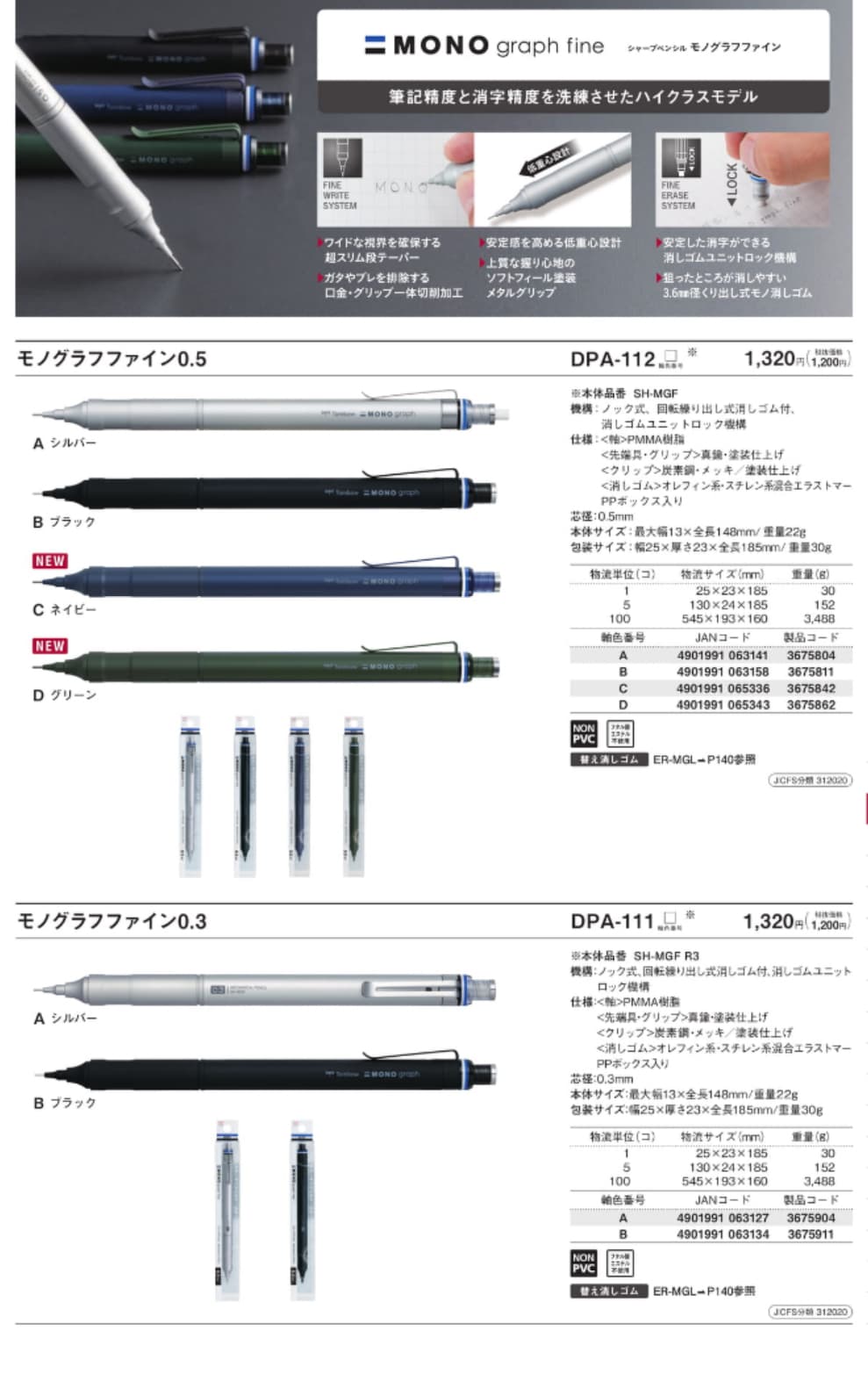
This leads to a common pattern in stationery releases: neutral colors first, red later. From a product lifecycle perspective, this is efficient and intentional. Initial launches prioritize broad appeal and predictable sales. Once a pen or pencil proves itself mechanically and commercially, color variants are used to extend the product’s lifespan. Red, in particular, functions as a reactivation color. It reignites interest among users who already own the item and transforms an existing product into something that feels new, special, or personal.
There is also a collector psychology at work. Red often becomes a “reward color,” not because it is objectively superior, but because it is withheld. When red appears later, or as a limited edition, it carries the emotional weight of anticipation. Enthusiasts do not simply want the object; they want the version that signals taste, discernment, or commitment to the hobby. In this way, red becomes symbolic ownership rather than functional necessity.
Manufacturing considerations reinforce this delay. Red finishes are less forgiving than black or metallic tones. Minor inconsistencies in coating or anodization are more visible, and poorly executed red can cheapen an otherwise premium object. Companies often prefer to perfect production before introducing demanding colors. Thus, red arrives when confidence is high, both in the product and in the manufacturing process.
Perhaps most importantly, red stationery represents a shift from restraint to expression. In many design traditions, particularly Japanese ones, seriousness precedes play. A tool must first earn trust through performance. Only then is personality introduced. Red marks that transition. It says: this object is no longer proving itself; it is being enjoyed.
This explains why the desire for red variants can feel disproportionate. When someone says they “really, really want” a red version of a pen or pencil they already own in multiple colors, they are not expressing need. They are responding to symbolism. Red represents completion, individuality, and emotional resonance. It is the color of arrival.
In the end, red in stationery is powerful precisely because it is not neutral. It is not safe. It is not default. It is chosen, and often, chosen last. That delay imbues it with meaning far beyond pigment, turning a simple color variant into an object of longing.