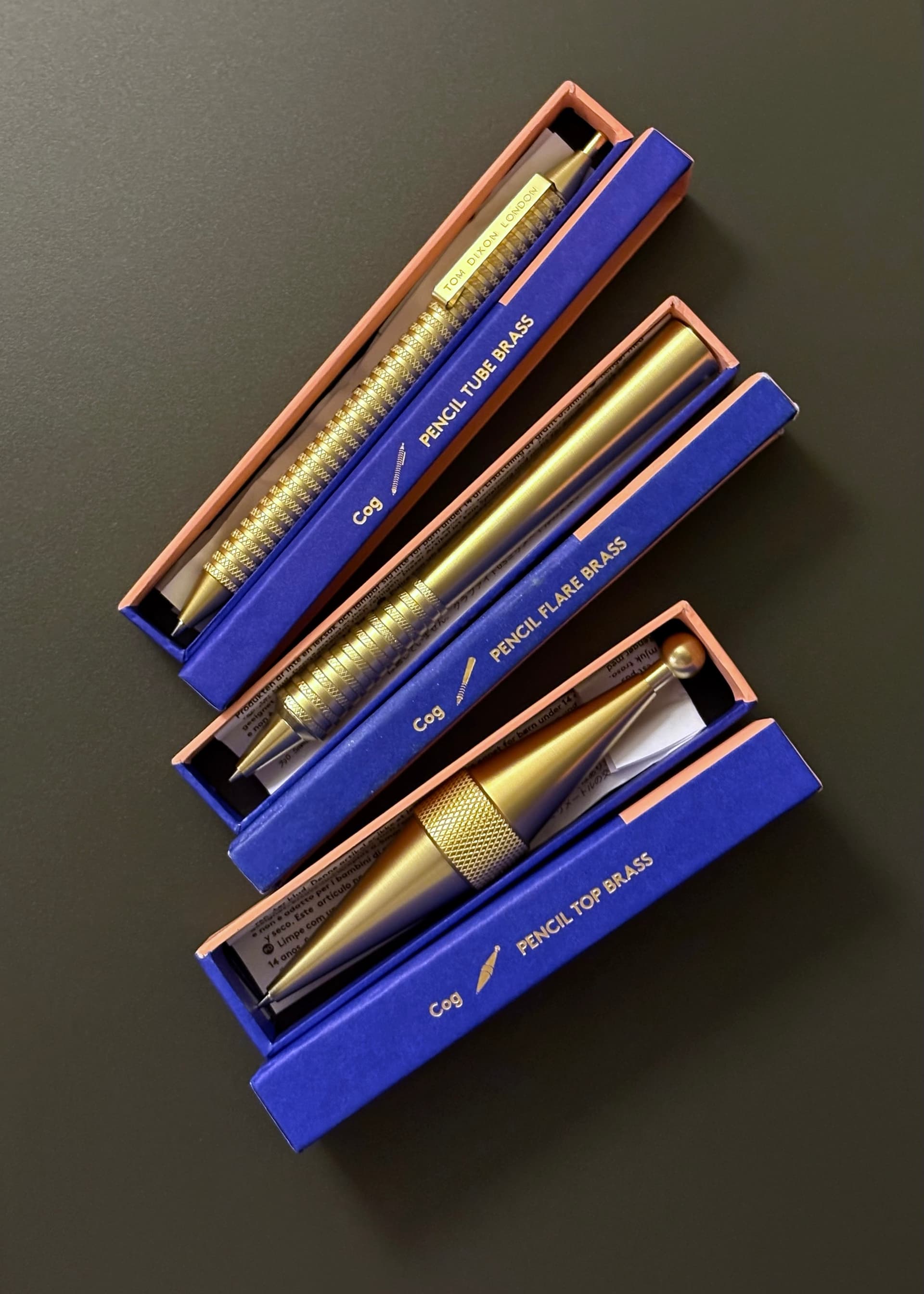
I first learned about this series of ‘designer pens’ 10 years ago when I was doing up my home and purchased some Tom Dixon ‘Beat’ lamps for the dining room. While researching the brand, I saw them: strangely industrial pens and pencils all done up in golden brass, with tons of knurled detailing. I was curious then but my rudimentary hobby budget wouldn’t allow me to go for any one of them at over 80 GBP each. Over the years, I would catch glimpses of them from other collectors like @Raybonche and @amjacobs7, and my curiosity would get fired up again. It would take a decade to find two of them on close-out on eBay UK, and some frenzied hunting to complete the set.
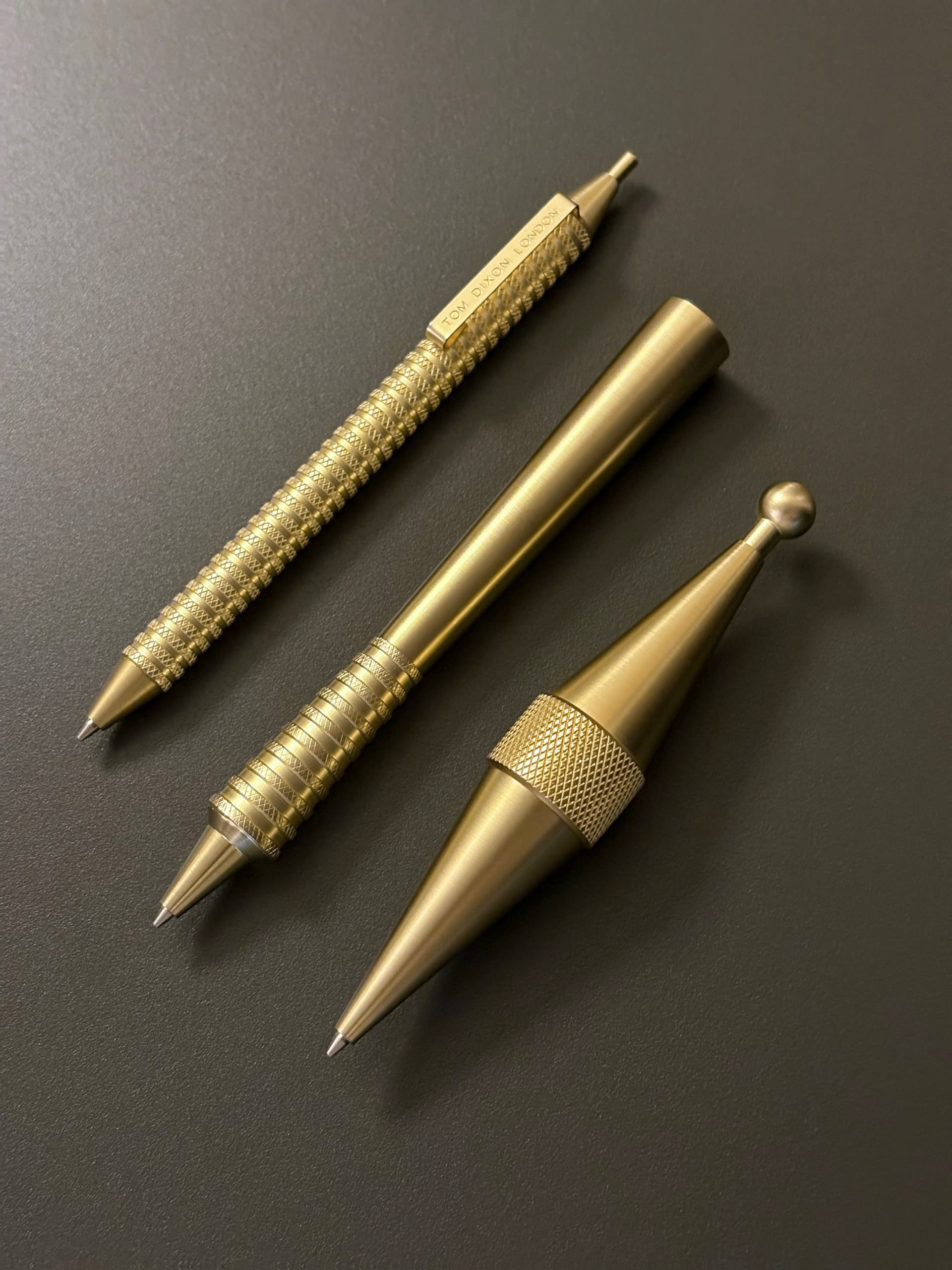
The Cog Pencil series comes in three designs. From top left:
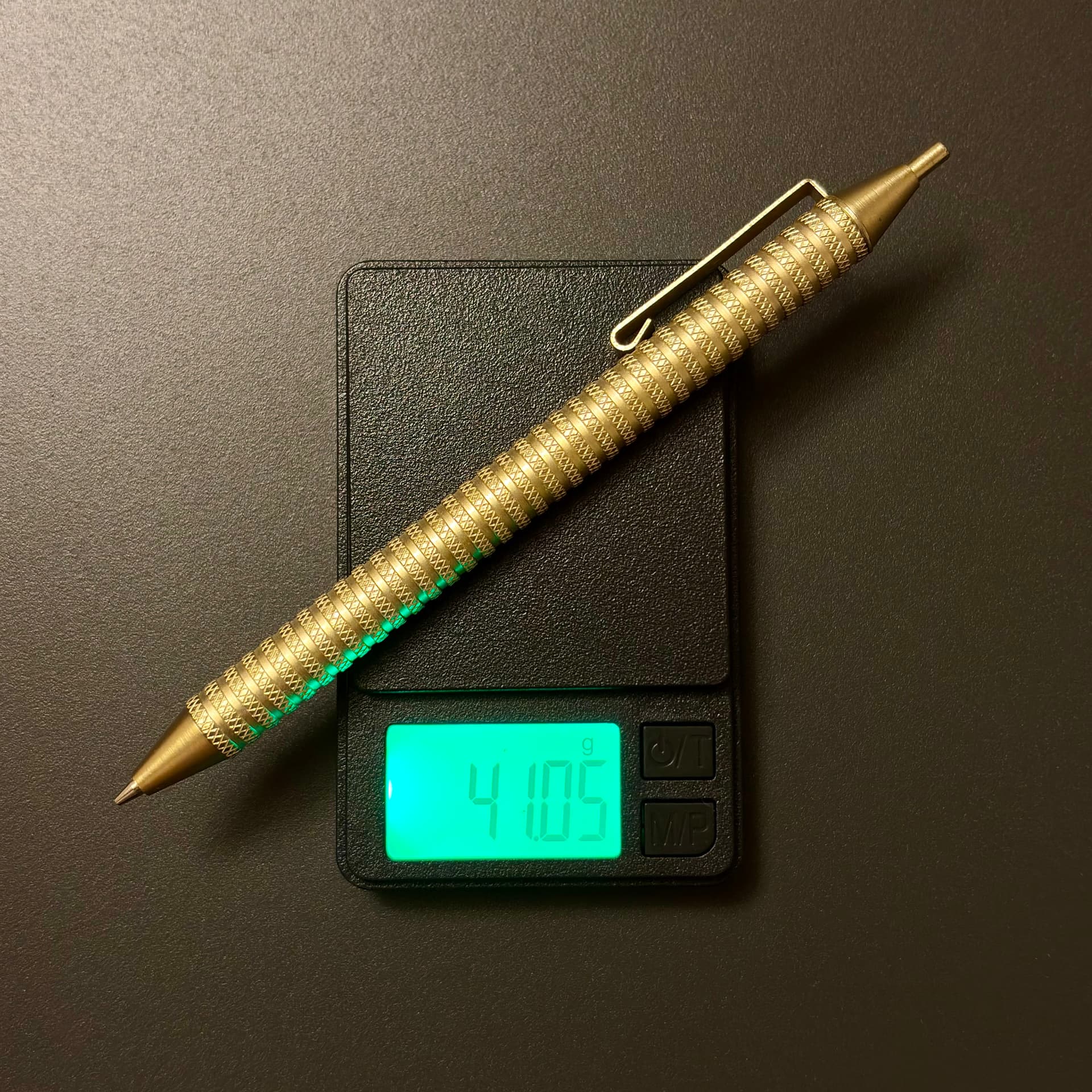
• Cog Pencil ‘Tube’ – a straight brass tube with interrupted bands of knurling running the entire length. The cone and button flange mirror each other symmetrically. This is the only Cog Pencil that comes with a clip, and thus, seems intended to live off the desk. Comes with a Schmidt 0.5 inside.
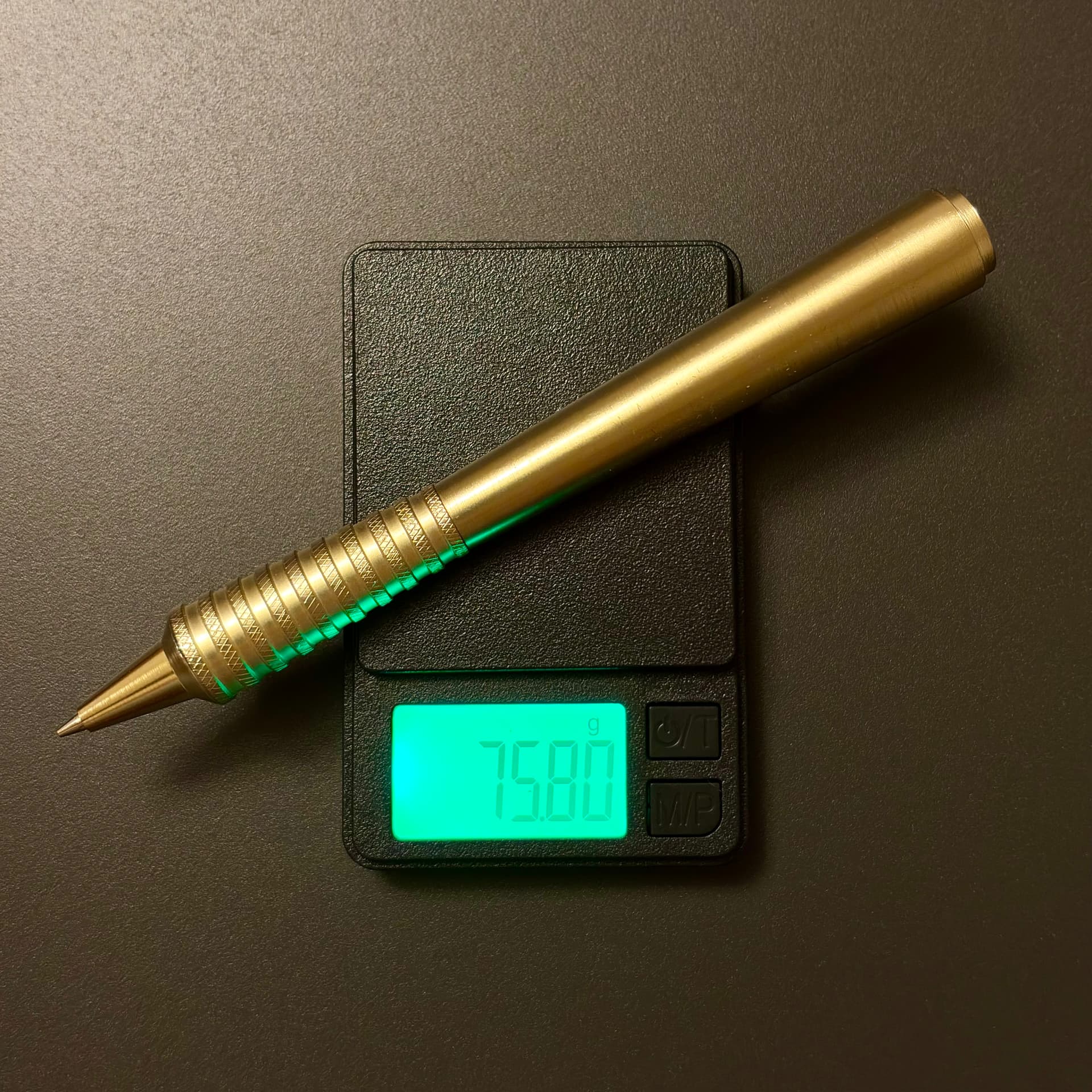
• Cog Pencil ‘Flare’ – an elongated hourglass design that narrows from both ends down to a tapered waist. Interrupted bands of knurling grace the grip area only. The recessed button at the back is kind of unique ergonomically. It is quite obviously meant to be stood on its tail, a desk bound pencil. Again, it’s a Schmidt 0.5 inside.
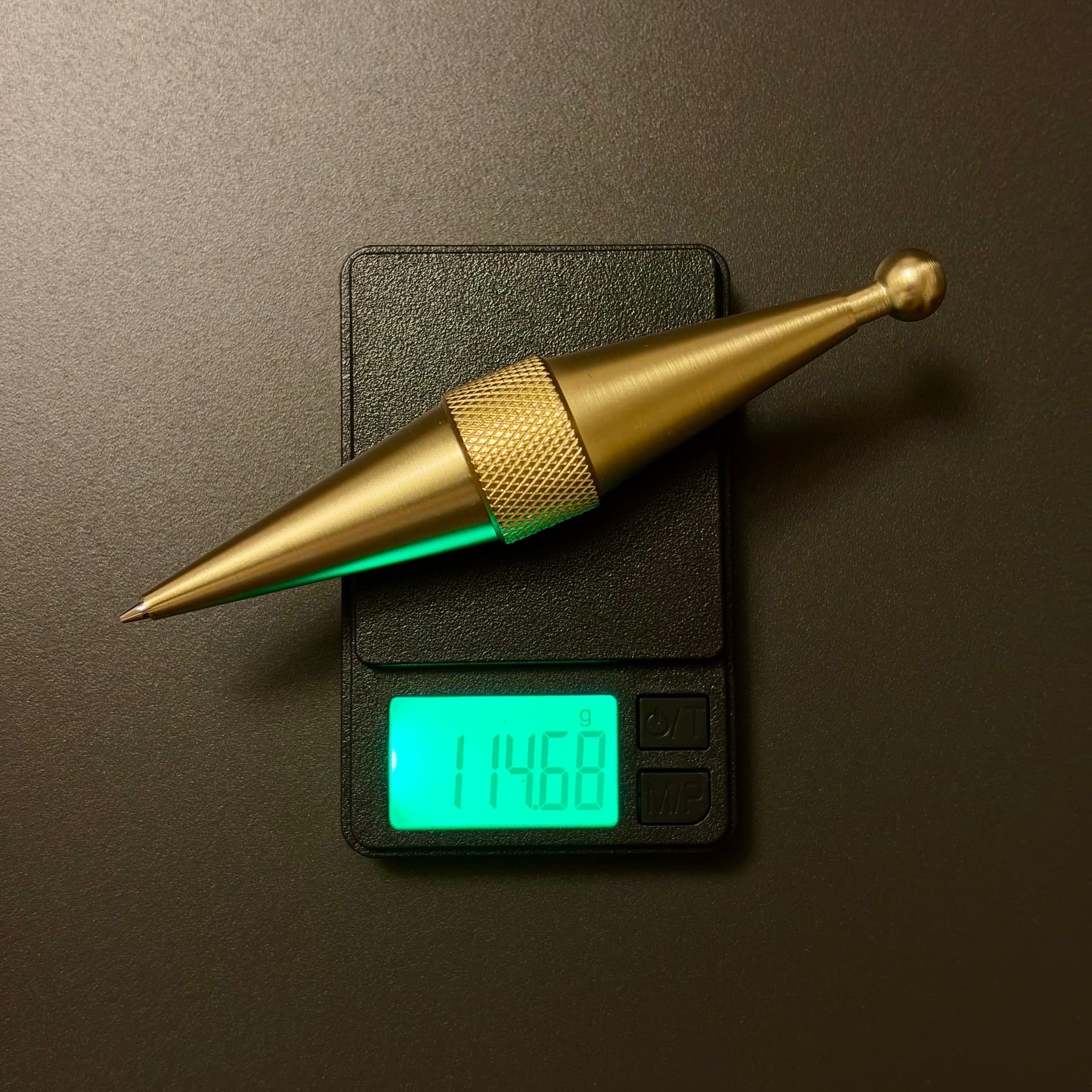
• Cog Pencil ‘Top’ – a stubby double conical design with a wide knurled band in the center, and a ball-tipped clicker at one end. This is a heavy object, but it feels really good in the hand. Confession time: I accidentally dropped it while positioning it for the camera and I was lucky it did not land on my foot. It DID destroy the tip of the Schmidt cartridge though - so now you know. I replaced it with a spare Schmidt 0.7, which I had wanted to do anyway.
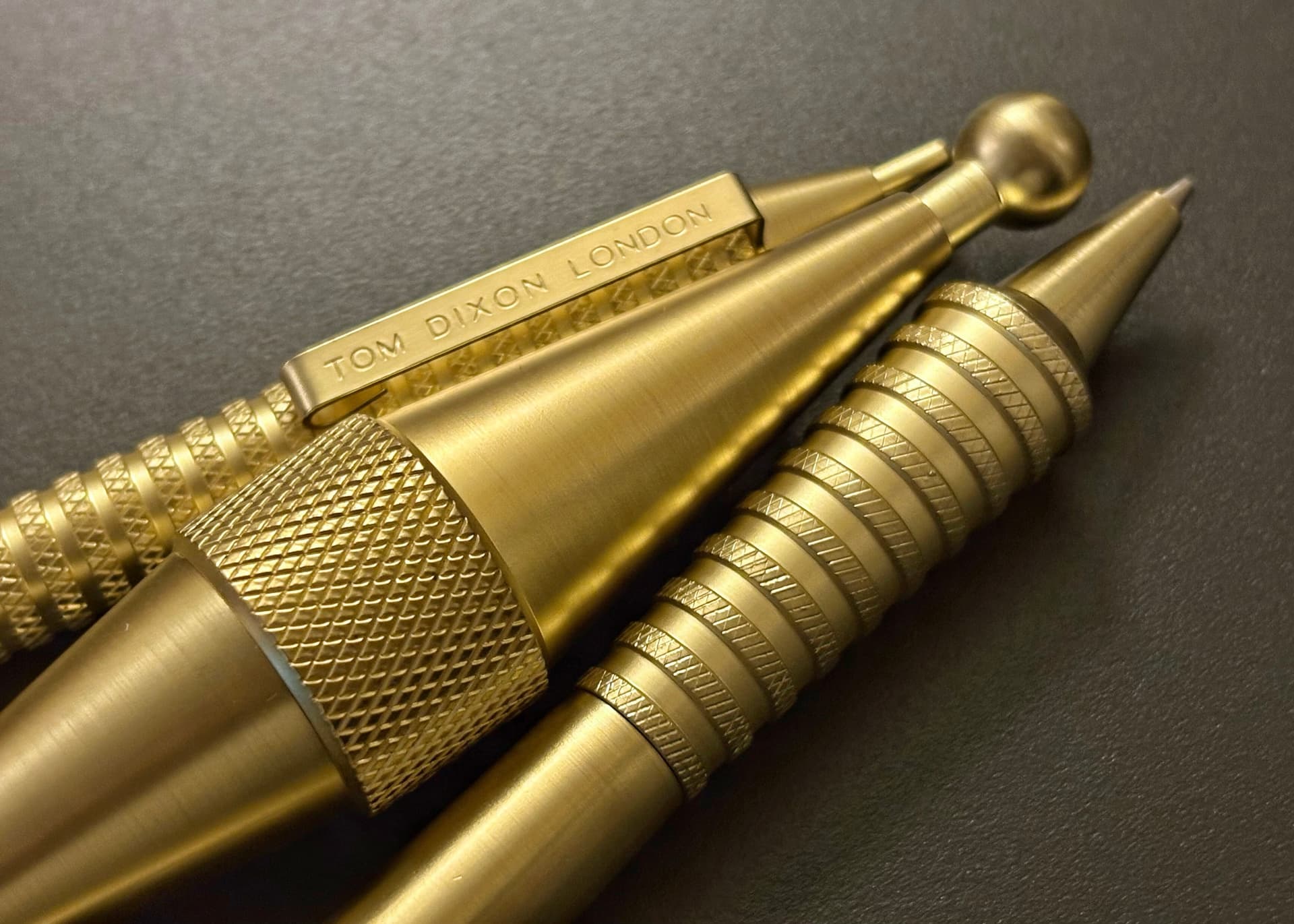
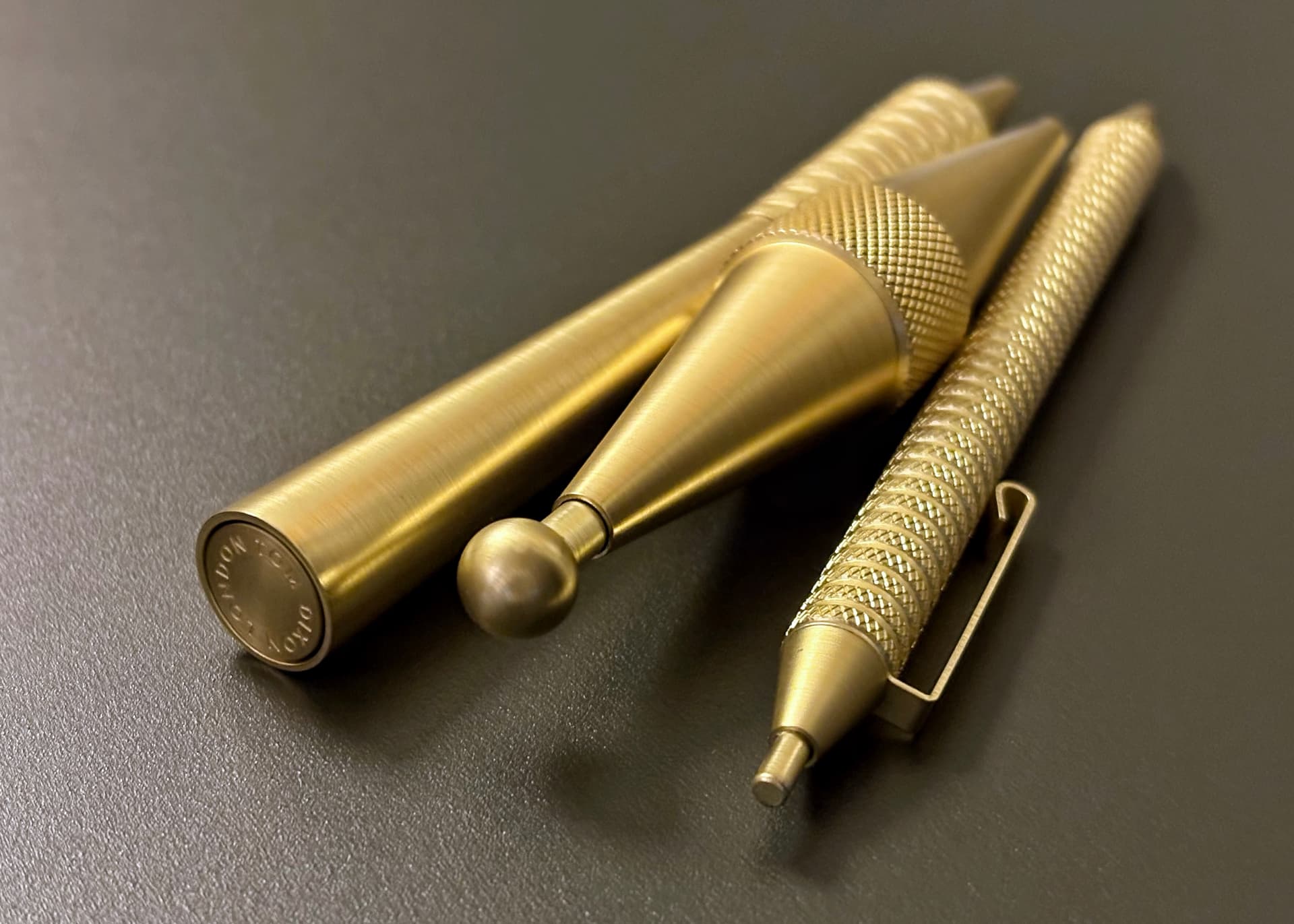
I’ve bemoaned the prevalence of Schmidt-powered pencil designs before. It feels like taking the easy way out, although I know, I know, the economies of scale work against smaller manufacturers who cannot afford to implement custom spec’d mechanisms. The exception for me is when the design is compelling, and this trio succeeds on several levels.
- The aesthetics: Tom Dixon has a way with ‘industrial chic’. There is a gruffness to the style of each pencil but also a sense of refinement in the execution.
- The quality of construction: these are all solid hunks of metal machined with precision. Aside from the Schmidt cartridge, there is zero plastic involved. Even the buttons and length adaptors are metal.
The one thing I did not buy was the Cog Pen. This was a desk only design without a clicker or twist mechanism. It rests in a block of brass on the table. That didn’t work for my needs.
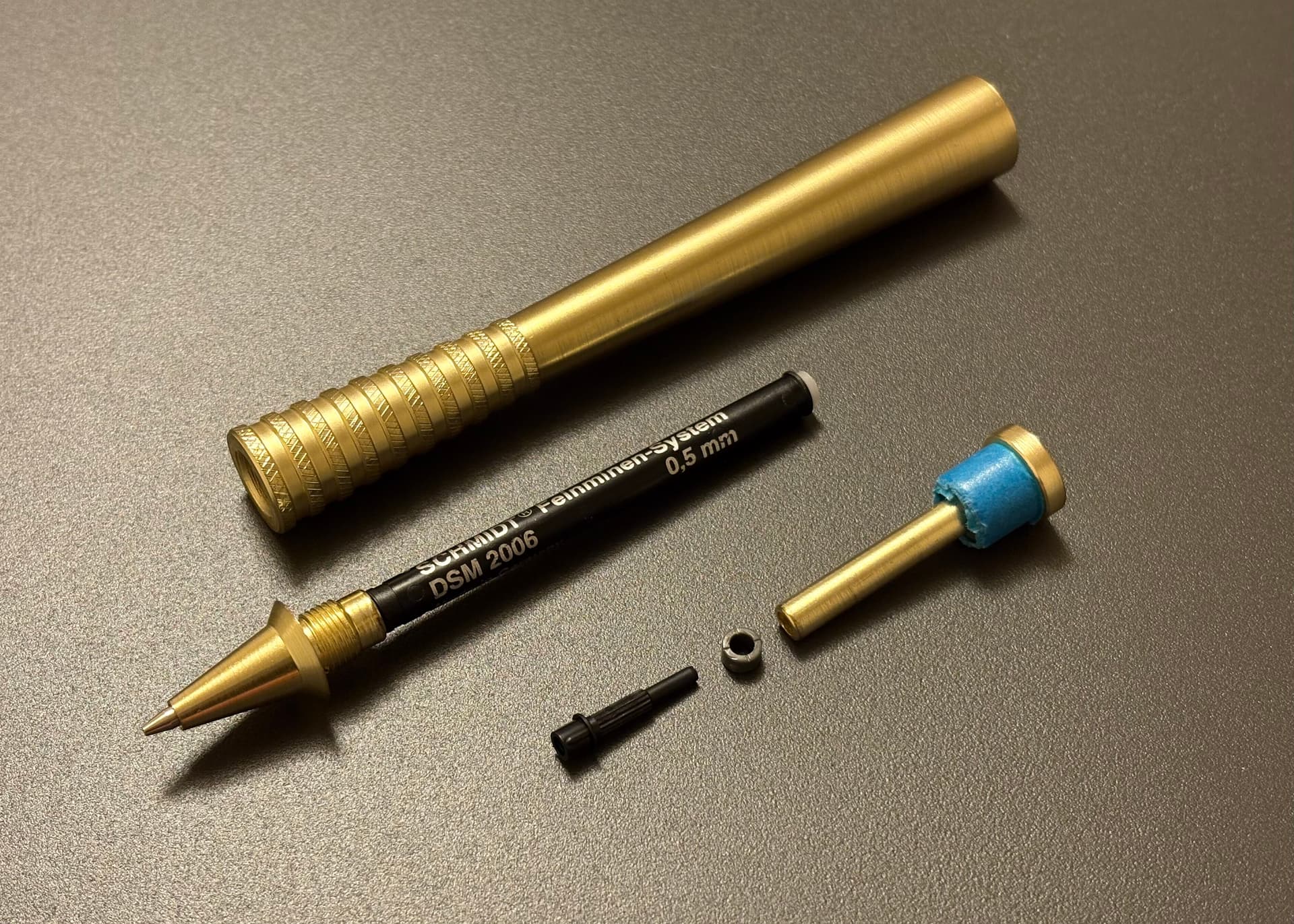
Now, about the ‘Flare’ pencil. The button is pretty big and has quite a bit of momentum when the pencil is shaken or stirred. First step: tape up the sides of the button to reduce the sound and movement.
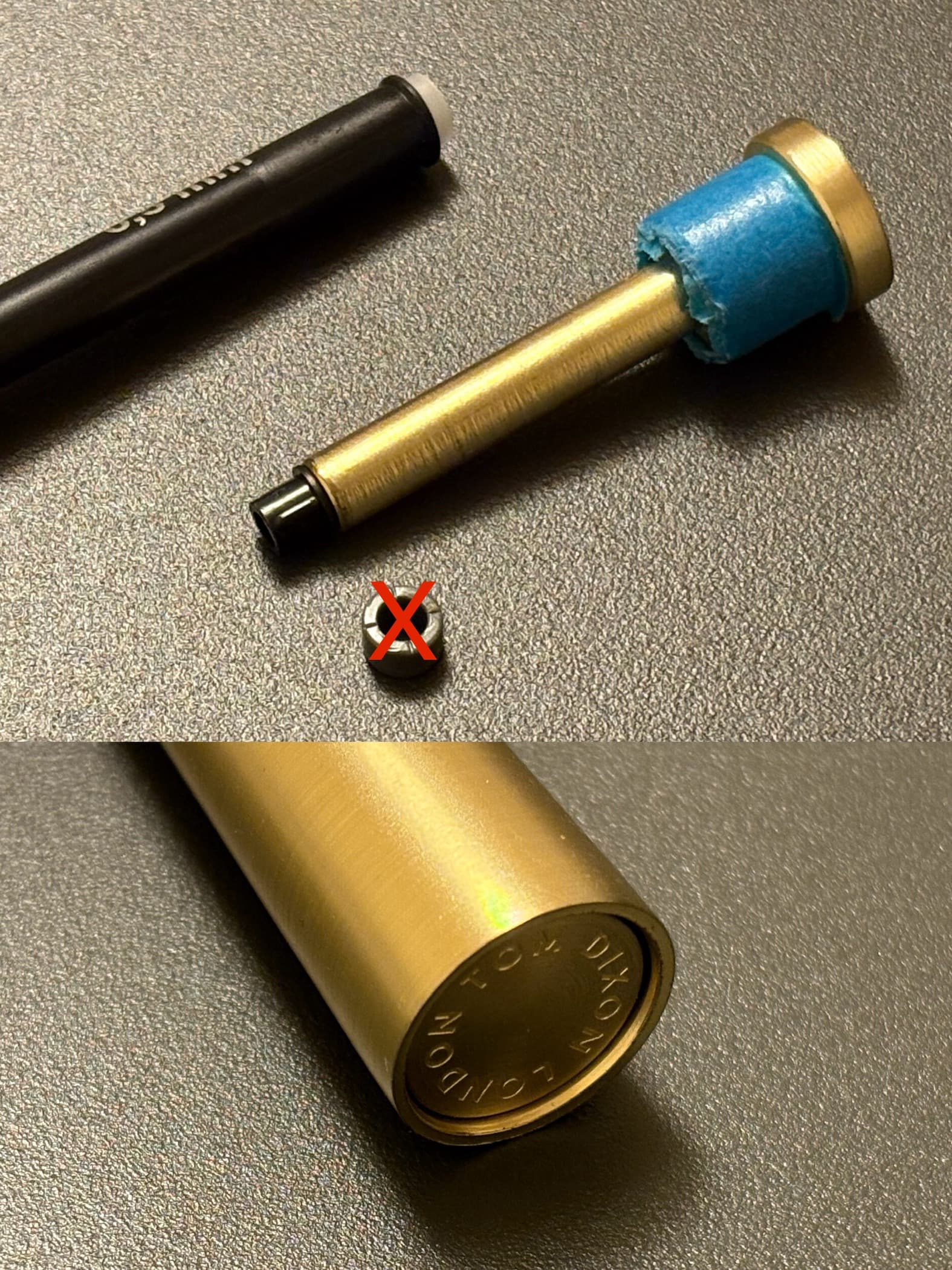
The original configuration had the huge button recessed about 2-3mm inside the body. This meant that my fingers always came into contact with the brass rim whenever I ‘reached in’ to press the button.
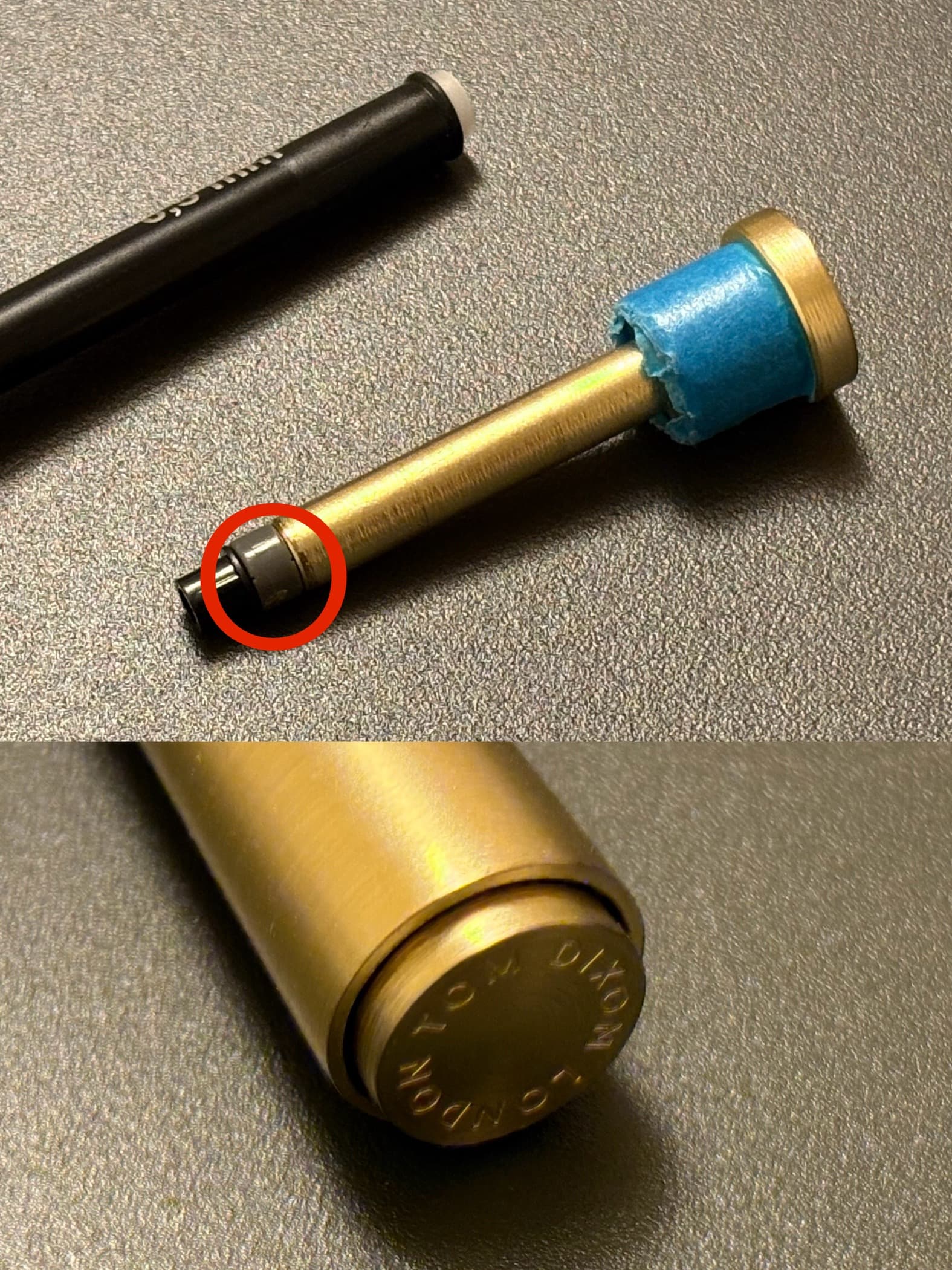
My solution is to add a short spacer to the Schmidt’s extension piece. This in turn causes the button to jut out past the bottom of the pencil by an equivalent amount. I find this to be more to my liking, but others may disagree. In any case, the mod is reversible.
Now, on to the challenge of finding a suitable brass pen with a comparable style and/or UK pedigree!