I have watched Knockology from afar and was advised to join by a dear friend so, here I am.
I am a thick-leadholder collector. I started collecting before the “addiction” began to spread, enjoying the luxury of a non-competitive market where everything was a bargain. Along the way, I made a few very good friends; some are still here, while others have moved on.
Like many, I fell in love with leadholders because of the industry I work in. Specifically, the 2mm leadholder the tool of choice for the architects out there.
It is much like craftsmen who take pride in their tools. The tool is more than just a means to an end, it is a part of you and who you are. It’s about how it fits in your hand and how it expresses your personality from the old joiners’ ivory-encrusted hand tools to simple but beautiful leadholders. These tools are an expression of the designer and an expression of design in their own right.
From the simplicity of a split piece of carefully crafted wood with a compression ring, to a machine-pressed and knurled body with a simple rubber gasket, to a spring-loaded automatic leadholder formed just right to sit in your hand.
There is a world of craftsmanship and creative engineering behind this simple but elegant tool. It has been used to breathe life into some of the world’s most beautiful and significant achievements from the first moon landing to the most prestigious architectural designs. The simple leadholder helps open the creative’s mind.
My first love is design, it’s what I live for, no matter how small or large the project. Being creative and being around creativity is my passion, which is why I fell in love with this simple tool that has defined so much of the world around us.
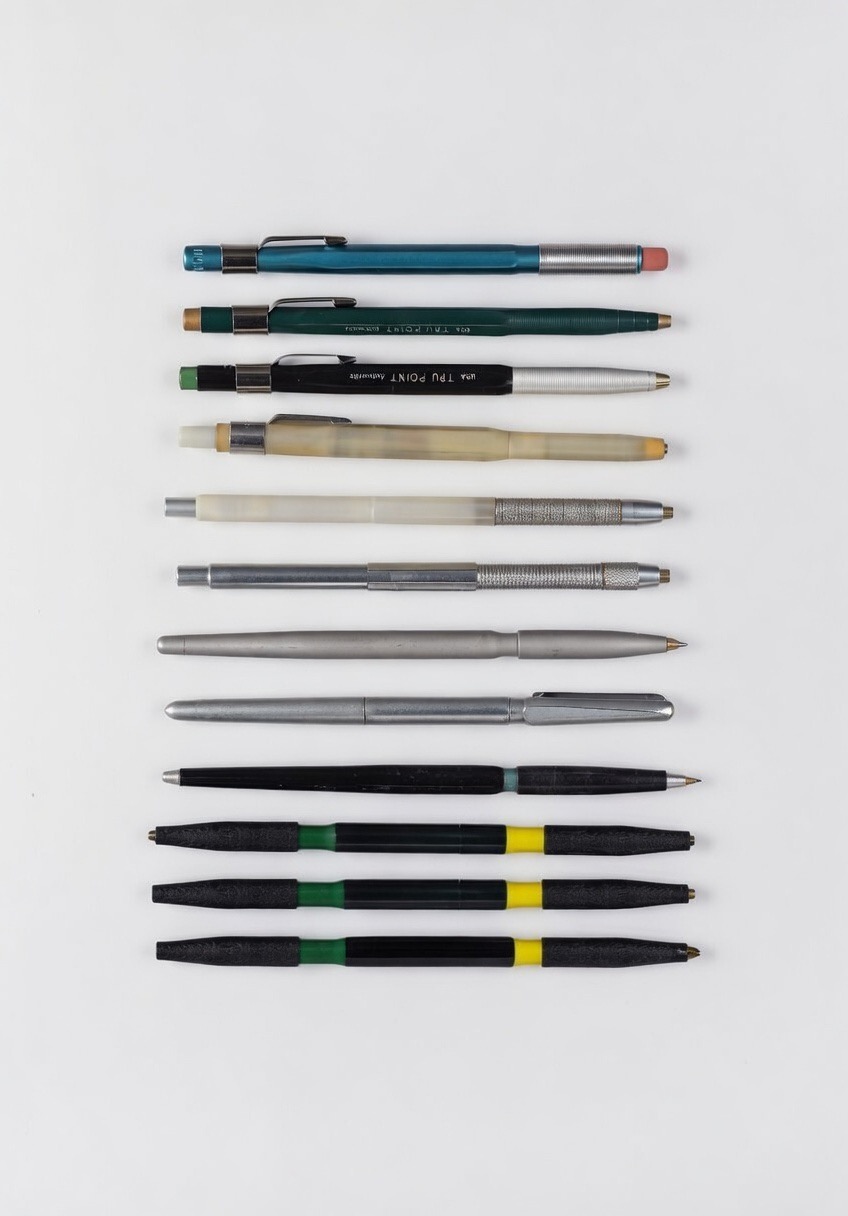
Yes, they all originated from the Tru-point factory. There are two brothers, one of whom inherited the factory years ago. One of them went through the old inventory and started selling the old stock over a number of years. A few very rare pieces came up, such as prototypes and items that never really took off.
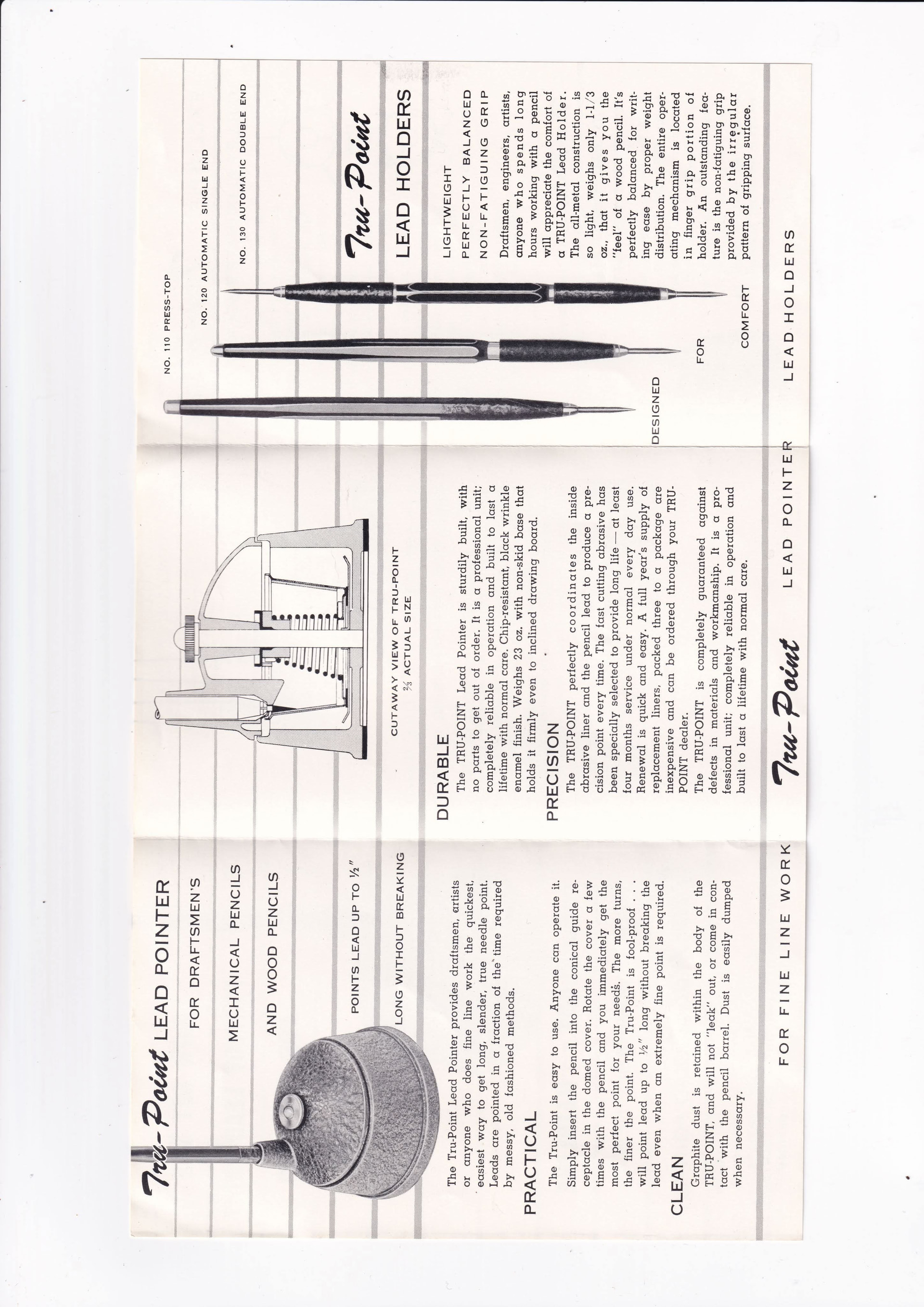
The single and double-ended black leadholders were to be production items; they may have briefly seen the market, although it’s not something I have a definitive answer to only the marketing leaflet that was sent with them.
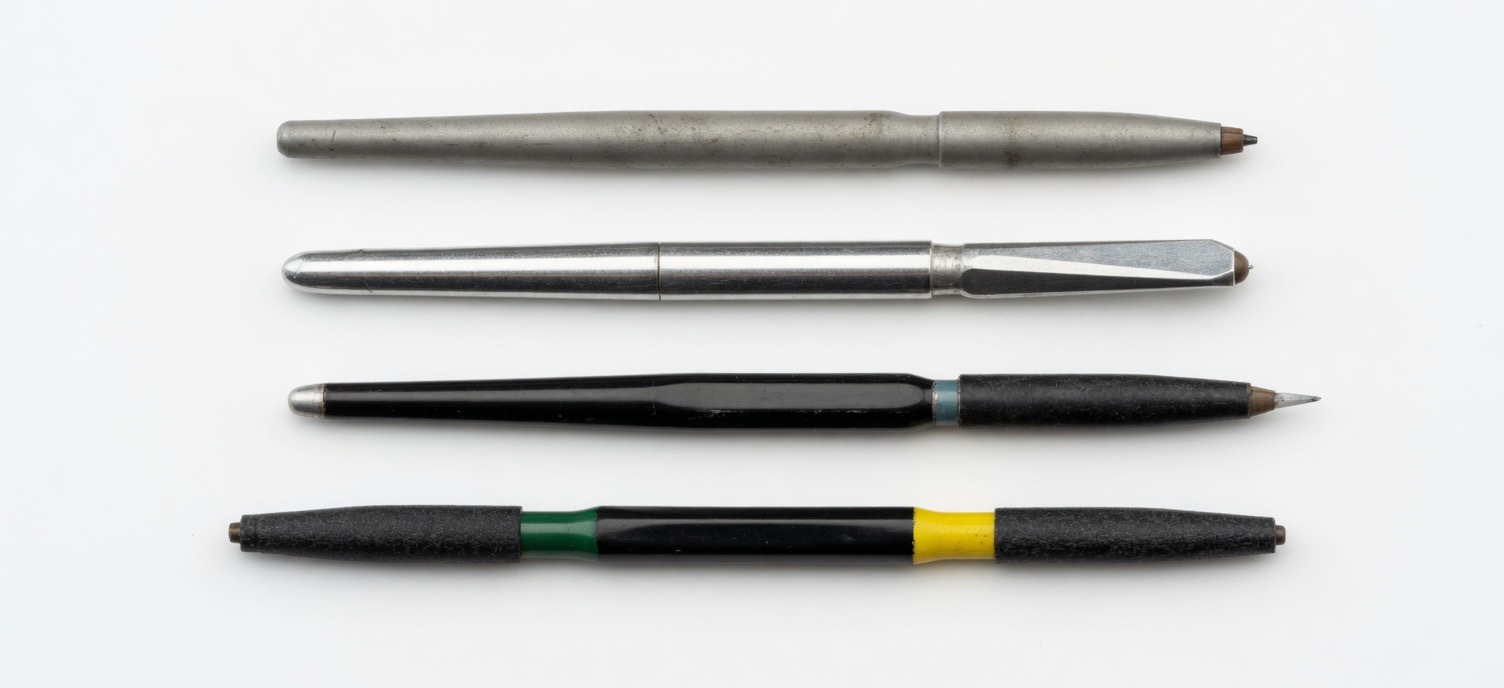
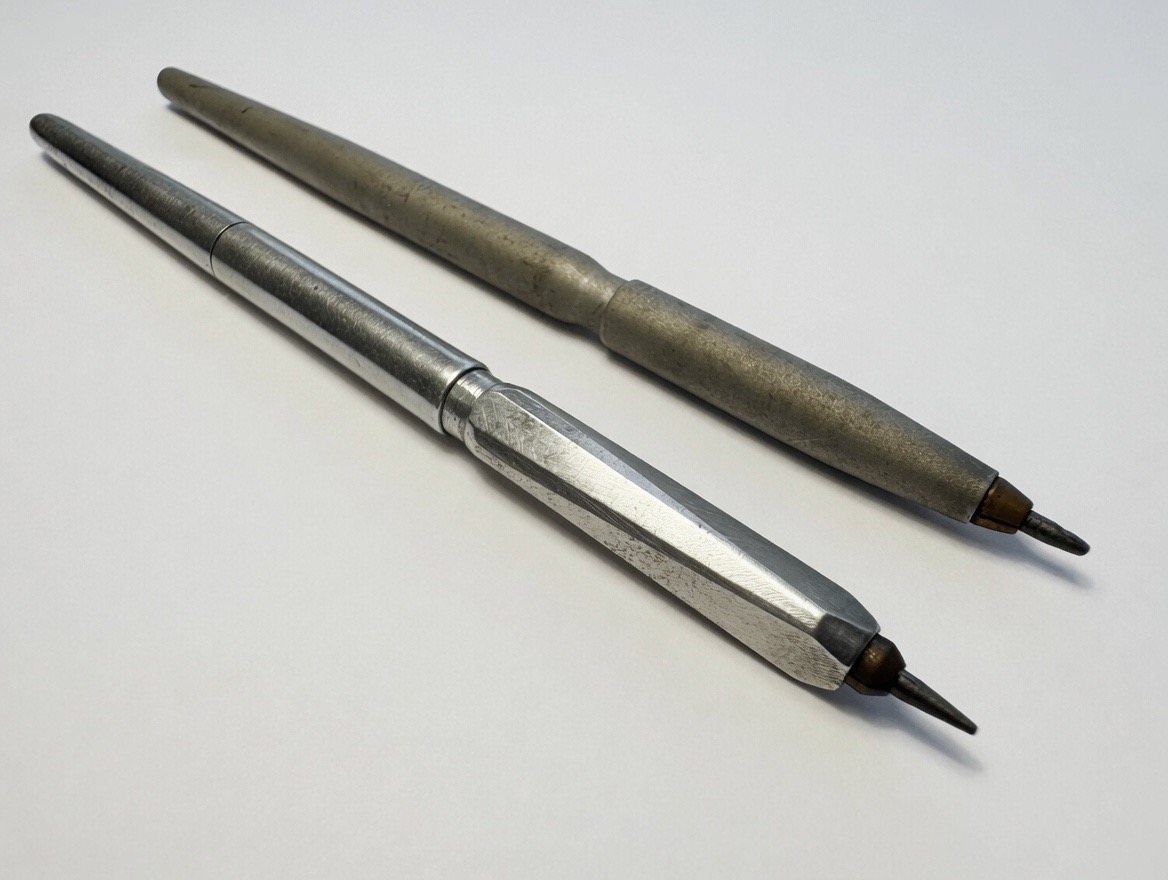
The aluminum and plastic versions are prototype pieces Tru-Point experiments. These never made it beyond the factory floor; they are raw, and you can clearly see the machining marks.
The one at the top is the prototype of the Tru-Point we love today. I love Tru-Points for their simplicity: a single refined grip and barrel, elegantly formed. There are many leadholders out there, but this was a very well-crafted and simple design. It was an evolutionary process that led the factory to the product we know. I can only imagine, cost, refinement, and market response led to the leadholder we all know and love.
Unfortunately, companies like Tru-Point would not have been able to compete with the likes of A.W. Faber and Staedtler, their massive factory machines and low-cost units effectively killed off many of the marvels we collect today.
These are “bits and bobs” of proto/experimental things I have…be nice to have the guts of the two colored barrel versions…the prodiuction innards do not work..yes, that is a 110..(4th from top)
This is a clear image, but it’s missing the 110. It’s a shame, but that is the nature of collecting. I will have to live with the knowledge that there is still one out there.
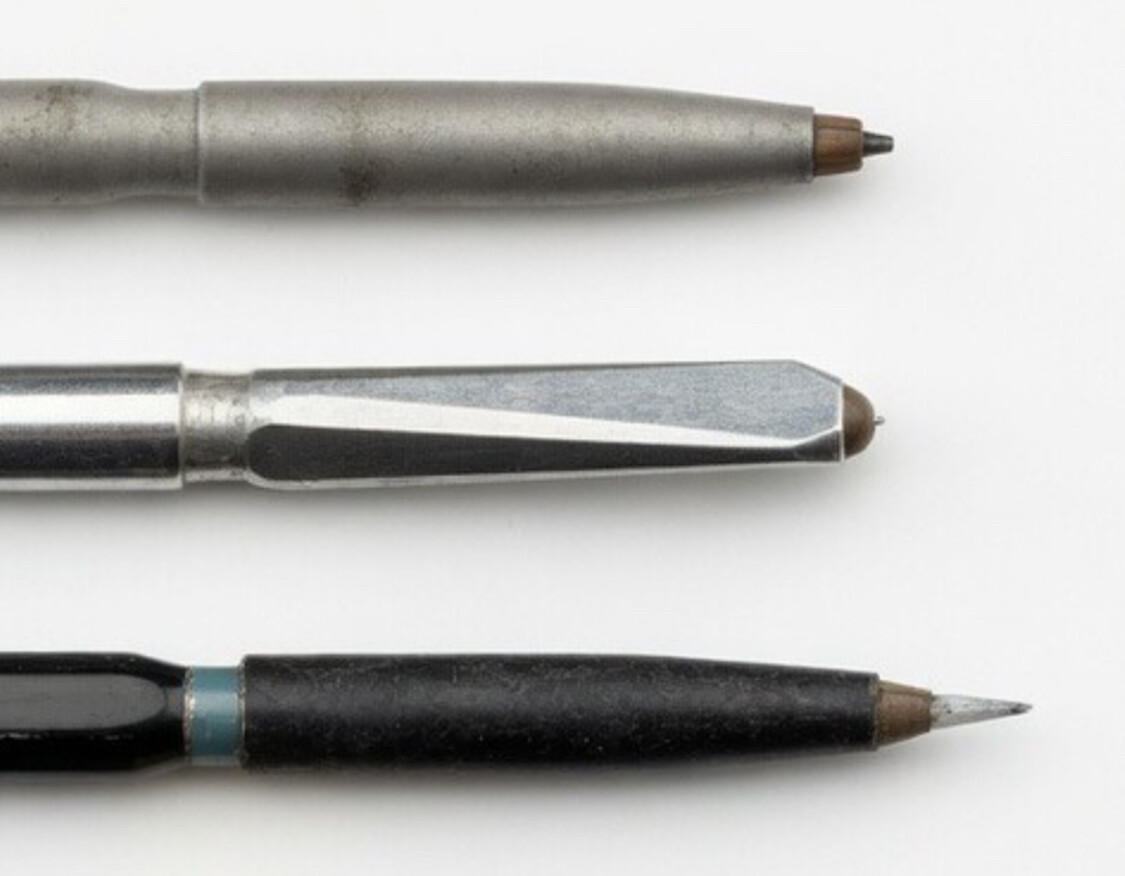
The image was not cleaned up properly, the one you are questioning is the second from the top. All three use the grip as the chuck-release mechanism for dropping the lead. They are part of the same family of lead holders.
Now I am even more curious. Is this a gem-style faceted grip? And how can it have a round clutch like that? Is that 0.5mm lead sticking out? My mind is spinning.
Does this image help? Yes, it has a faceted grip, which is rather unusual. The chuck is also unique, as it features a non-typical taper. All of these lead holders are designed for 2mm leads.
Wow! Love it! The fabrication challenge is really extreme and calls to mind the difficulties @lindsay.wilson.88 had with reproducing the grip shape of the FC Locktite 9603 using metal instead of plastic.
It appears to be machined bar stock, not cast. At the time of production, CNC milling was not available so this would have been a very manual production process with jigs and grinding disks, just like making a gemstone, I would guess. @Thomas, as a jeweler, can you comment on this?
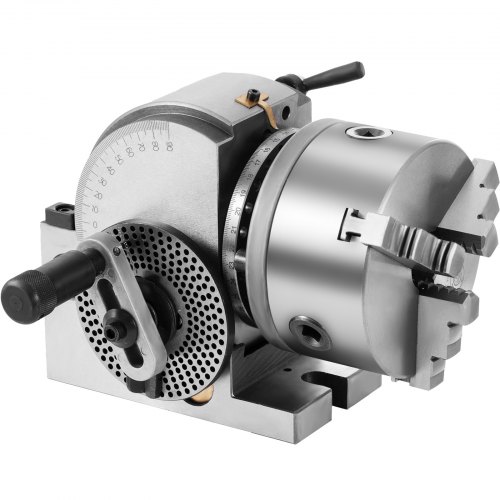
What you’ll find is that an old-school dividing head on a manual milling machine was the primary tool for creating parts like this. There is actually little need for CNC in this context; while CNC machines can handle extremely complex geometries, the fundamental indexing techniques have remained virtually unchanged for the past century.
Although the link shows a modern example of a dividing head, shops in the 1950s might have used smaller milling machines more appropriate for the specific task at hand. Regardless of the machine’s size, the principles of operation remain identical. There would be little issue forming a precision grip like this on a manual mill using this setup.