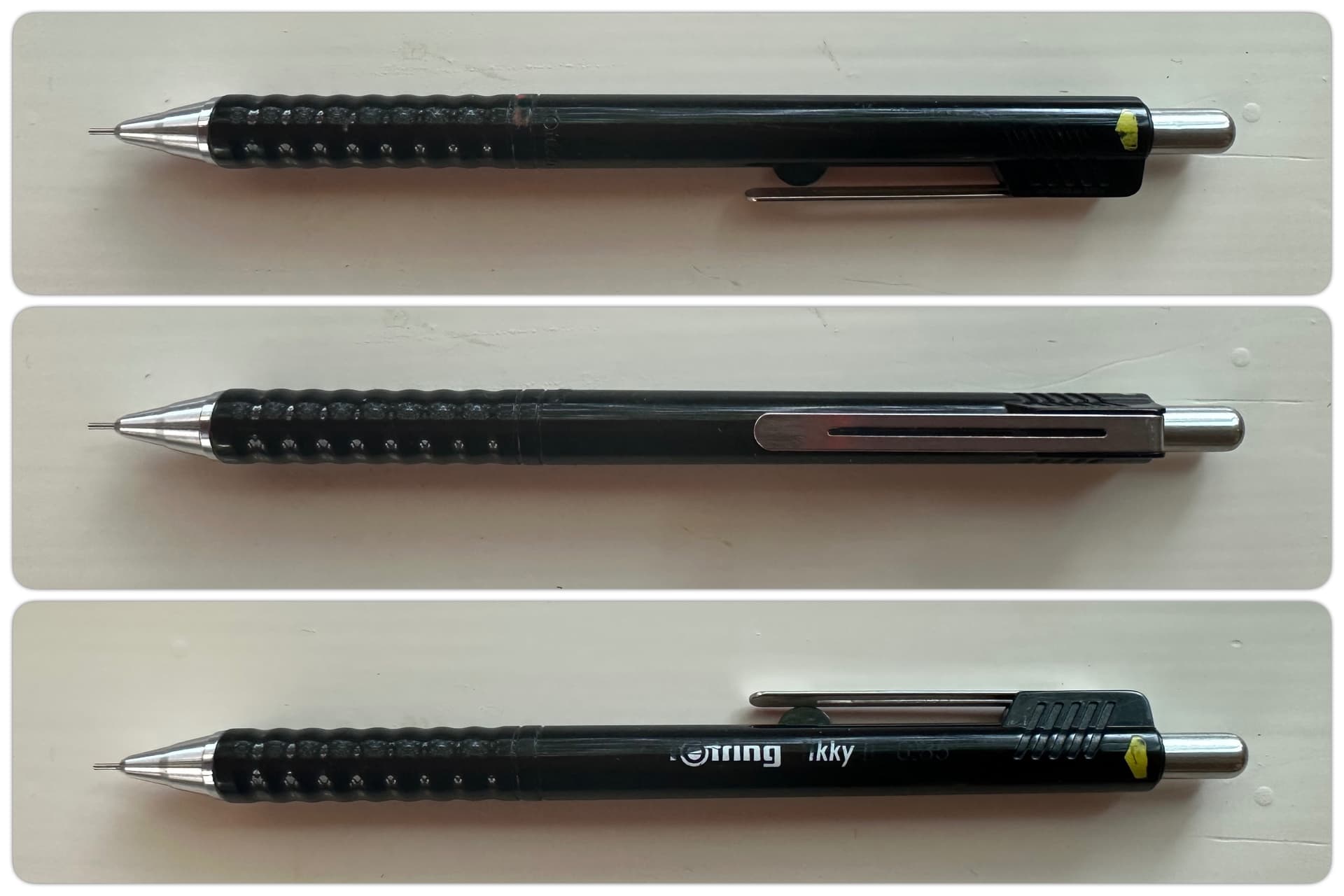
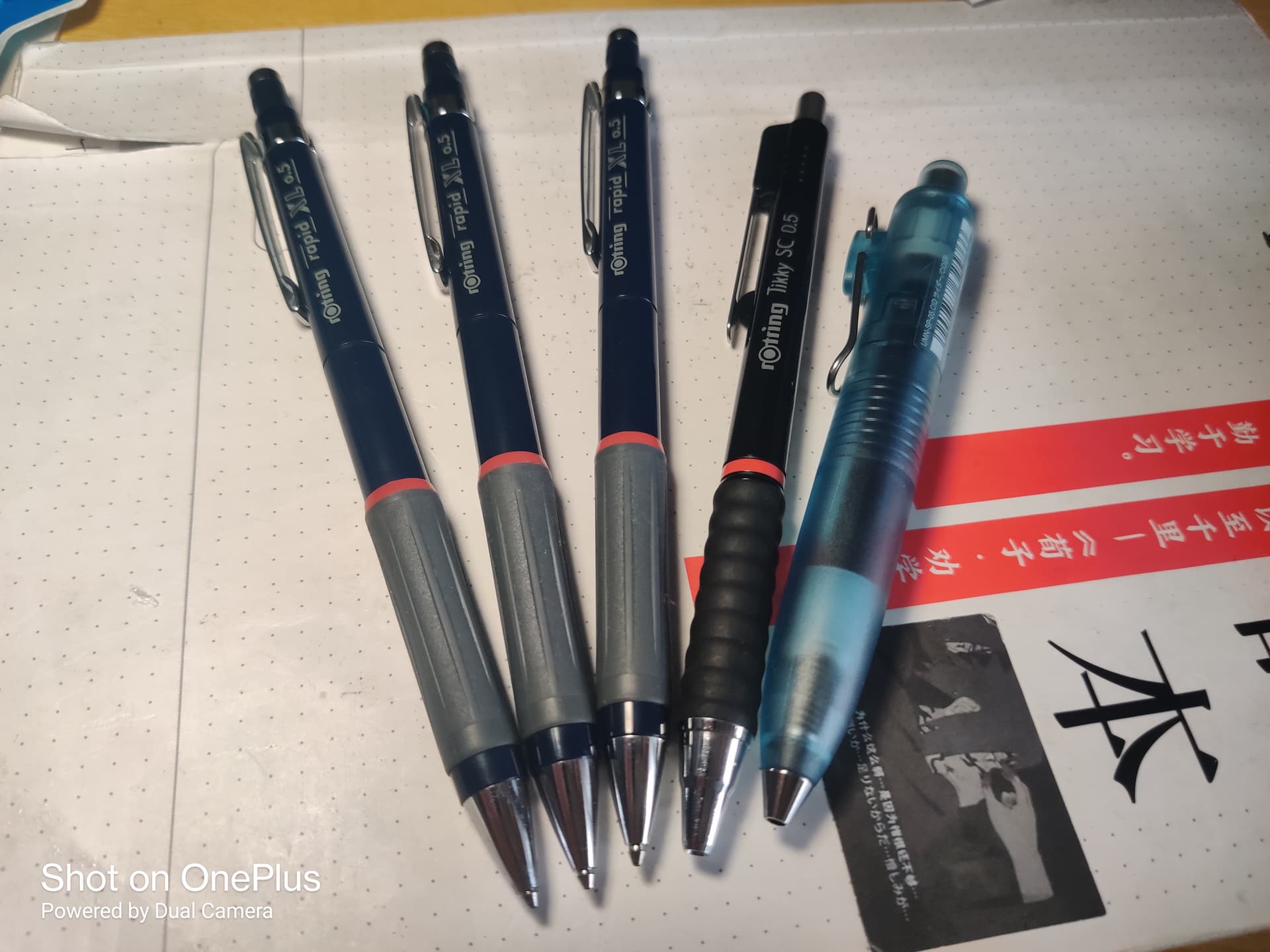
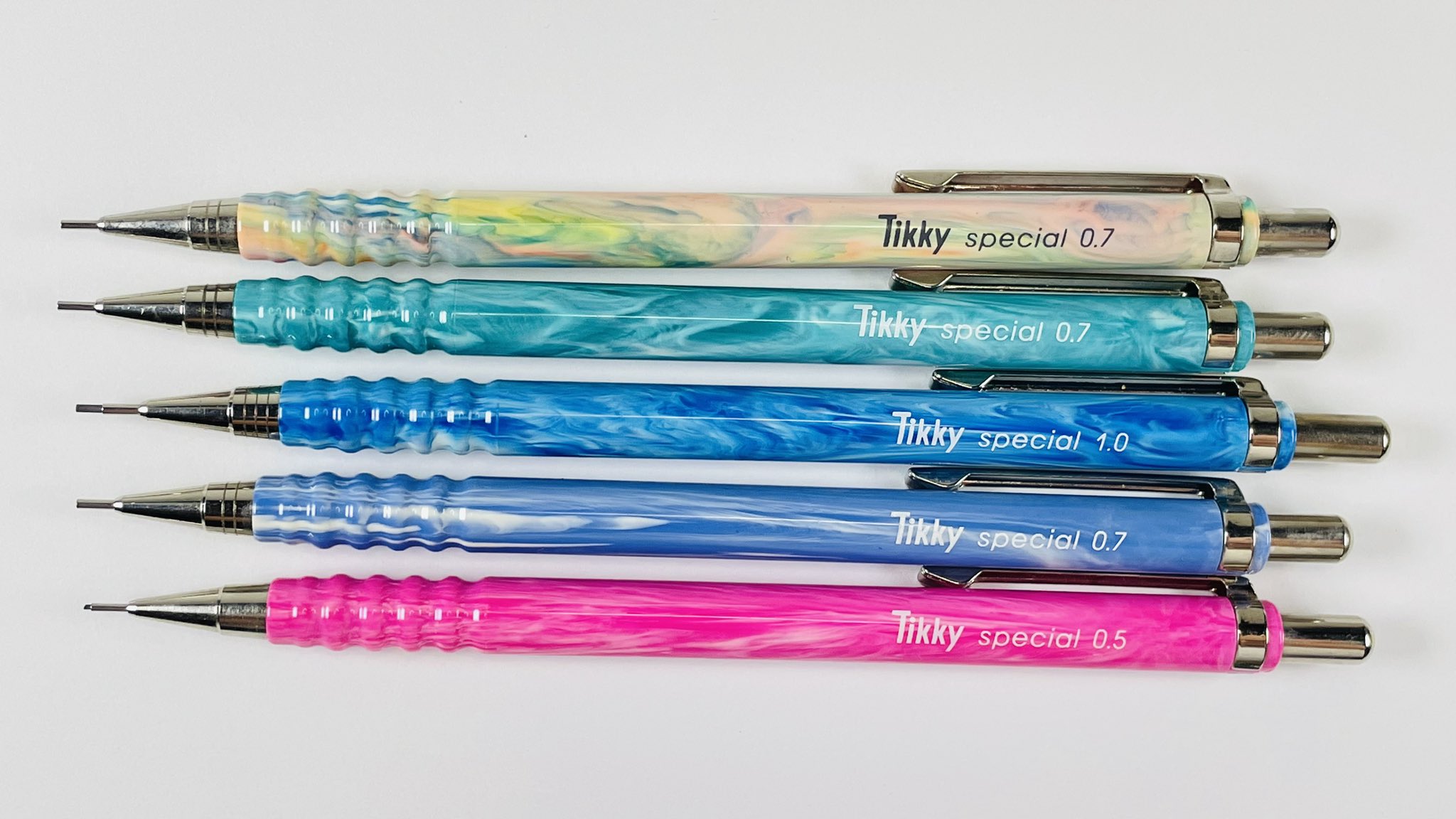
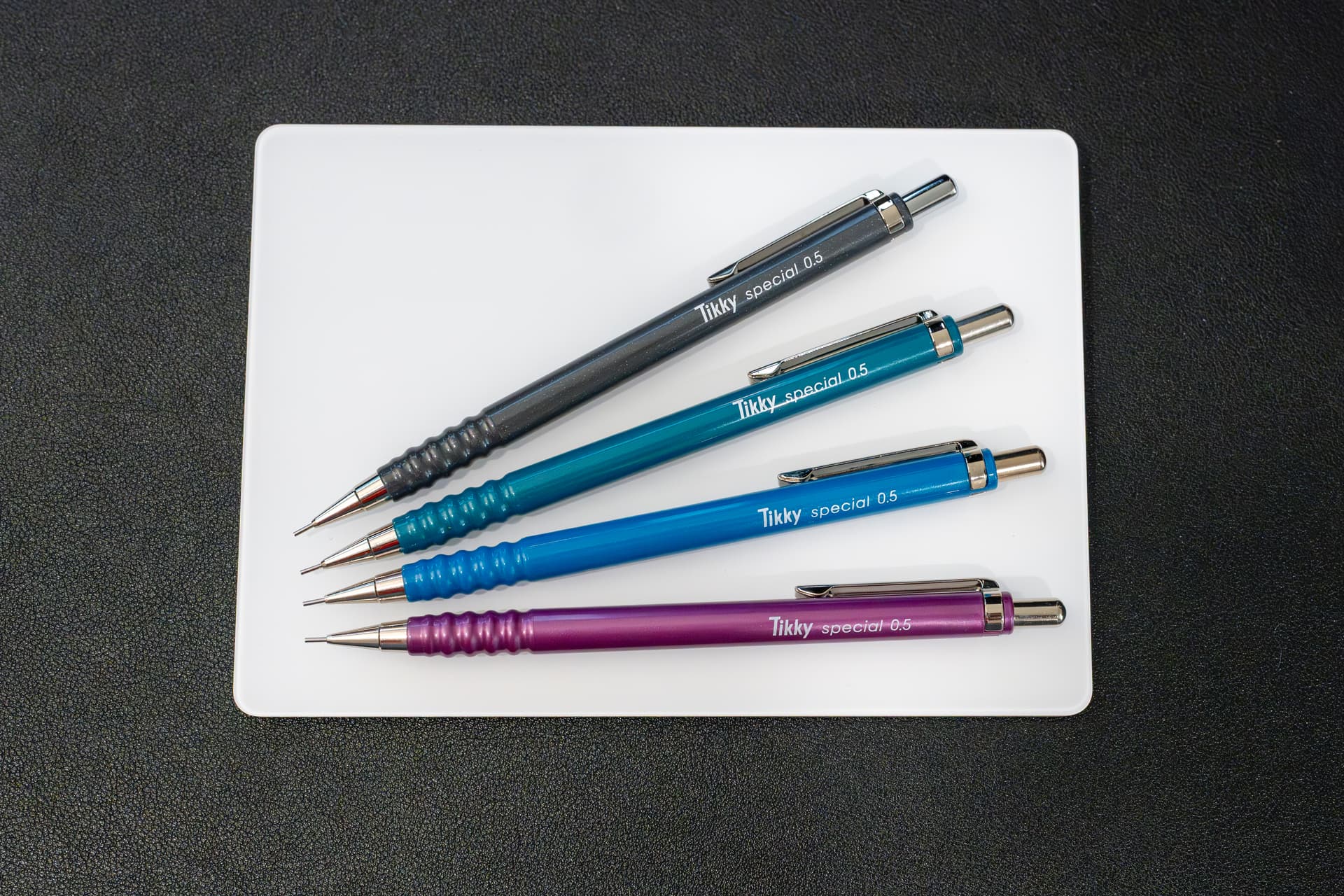
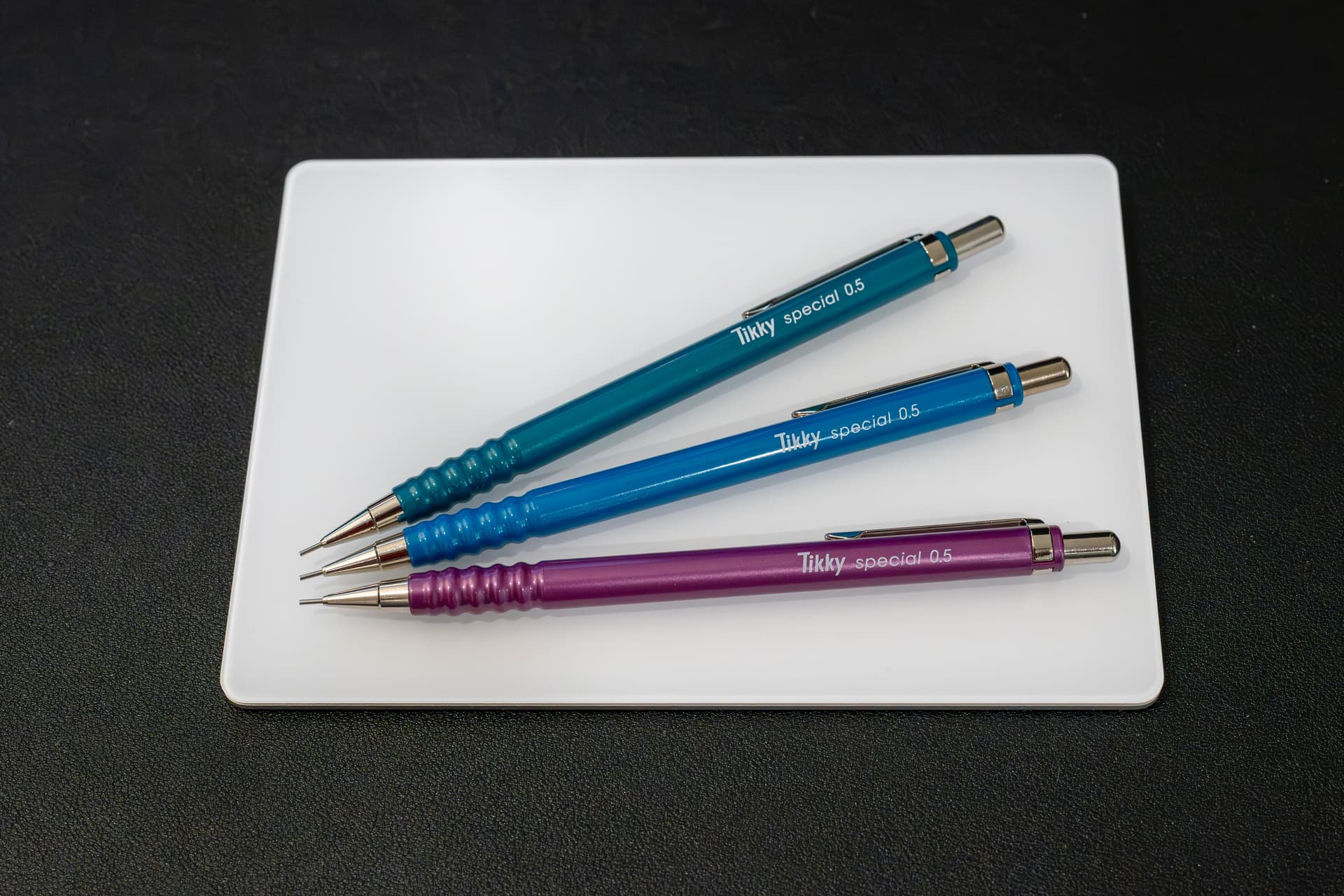
I have a few Tikky specials in pearlescent colors (mid-1990s?). (I believe the more common “mica grey” is also part of the range). And I’m certain I’ve seen a pearlescent red Tikky special somewhere online.
Does anyone have info about the pearlescent Tikky specials or have other colors?
I have a question about the Rotring 400, the “rebranded” double push. I just received mine but I have 2 things I noticed that may or may not be totally normal. I’d require the more experienced folks to let me know. I know it’s an old pencil so it may not work properly as if it was brand new (age-wise) but I’d still like to know if I’m panicking over nothing or not. For context the only retractable tip pencil I’ve used so far is the Pentel GraphGear 1000
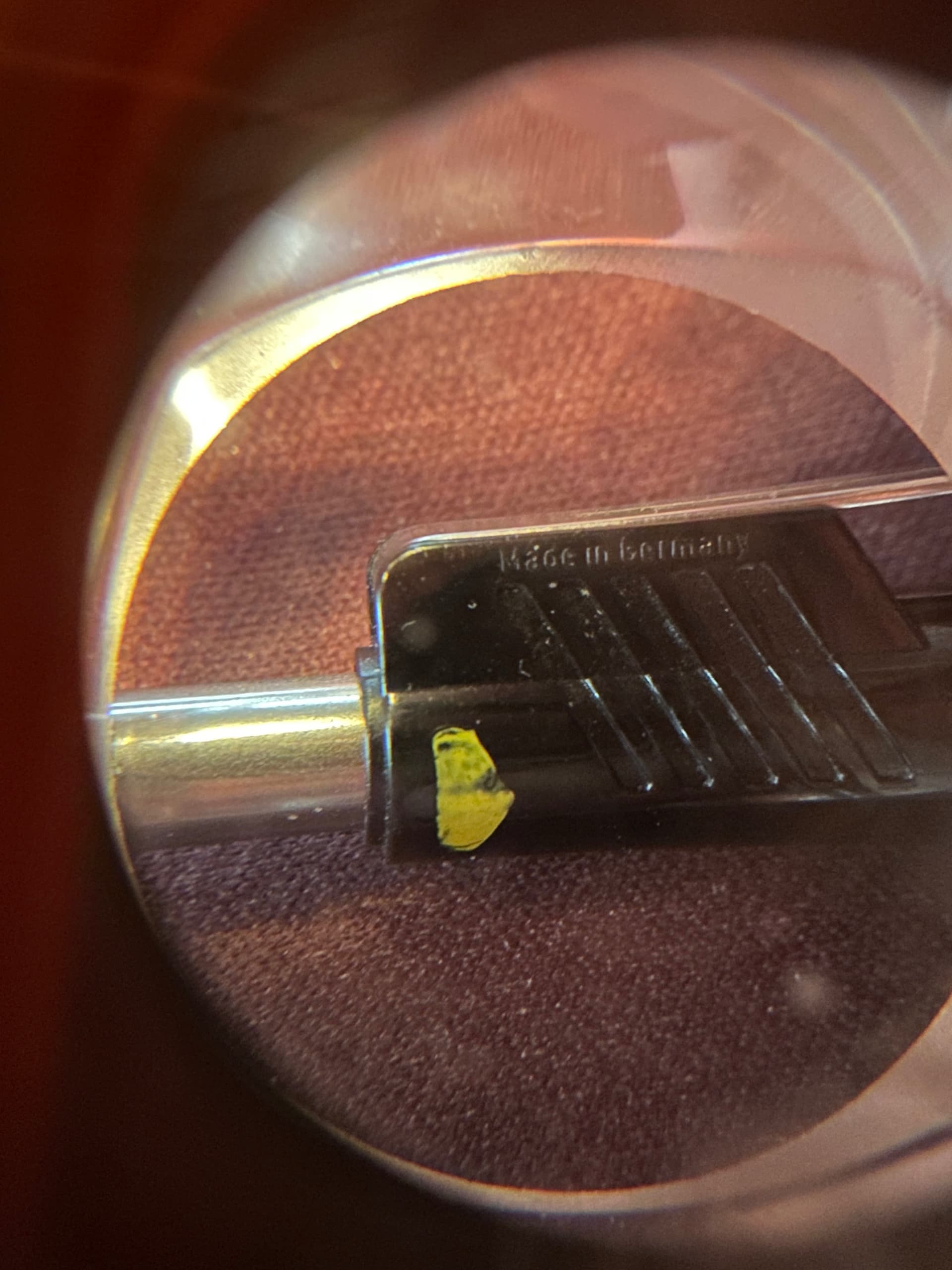
Here’s what I noticed on my new Rotring 400. It’s never been used as far as I was told, and looking at it that seems to be the case as it appears to be in perfect condition:
The lead advancement is fine, however pressing the internal barrel down requires less force than pressing the end cap to advance the lead. This leads to the internal barrel moving down and back up little each time I advance the lead. I’ve checked some of @Pdunc67‘s videos and his models seem to behave the same way, but I’m still concerned lol. It works just fine imho, but I’d have expected the opposite, where you’d need more pressure to push the internal barrel out than to advance the lead. Just like on the Pentel GG1000, so the barrel wouldn’t move unnecessarily when you knock the pencil to push more lead out
From a retracted tip position, when I press the end cap to push the barrel out it feels scratchy. I know there are 2 different metal surfaces touching each other creating friction, but it feels wrong to me, as if this isn’t supposed to feel like this. If I press the side button a little while I extend the internal barrel, it feels nice and smooth and still clicks into place
So can anyone please confirm whether this is normal or not?
Hey, thanks for the callout! To answer both (My opinion only but would love to hear from some other 400 owners here)
The barrel shifting slightly on lead advance — that’s normal on the 400 double push. The two mechanisms (barrel extend vs. lead advance) run on separate springs tuned to different tensions, so it’s expected that one takes less force than the other.
The scratchy feel on extension that smooths out with a light side-button press — that’s most likely just dried/thin factory lube from age, since these are old NOS pencils even when unused. Metal-on-metal contact during that snap-extension is exactly where you’d notice it. It’ll often loosen up with some use, or a tiny drop of appropriate lubricant can help if it doesn’t. (Tip: graphite dust is a great lubricant that wont gum up)
I have a force gauge and measured the knock vs. extending the tip:
Extend Tip took 0.39kg of force
Knock to advance took 0.82kg of force
Nothing here sounds like a defect to me — enjoy the pencil!
How would you recommend to apply graphite dust? I tried adding some with a q-tip I rubbed over graphite, and I tried gently rubbing a graphite lead itself between the metal parts. I did help a little but I believe it can be improved. I’m not sure how else I could do it tho
That sounds about like how I would do it. Maybe if you have a Jewlers screwdriver you can use it like a teeny tiny spoon to dump some in places? It shouldn’t take much.
I don’t have such tools. I took a thicker piece of paper, cut it into a narrow stripe, scribbled with a 4B pencil on its 2 sides and gently rubbed it in the gap between the lead barrel and the wider cylinder that the internal clip can hold onto to keep the barrel extended. I was snug so it should have spread some of the graphite dust around. I did the same with this inner metal piece that’s moved by the side button. It helped a little but honestly not by much. The metal still feels pretty scratchy. The barrel can stop halfway sometimes if I don’t press it strongly enough to fully extend it. Not the end of the world obviously but I’d like if this wasn’t the case. I’m really spoiled by the super smooth mechanism of the GraphGear 1000
If I were to use a liquid lubricant of some sort, what should I use, and what to avoid?
I’d avoid liquid lubricants here — general oils (WD-40, sewing machine oil, etc.) attract graphite and paper dust and will gum up a mechanism like this over time, especially since it’s already collecting graphite from your dust treatment.
If you want more than graphite dust, a dry PTFE/graphite powder lubricant (sold for door locks/hinges) is a safer bet — it’s a true dry film, not an oil, so it won’t attract debris the same way. Apply sparingly with a toothpick or folded paper, same as you did with the pencil shavings.
I’d hold off on anything liquid, including “dry” spray lubricants that leave a wet residue before curing — test on a scrap piece first if you go that route.
Maybe it needs to be “broken in” - after a lot (a whole lot) of cycles, it may also wear down whatever is causing the issue?