suggest me best mechanical pencil for sketching thank you
1 Like
What kind of sketching do you mean? Classical academic drawing, or more modern illustration‑style sketches?
For me, the nib thickness differs between those two styles and is closely tied to how you normally wield the pencil. Could I see some of your sketch work? That way I can give more accurate feedback.
1 Like
What is your price range? I like to use a simple 2mm holder like a rOtring 300 or a Staedtler Mars Technico - both are easy to find, made well(ish) and are affordable to maybe carry 2 - one w/ hard lead and one with soft.
Plus they have built in sharpeners so it’s one less thing to carry. And, the lead can retract fully inside making it pocket/bag/art case safe
If you wanted to splurge a little you could always dip into vintage pieces.

5 Likes
I’m thinking more along the modern illustration-style sketches.
i’m looking to keep it affordable, so something like the rOtring 300 or Mars Technico sounds perfect.
2 Likes
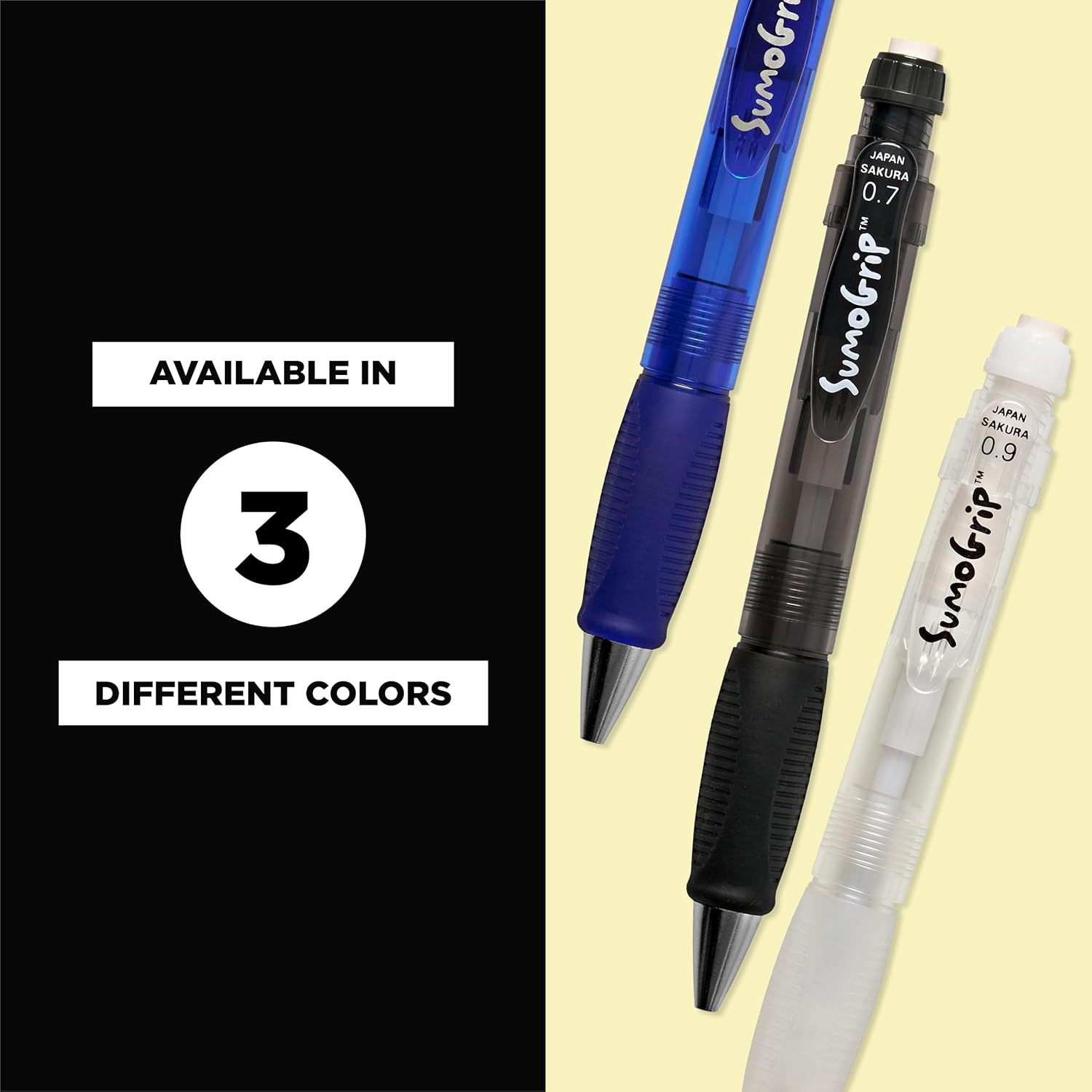
My friend, a professional artist, uses these. If you use lead holders, you might as well use a high-quality wooden pencil, since they usually have better leads.
5 Likes
I’m not an artist but I figure the appeal to a holder and not a pencil is ease of sharpening or lack thereof.
2 Likes
Pentel Sharp P200 set (0.3, 0.5, 0.7, 0.9) if you like tappered grip
Pilot S3 set, if you prefer wider grip
1 Like
First off, there isn’t a single “best” mechanical pencil on the market. But like choosing a dinner or a partner, you’ll eventually find one that feels just right for you.
Today is also my first Seriously Post at 2026, so I’m tidying up the drawer again. The new MPs I got last December still sits unfiled—New Year’s chaos, right? (I was drunk with my family for two days.)
I’ve taught sketching before, so I’m happy to give you a serious answer that hopefully helps.
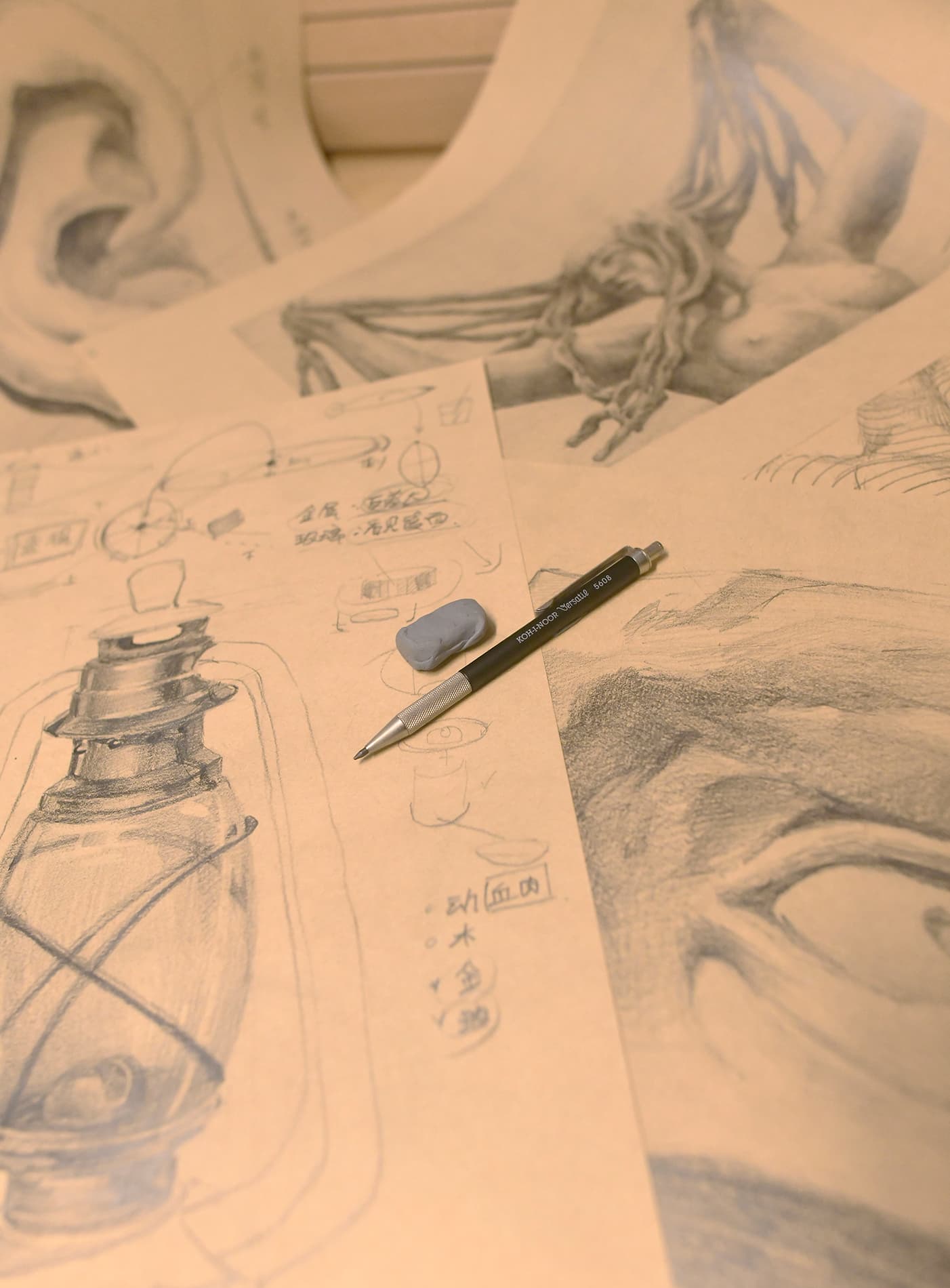
“Don’t Use a 2.0mm Engineering Pencil for Sketching” If you want to sketch well, never touch a 2.0mm engineering‑style mechanical pencil. When you’re deep in the nitty‑gritty of proportions and line weight, that lead‑ejection mechanism will have you throwing your sketchbook into the trash.
The fix? Stick with a progressive‑type 2.0mm pencil—just press once and you’re good to go. It’s simple, it keeps your focus on the art, not on the mechanics. Below are a few budget‑friendly models that hit the sweet spot and are easy to find.
Academic Style: Keep It 2.0mm. For a more academic look, use 2.0mm leads whenever possible. They mimic the stroke of a standard wooden pencil, so you can layer H, B, and 3B for smooth tonal control.
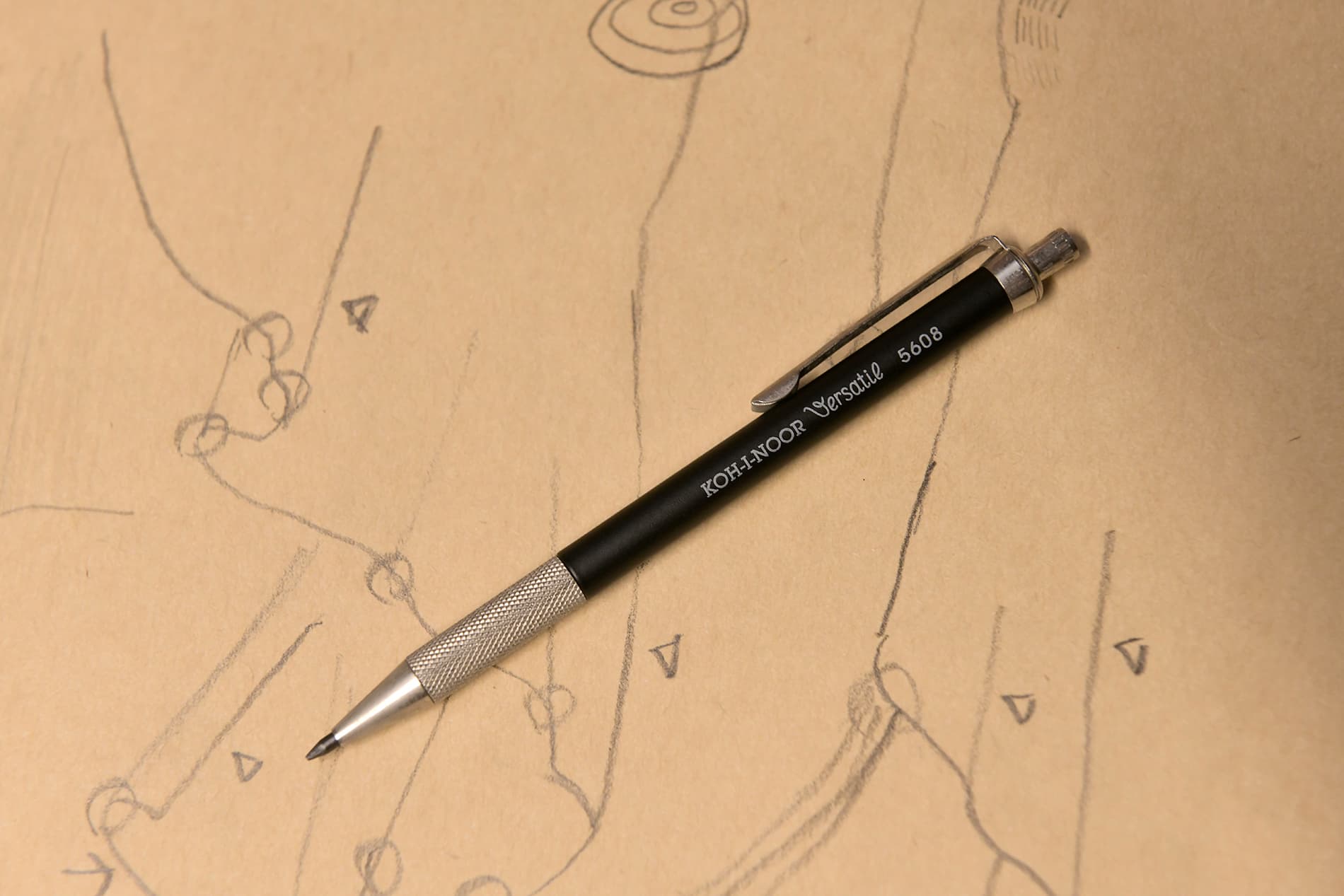
I recommend the KOH‑I‑NOOR Versatil 5608 (2mm).
It’s compact, portable, but the ABS barrel is a bit soft—easy to dent in a crowded pencil case. Having a lot of used‑tool marks on my collection feels like one step closer to becoming an artist (laughs).
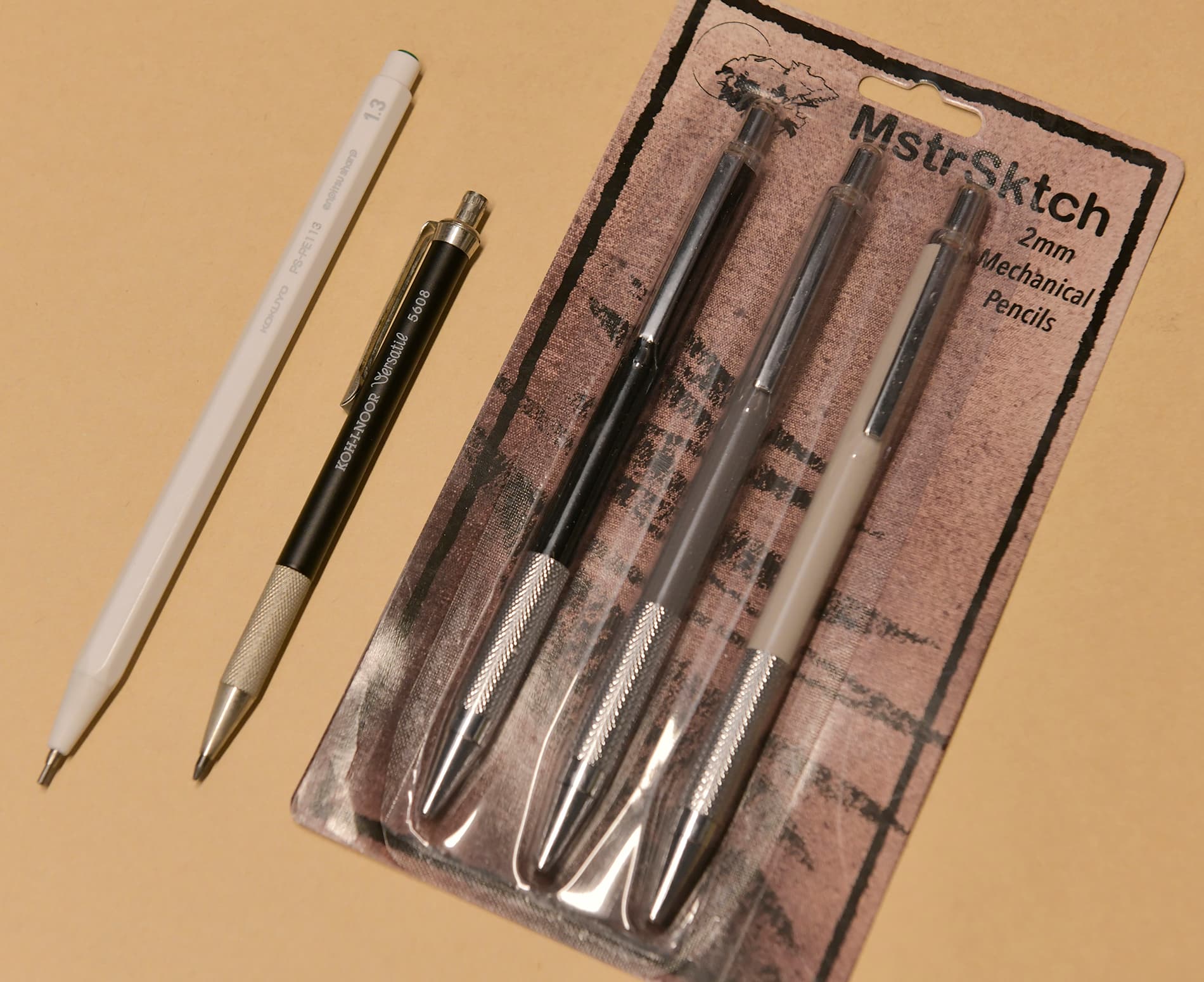
Under the same principle, here are a few more models that are easy to grab and deliver excellent sketching performance (listed left‑to‑right):
- KOKUYO PS‑C113w 1.3mm
- KOH‑I‑NOOR Versatil 5608 2mm
- Mstrsktch 2mm Drawing Mechanical Pencils
But, why the 1.3mm? It’s not a true 2.0mm, but KOKUYO PS‑C113w is performance mimics a constantly sharpened 2.0mm lead—lightweight and cheap. It comes in black, but I prefer the white because it’s easier to spot amid a cluttered drawing station.
Mstrsktch comes with 4H, HB, and 5B leads plus a carrying case. I can’t recommend using the bundled leads: 4H scratches paper, and 5B makes your work look messy—especially where the palm touches the sheet. (The barrel is simply color‑coded, no labels—think of it as a colored MUJI mechanical pencil.) It’s purely functional.
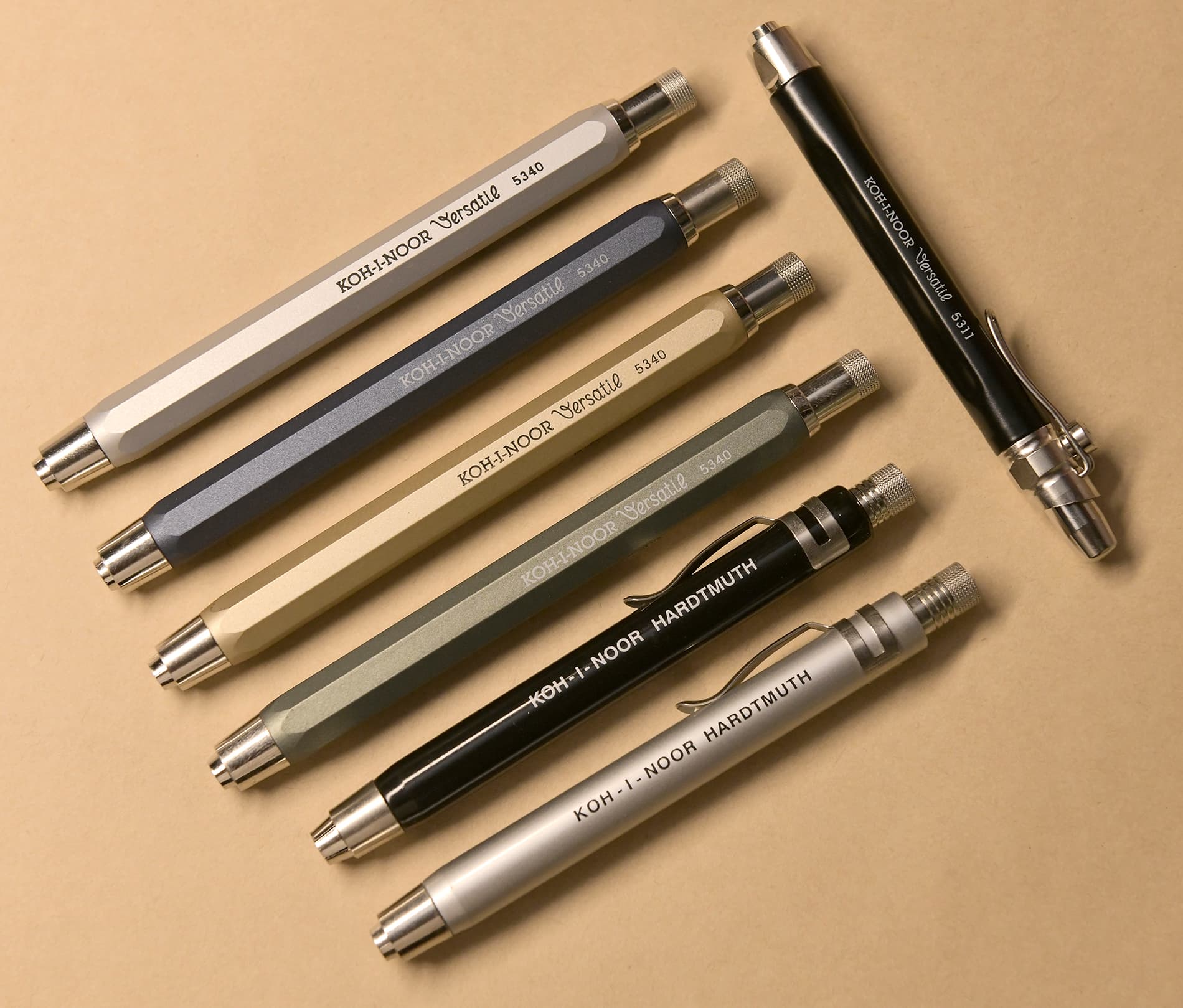
Bigger Leads for Big Surfaces, I also recommend the KOH‑I‑NOOR Versatil 5340 (5.6mm). It’s not progressive. And the grip posture more like holding a wand than not the grip posture for writing. This size and hand position make it easy to sketch on walls or large paper sheets without breaking a sweat.
I had another KOH‑I‑NOOR box in my deep the drawer, but I couldn’t find it tonight—my office is already cramped from this shoot.
Other 5.6mm and 3.2mm options:
- KOH‑I‑NOOR Versatil 5311 (5.6mm)
- KOH‑I‑NOOR Versatil 5358 (3.2mm)
- KOH‑I‑NOOR Versatil 5340 (5.6mm)
- KOH‑I‑NOOR HARDTMUTH (3.2mm / 5.6mm)
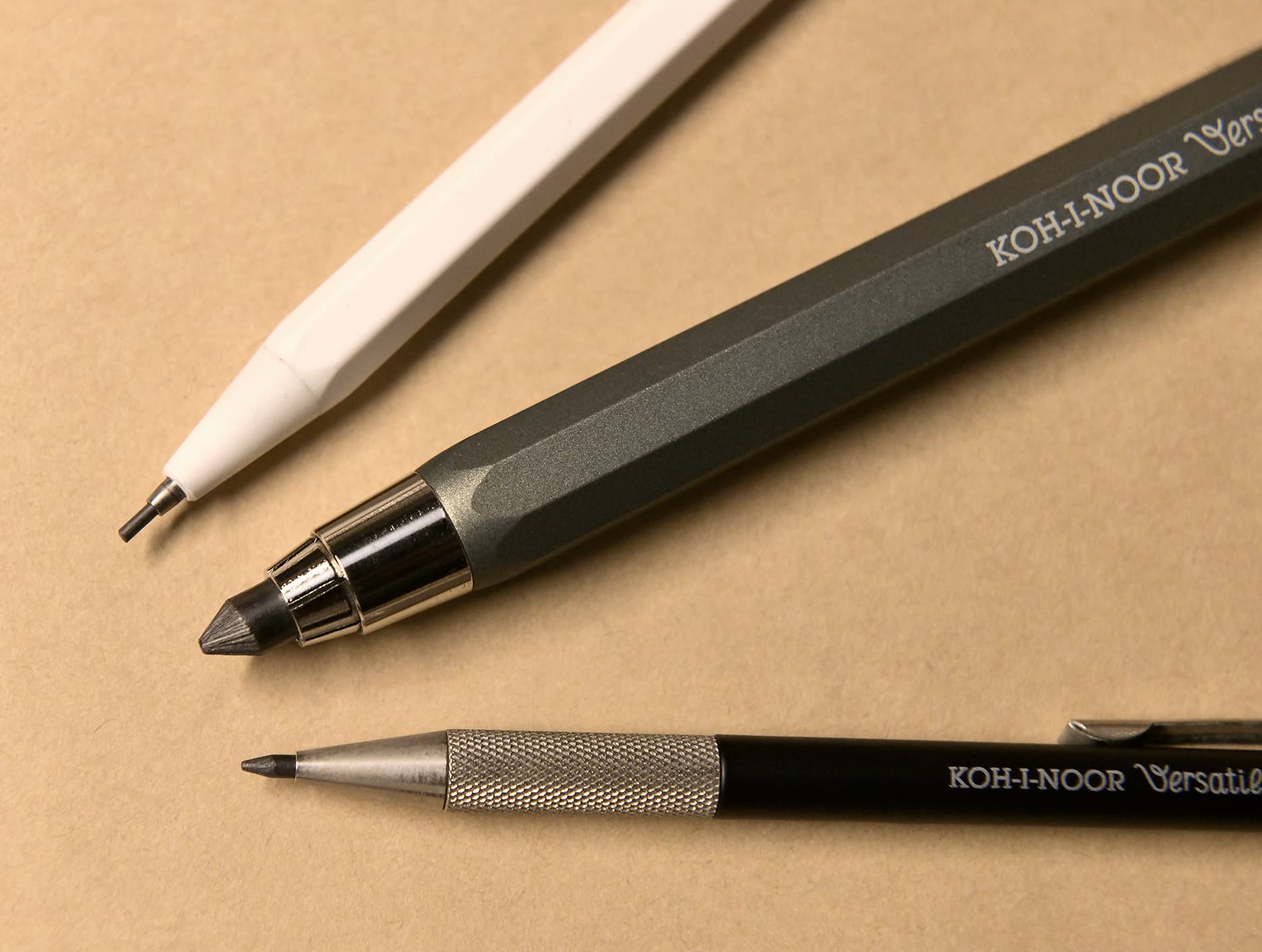
Feel free to pick any of these cheap, handy sketch pencils. There are also limited‑edition and antique options out there, but I’ll skip them for now.
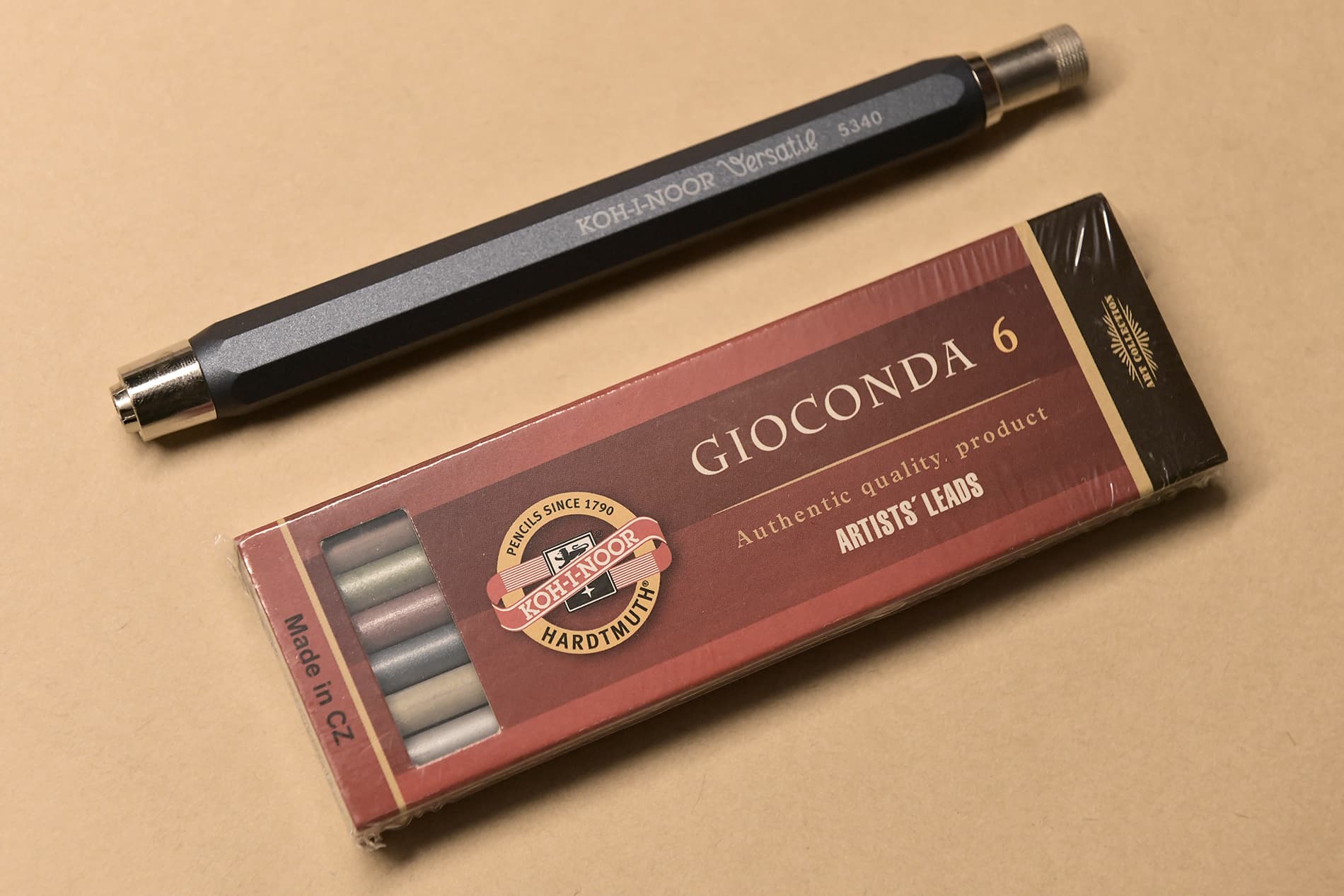
A 5.6mm lead is physically sturdier, so you get more color and variety than a 2.0mm. This one is a metal‑colored lead; I’ve forgotten where the used lead ended up, so I’m photographing a fresh box. 2.0mm colored leads break easily—maybe it’s my own handling or the material limit. I mostly use STAEDTLER products; their colored leads have a waxy feel that’s satisfying.
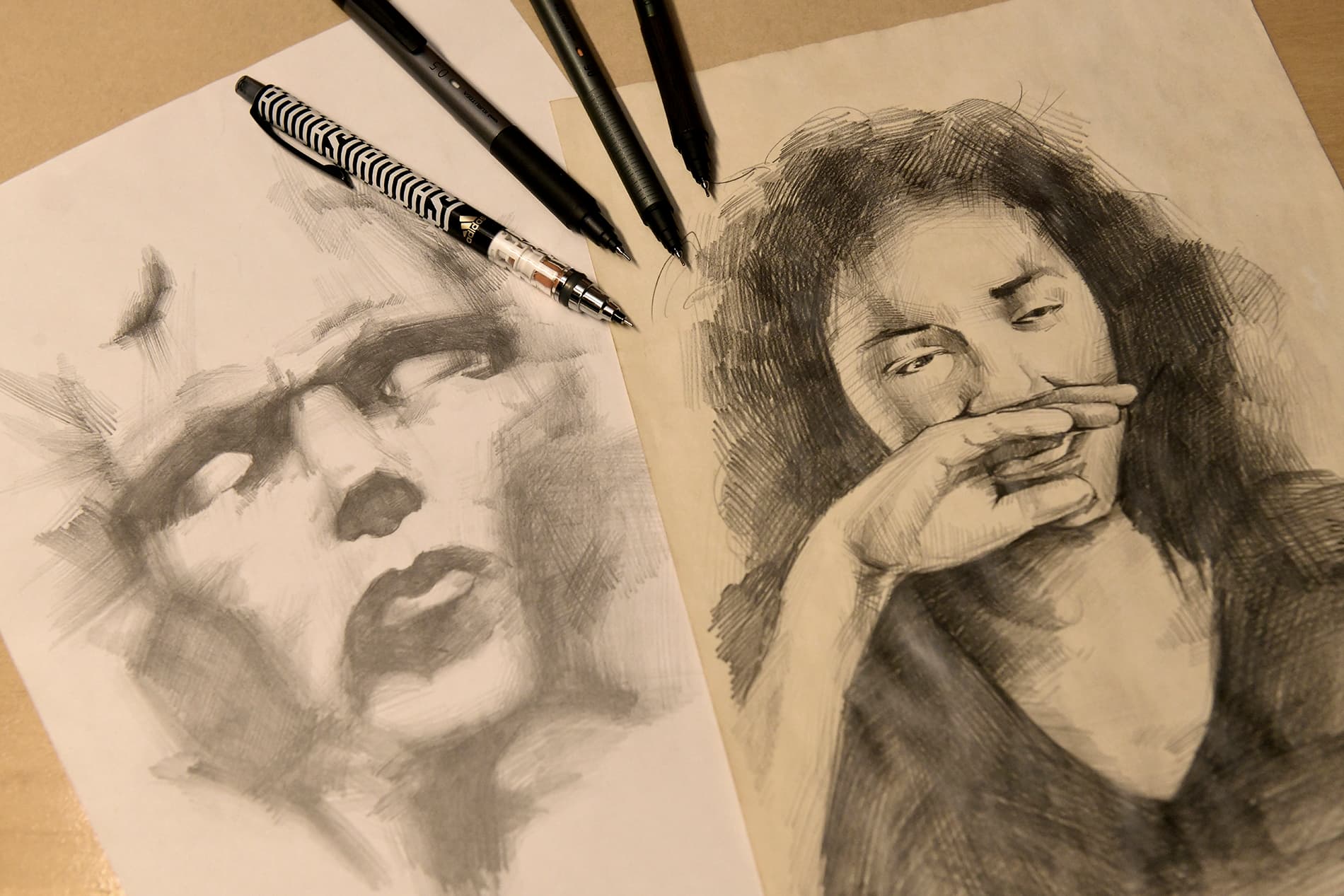
If your sketch style leans modern or illustration‑heavy, go for a Uni with the KURU TOGA mechanism. On 0.5 mm, the rotating system keeps your line weight consistent—no more “oops, I just got thicker” moments.
Tom tip:
The yellowed paper in the photo isn’t real old‑paper; it’s white stock soaked in expired instant coffee (tea works too), wrung, dried flat, and smoothed under a bed—makes for a vintage backdrop that’s great for adding highlights and depth. (Another simpler method is to use kraft paper to draw the sketch.)
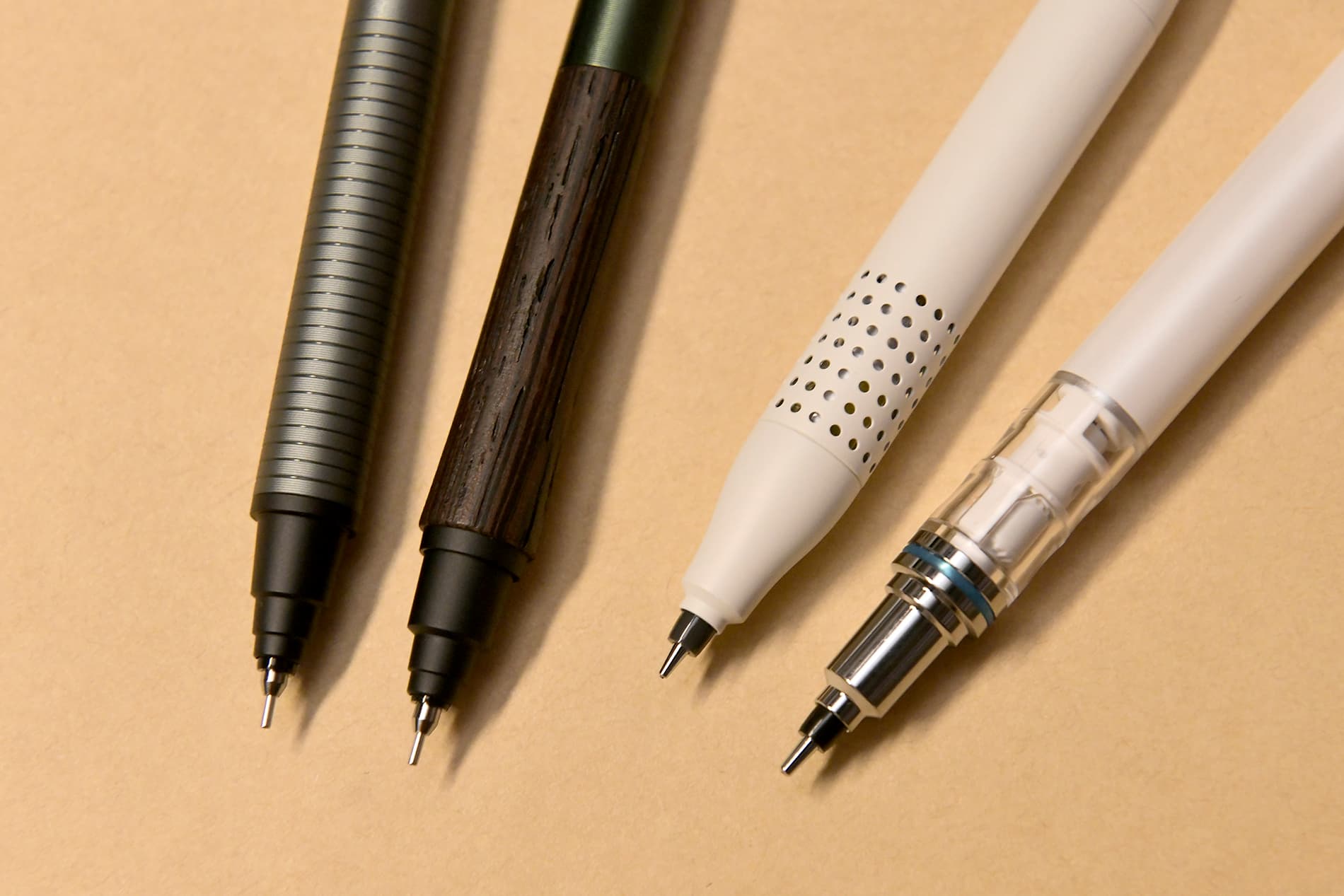
When you’re picking a KURUTOGA, go for the drawing tip rather than the writing‑tip. The white tip in the photo is a writing tip—use it for text, not art. Drawing tips give you better positional control.

A few models I recommend:
- Uni KURUTOGA M5‑450
- Uni KURUTOGA M5‑650
- Uni KURUTOGA M5‑KH
- UNI KURUTOGA KS M5‑KS
- Uni KURUTOGA KS M5‑KW
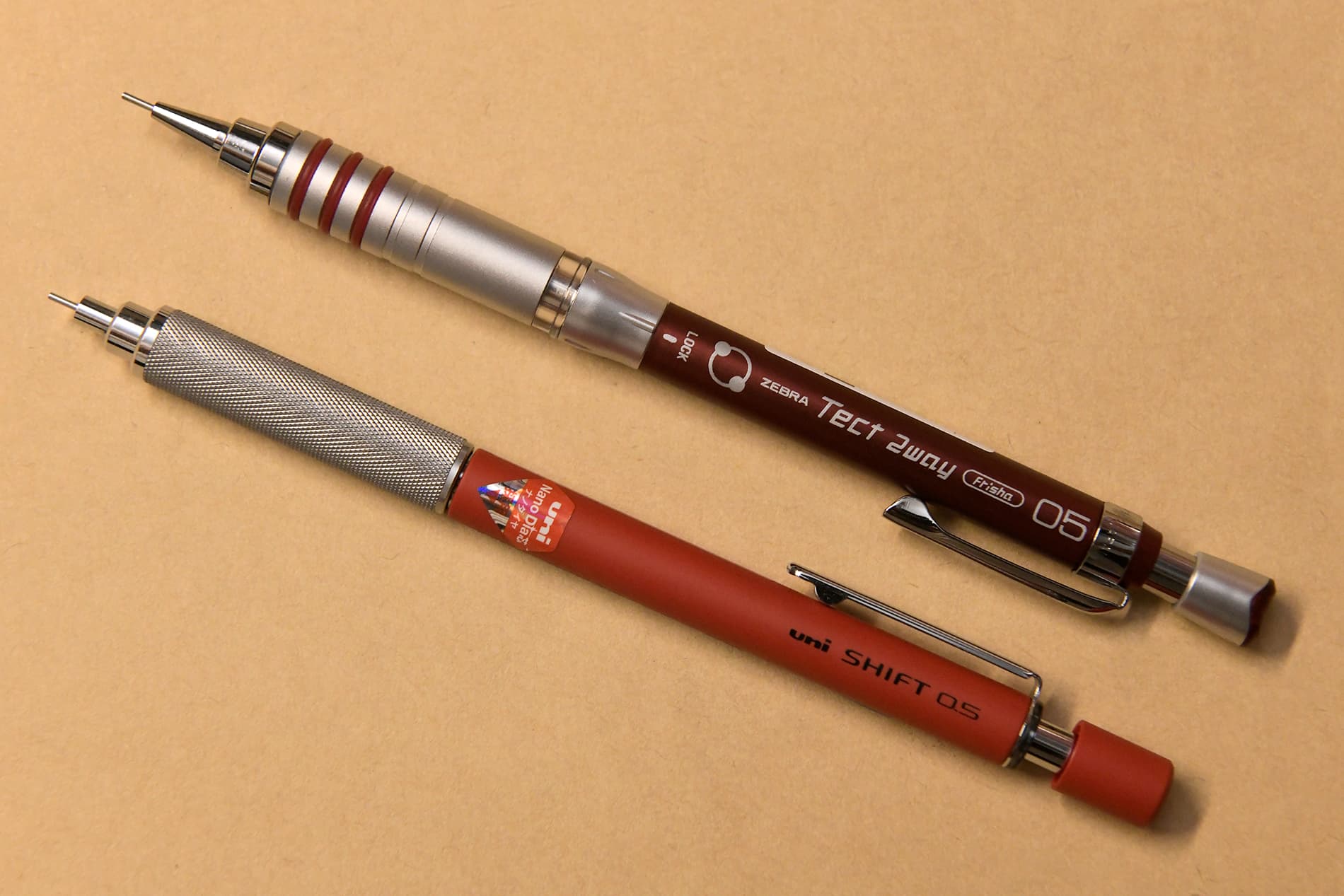
Besides KURU TOGA, I often use these:
ZEBRA Tect 2‑way Frisha
Low center of gravity, perfect for fluid strokes and large washes. It shakes to expose lead, The shakes function effectively prevents interruptions to the drawing process. And a lock keeps the lead from falling out in your case—no more broken shavings ruining the bag.
Uni SHIFT M5‑1010
Warm grip—no sharp cutting feel like the STAEDTLER 925‑25 or ROKORTING 300/500/600/800. My middle finger used to leave marks from other pencils; SHIFT’s grip is comfy and has a tip‑protection mechanism, so it stays safe in your case.
Both are great for beginners and easy to purchase.
I also suggest using a 0.5 mm lead—it’s balanced, versatile. 0.7 mm is too thick for fine detail but great for gradients. 0.3 mm is low‑efficiency and consumes fast—often you’ll find yourself pausing to replace it. I once did a near‑A4 sketch with 0.3 mm over two nights; the result was amazing—will share if I get a chance.
Best practice:
Use 0.3 mm / 0.5 mm / 0.7 mm together, then fine‑tune your rhythm and style before expanding your toolkit.
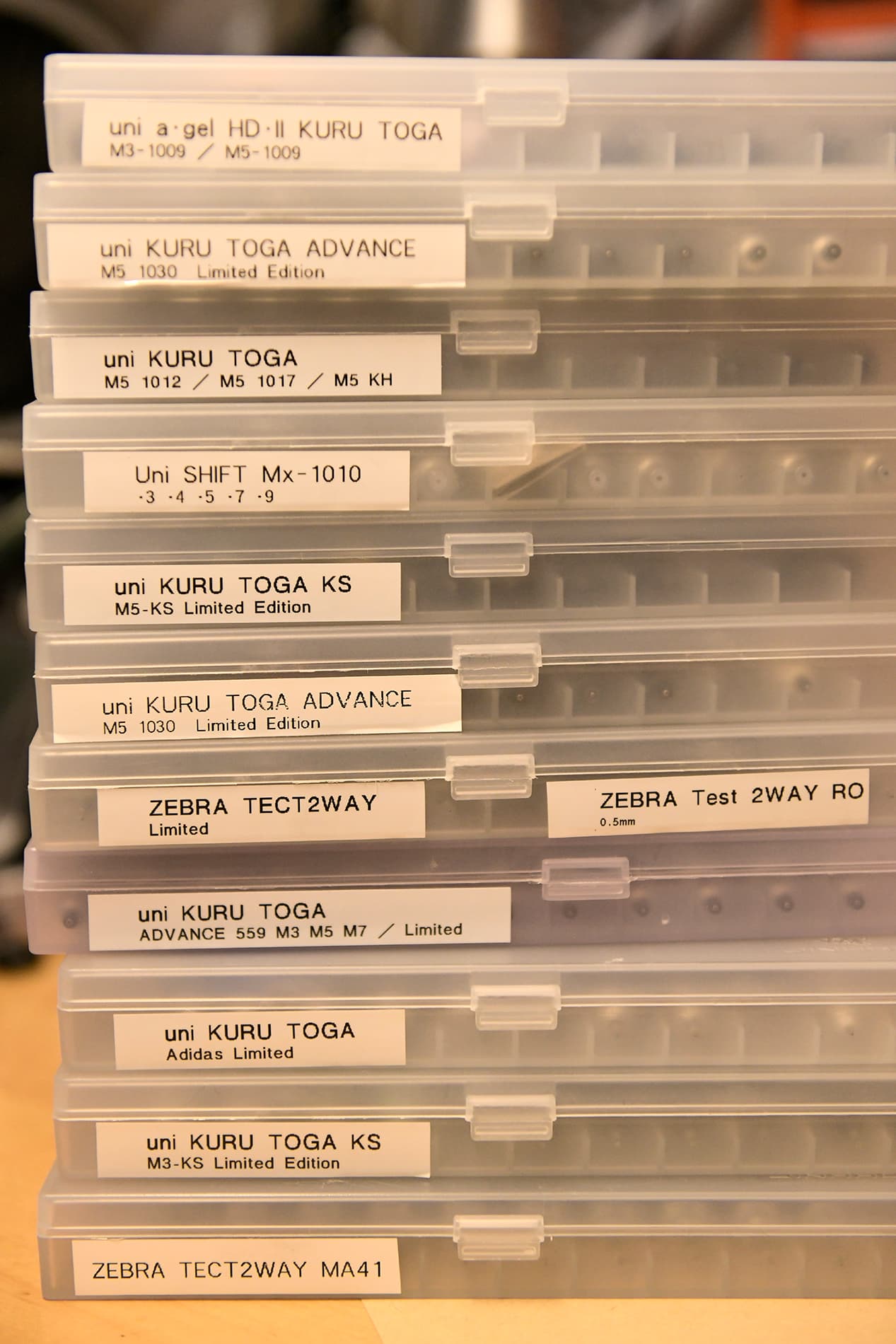
These sketches are from a my early‑stage classroom demos, and a few bored nights. Looking back while shooting those backdrop brings memories of students who may or may not still find joy in sketching amid AI’s rise. I still get the urge to draw with kids now and then.
I also took this chance to rummage through my inventory. I’ve always collected every MP model and color—so many sleepless nights chasing missing hues like now. It feels like an endless dopamine loop: the only way to ease that ache is to keep hunting for new colors model.
Final Thought, All of this comes from my personal experience.
Once you find your own sketch rhythm, you’ll have a unique toolkit that’s hard to copy. I can’t wait to see your sketch journey—drop a new piece in the comments or share it with us!
14 Likes
Simple and worry-free is the best tool!
2 Likes
that makes sense good wooden pencils do have fantastic lead, especially at the higher end.
Still, I like holders for consistency and quick lead changes depending on the sketch.
1 Like
thank you for your suggestion
1 Like