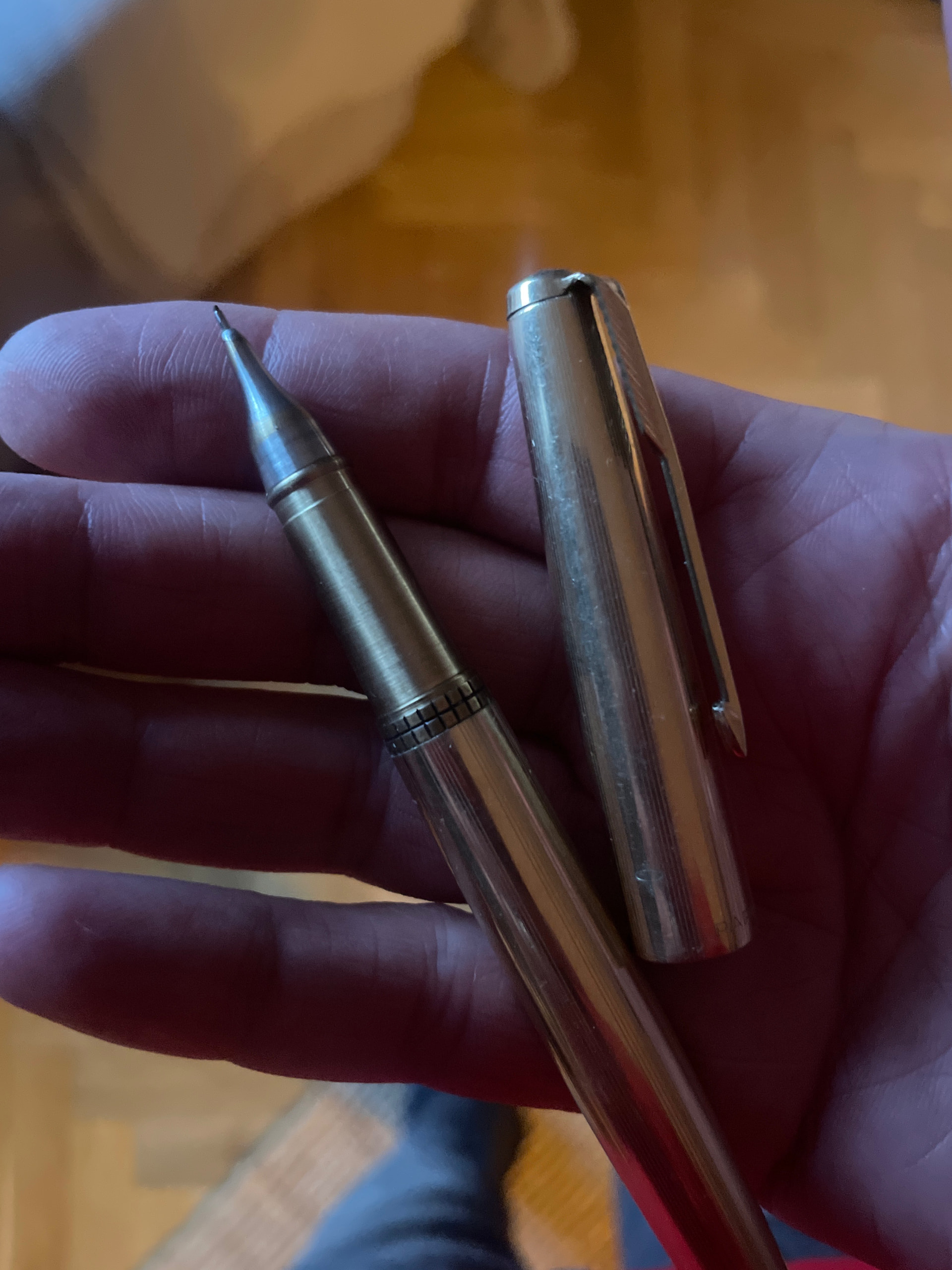
From the Knockology archives
This post revisits conversations from our smaller community before we moved to this forum. I’ve brought the discoveries and memorable moments together, with credit to the members who contributed. These discussions reflect what we knew at the time. Please add any newer information, corrections, or photos below!
A Kerry can look reassuringly familiar across decades. Put a few of them together, though, and someone in this group will eventually ask what changed on the inside.
@knocktype11 asked exactly that. He knew the obvious distinction between the older “5” under the clip and the later “Kerry since 1971” marking. He also noted the cleanout rod integrated into the older body-end cap. What he wanted was the less obvious stuff.
@nimrodd responded with four sets of internals.
Of course he did.
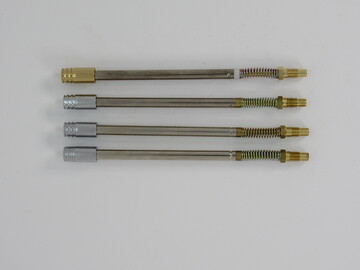
The details hiding behind a familiar silhouette
Jimmy described the four examples this way:
| Position in the photo | Jimmy’s description of the specimen | Detail he noticed |
|---|---|---|
| Bottom | Late 1970s–early 1980s, triangular price sticker | Attachment behind the spring clamped all the way around; reservoir cap slightly different |
| Second from bottom | Early–late 1980s, square price sticker | Attachment clamped on two sides with a relatively wide bite |
| Third from bottom | Early 2000s, “Kerry Since 1971” | Similar clamp arrangement, but narrower |
| Top | Then-new silver/gold Kerry Legend | Less clean-looking clamp; the spring base was plastic rather than brass |
These are Jimmy’s descriptions of four specimens, rather than fixed production boundaries. Another Kerry almost immediately complicated the picture.
Knocktype11 checked a Kerry with a 1982 date code and reported a later cap with a cleanout pin and a three-side clamp. Already, the simple four-row story had acquired another detail.
This is what I enjoy about these conversations: someone contributes a tidy comparison, another person opens a drawer, and the tidy comparison becomes more interesting.
Same pencil, evolving construction
The value here is in knowing what to look at. Branding gives us one clue. Stickers give us another. Internal construction can supply details the outside never advertises.
In this exchange, members were comparing the clamp behind the spring, the reservoir cap, the presence of a clearing pin, and the material supporting the spring. Those are much more specific observations than “old ones are different.”
Knocktype11 joked that a clamping fixture might last ten years before replacement prompted another round of cost cutting. His explanation was speculation; the changing clamps were there to compare.
Nor did the discussion settle every Kerry question. Knocktype11 also asked when the 0.7 mm P1037 appeared, pointing out that “since 1971” on the family branding did not necessarily date that particular lead-size version. The earliest catalog entry he had found was from 2006, leaving the actual introduction date open.
Before you collect every color…
A few months later @Heath asked about the difference between inexpensive current Kerrys and expensive older or special examples and if he should start collecting Kerrys. My advice was fairly simple:
“I say buy one of the current day cheap Kerry’s to see if you connect with them first.”
And then, inevitably:
“I like the Kerry a lot but I don’t allow myself to get emotionally connected to them.”
A bold statement from a mechanical-pencil collector. I am sure it sounded convincing for several seconds. I then went to collect as many as possible 
Knock on!