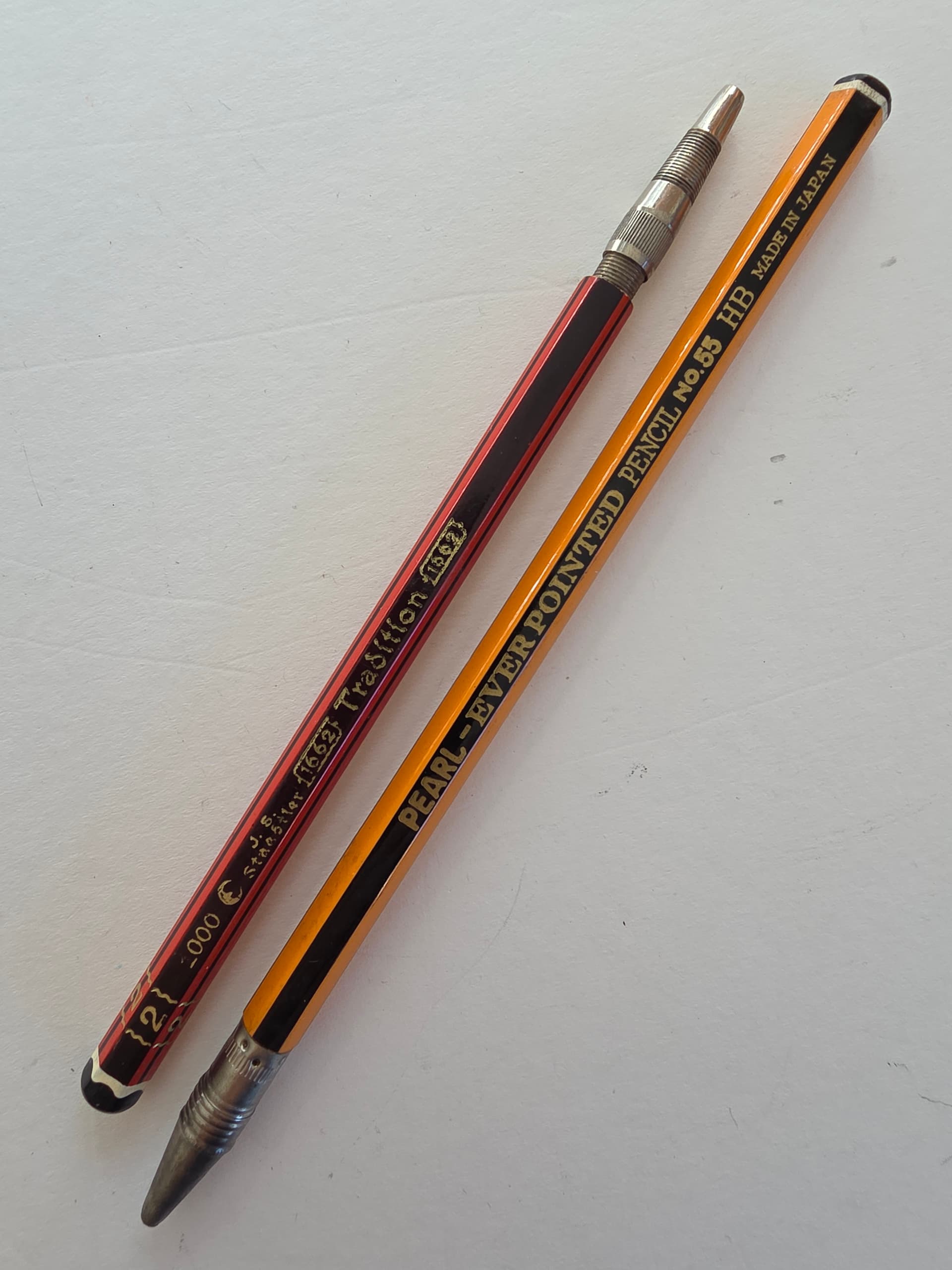
In response to the post by majkycz_y (lineup for weekend #48), I was reminded by the very nice 48002 (and the Tradition woodcased) of the oddity of the JS numbering system for that series (not a unique"problem"). It was/is the only 5 digit system I know for leadholders. That made me think of the previous series, the 10xx’s, and so I assembled them in numerical order and it had its oddities, as well. There are two very different 1002s, three versions of 1013 (two plastic!), etc. Then there is the red and black 1000, a clear take on the woodcased “Tradition” series. When was it? Style and operation indicate old ( their first per the number?) …only info I can find is in ads I created, not any real help there…ha. Then there is the similarity to another oddity, the made in Japan wood-barreled PEARL. Again, the only info I could find is self-referential.. Thoughts..?
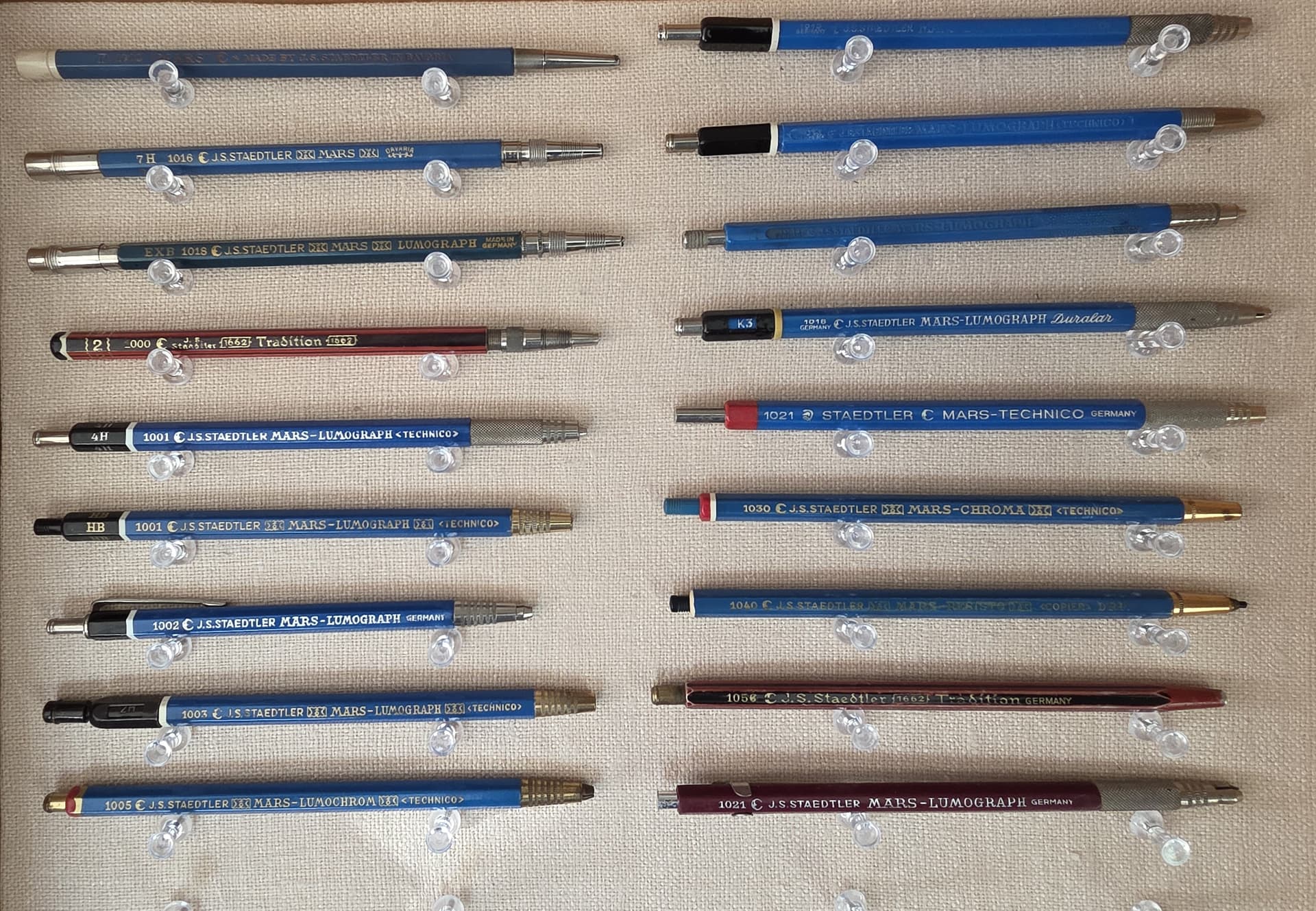
Apart from drooling over these images, and admiring the variety of those specialty pencils (take the Duralar specimen: the calligraphy alone is worth a million hat tips; also, the Tradition 1058 seems to have just got out of a Caran d’Ache production plant), my thoughts can be condensed by stating that I love the era when wood and metal were mixed to provide the older generations of leadholders, and I’ve found that most of my favourite “golden-age” clutch pencils come from that period — the F.C. Varius, the Dixon El-Dorado 163, the KIN 1511, and a very few others.
Sometimes the balance is not perfect, or the diameter may be a smidge too slim or too massive, but boy do they compensate in terms of effectiveness and charm! A level of boldness which is almost unreachable by the majority of the current models.
Dennis B. Smith’s archive dates many of these pieces between the “antique-shop” material sitting between 1890’s and 1910’s and the stuff available up until circa 1950’s, which I admit is quite a long stretch of time; after ruling out the tails of the distribution, I would say most of these Staedtlers ought to fall between 1930’s and 1940’s, slowly disappearing after the spreading of the plastic resins, but without catalogues or other similar sources, mine remains a wild guess.
Still, I am very glad some wise men and women saved a lot of those masterpieces from the oblivion, and allowed us to cherish/admire them today in collections, pen shows, or just pictures like yours.
Pretty sure all of the pushbuttons and the “Germany” labeled 1018 were post WW2…likely starting in the very early '50’s. AWF 's first “TK” (a wood barreled spring clutch) came out very late '40’s and into the early '50’s to supplanted, as with JS, by plastic barrels late '50s, early '60’s. KIN went from wood ( the USA 1511 series was basically the last big push, although there is a wood barreled 5616 with a push button clutch … rare bird) to all metal, the 52xx series, the 5616/17, to be followed by the iconic 5611 and its many clones