A few weeks ago I was scouting the usual suspect platforms, looking for sparkles of awesomeness, when an old wooden pencil set from Koh-I-Noor came up, and something caught my eye instantly.
The set was a plastic-and-fake-fabric container for a complete set of “Bohemia Works Special Drawing Pencil Toison D’Or: 1900” wood-cased pencils, with grades running from 10H to 8B, with all pieces almost intact — save for some damage caused by the incomplete fusion of the plastic straps to the black lacquer of the barrels. Pretty interesting per se, but the funny stuff happened when I counted the precise number of pencils in the set; the result was what triggered me and made me buy the item.
What was the secret quirk? Just take a look at the “middle” section of the range, where one would normally expect the sequence H-F-HB-B, and squint…
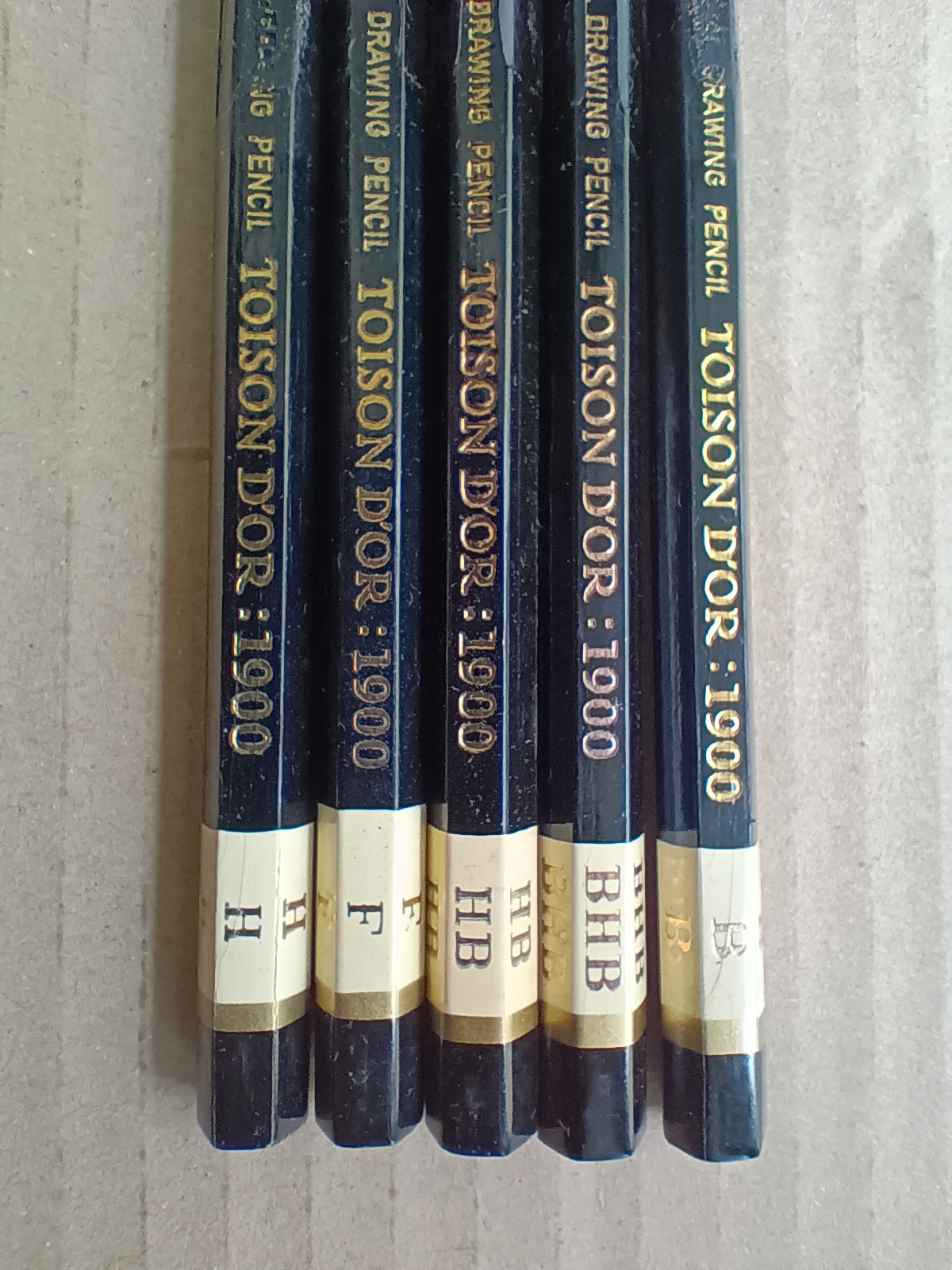
After finding the infamous “1B“ lead from Staedtler, I could not believe I would be even more surprised by a lead degree denomination, but here we are: a BHB pencil, whatever it means. And if you are wondering: no, I have not tried the tip yet: the pencil was among the few in the set which did not show up sharpened by the previous user, and I would like to respect this for a while before jumping towards my pencil sharpener, and discover what the BHB lead feels like. Also, there are other ways to find out the feeling.
Because yes, I see what you are all uttering right now: «But Leonov, this is a serious community for practitioners in the fine craftsmanship of mechanical pencils: why are you annoying us with wooden pencils?» Well, let me get to the second point of this story.
Tucked in a corner of the container, there were a couple more items: to begin with, an interesting 2.00mm clutch pencil from KIN as well, a Toison D’Or Versatil 5921 with shiny brass accents; but close to that, a super-slim lead container with two pieces of untouched lead.
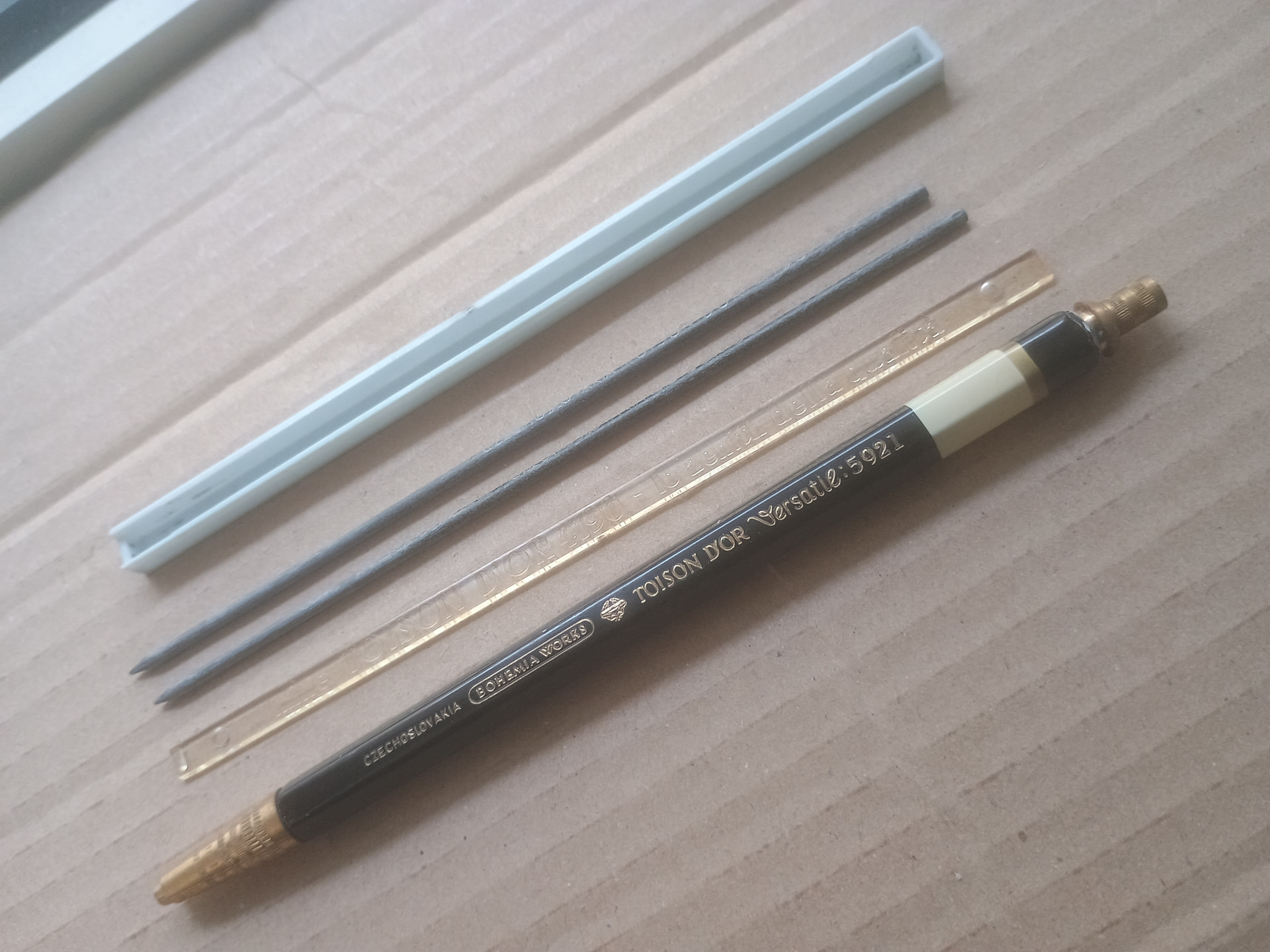
Now, can you guess what was the hardness degree on those pieces of lead?
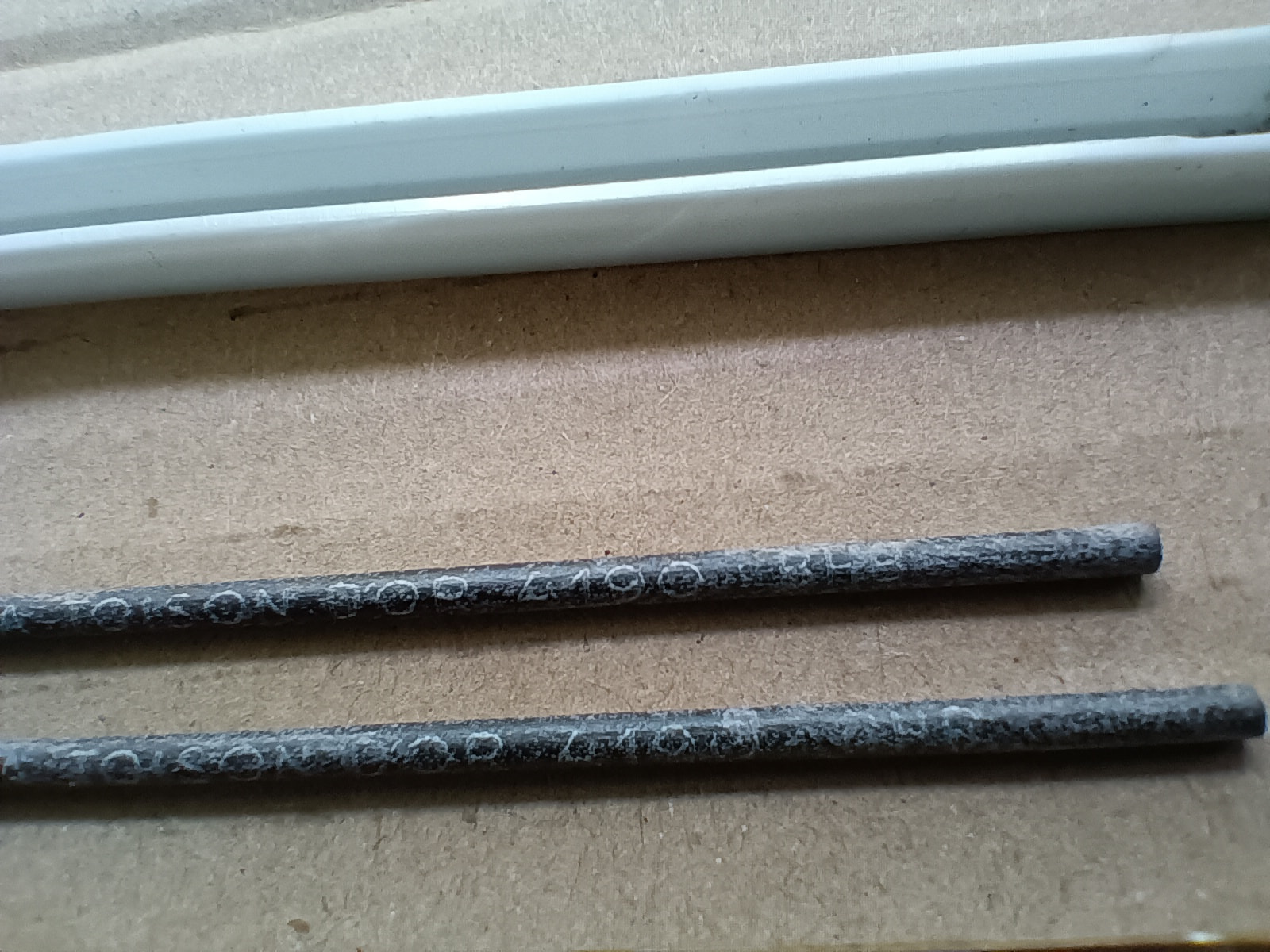
It is quite hard to see, as the imprint is a bit damaged, but rest assured that the indicator reads.. “BHB“! Ha! The lead counterpart to the pencil, just to show me that I was not totally insane, and there was as well some BHB lead for the included mechanical pencil.
I know very little about this unusual lead degree and similar items, so I conjure here the experts to say something more; enlighten me please, and let me know why in the world people needed an even more intermediate hardness between, I assume, B and HB. Have we found “the soft counterpart of the F lead”?