Growing up in the 1980s, giant robots from Japanese anime and manga filled the toy shelves at the Isetan, Yaohan and Sogo departmental stores here in Singapore. But the frustrating thing was that the actual TV shows almost never made it to our shores. The rare exceptions were the Taiwan-dubbed versions of ‘Battle of the Planets’, ‘Star Blazers’ and ‘Robotech: Macross’. Many more properties like Gundam and others only lived in our imaginations, fueled by amazing painted box art.
That all changed in the 1990s when VHS bootlegs of popular anime started to become commonplace, followed by licensed releases in the embryonic VCD format. Neon Genesis Evangelion came out right around that time and the pseudo-religious back story with giant robots driven literally by teen angst became an overnight sensation. While I immediately fell in love with the biomechanical designs of the robots, what I didn’t expect was to be introduced to cool European car designs!
In both the manga and anime, Evangelion featured a sleek blue sports car driven by one of the lead ing ladies, Misato Katsuragi. In the show it was an EV (new concept at that time!), and it was only later that I learned that it was based on a real car from France: the Alpine (later Renault) A310, a V6 beauty from 1971!
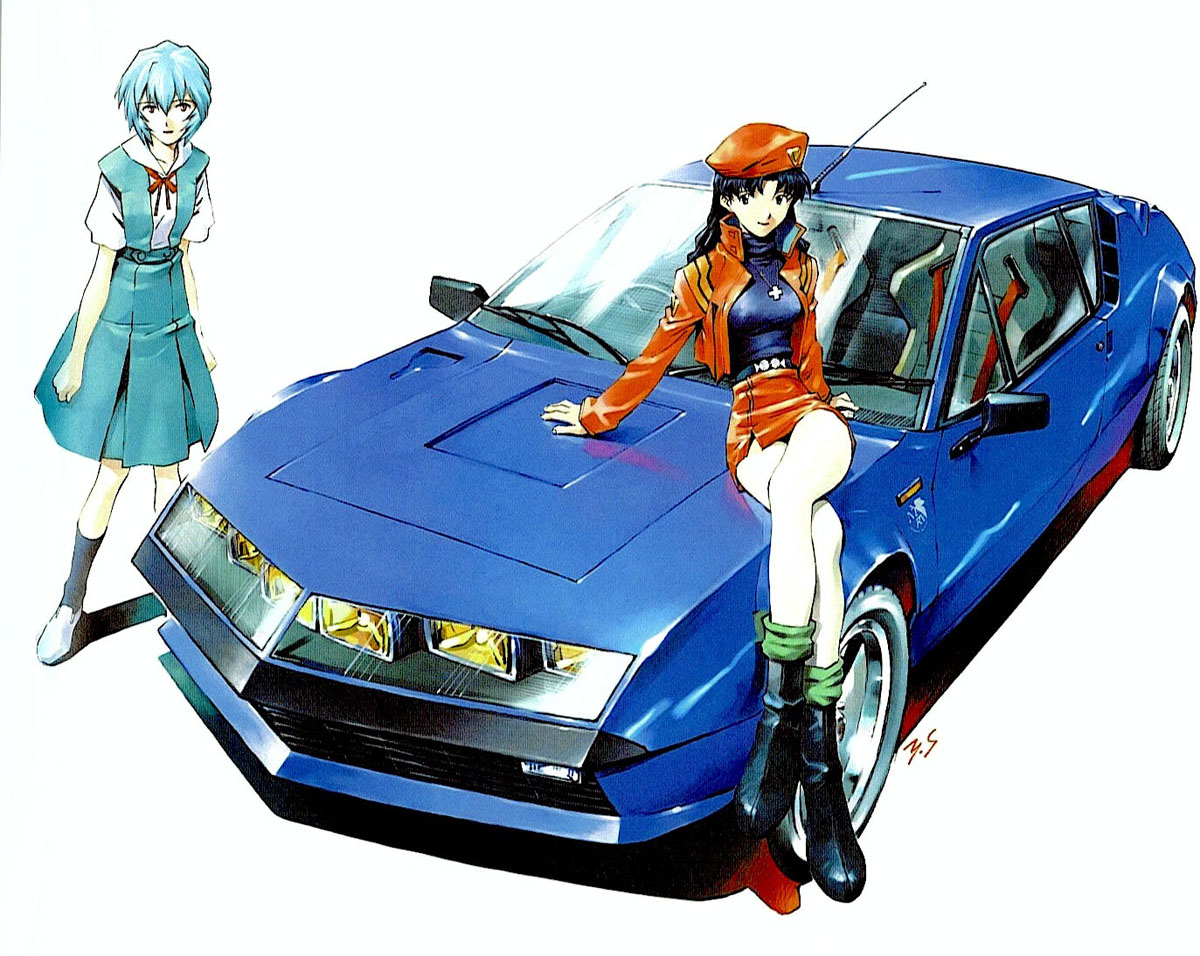
Here’s an illustration by the show’s character designer Yoshiyuki Sadamoto, that somehow managed to make it look even sleeker than the real thing.
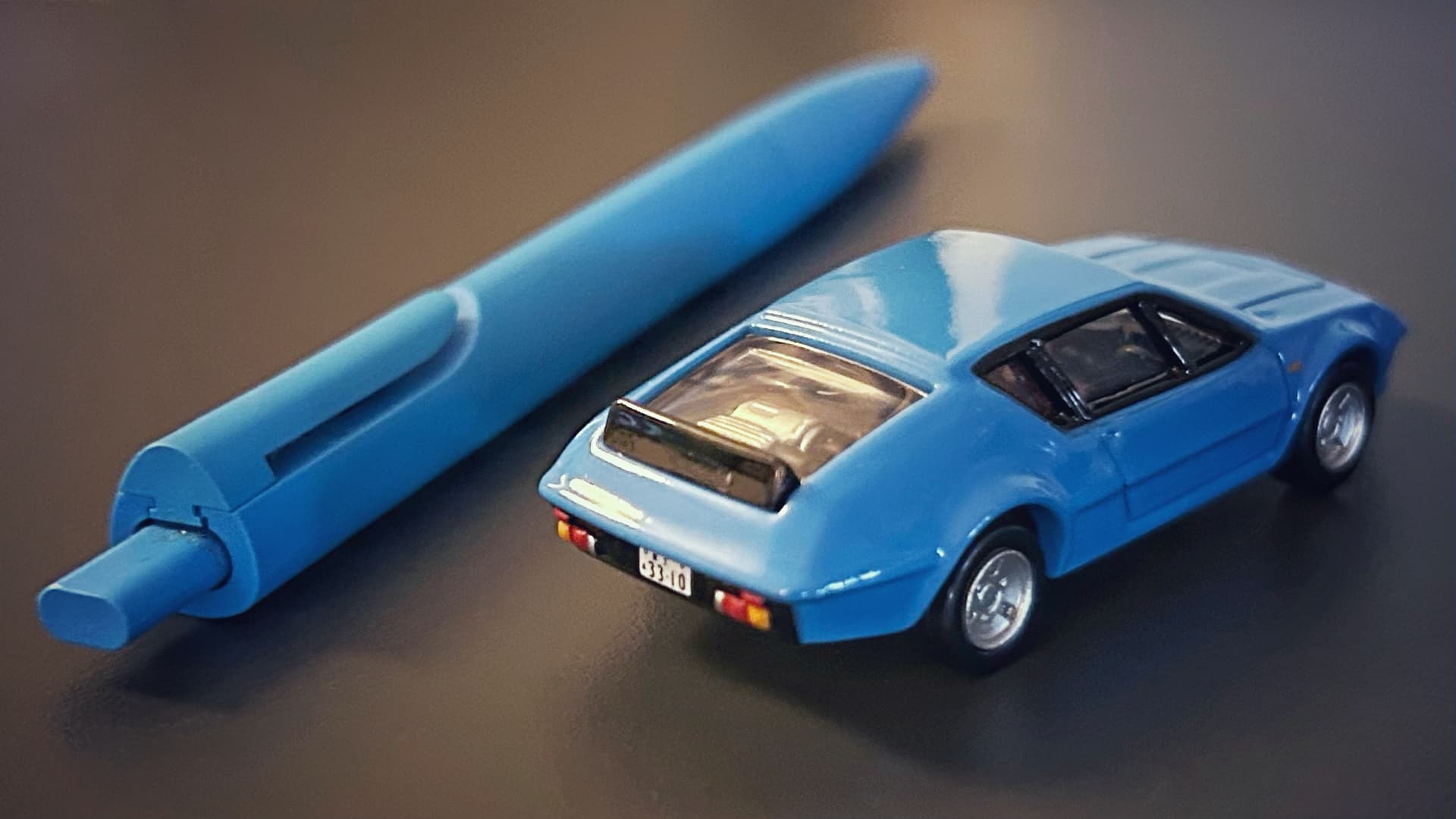
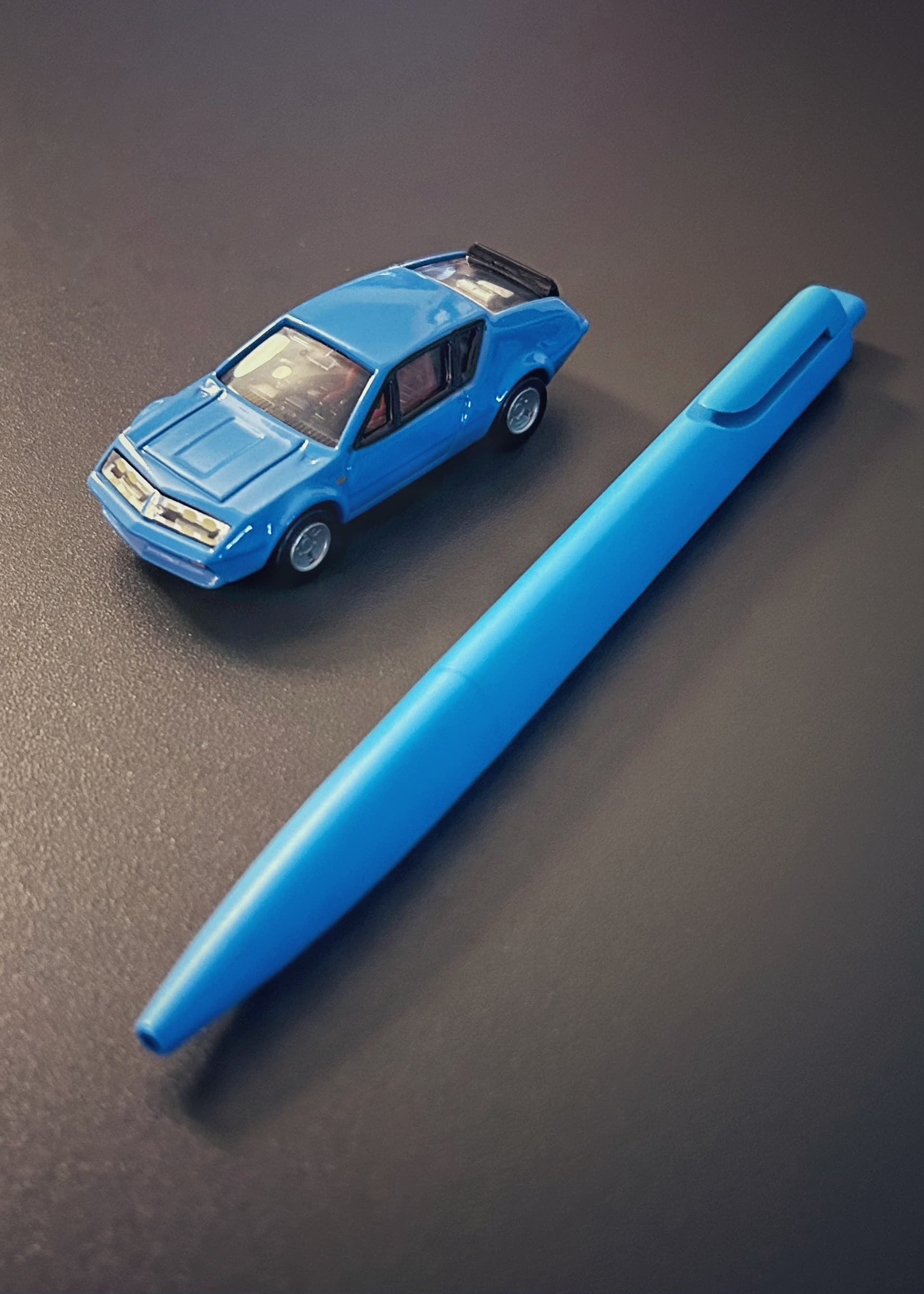
So when Tomica released a version of the Alpine from the show, I made a beeline to the nearest Toys ‘R’ Us. The model is quite faithful to the original, although I wish the translucent headlights were clearer. It even shows the fictitious EV conversion motor through the rear windshield.
As for the pen, one candidate stood out for me: the Lamy Noto. Designed by Naoto Fukasawa in 2008—the first non-European designer to work with Lamy—this rounded triangular profile all-plastic pen featured an elegant integrated clip and a slim oblong clicker that was all but silent in operation. Fukasawa, I would learn, was the one-time head of design for MUJI, being responsible for a plethora of well-designed daily use products.
To me, it felt right that the Noto was thoroughly ‘Bauhaus’ in spirit: it made excellent use of modern materials, was aesthetically pleasing and comfortable to use, and fit well in its intended corporate environment: no obnoxious clickity-clicks! Sadly, Lamy would abandon its original monotone design and try to up the Noto’s ‘executive charms’ (and perceived value) by adding a metallic cone. When I saw the Xevo in 2021, I thought to myself: “This was what Lamy originally wanted the Noto to be.”
I truly hope that with Mitsubishi taking the reigns, Lamy will revisit the Noto with bolder and more vivid monotone editions in the near future!
