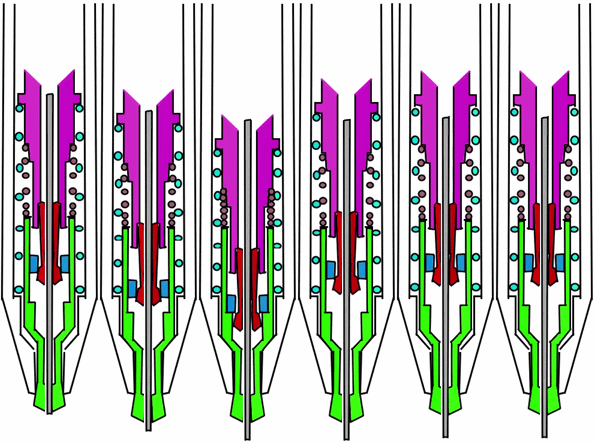
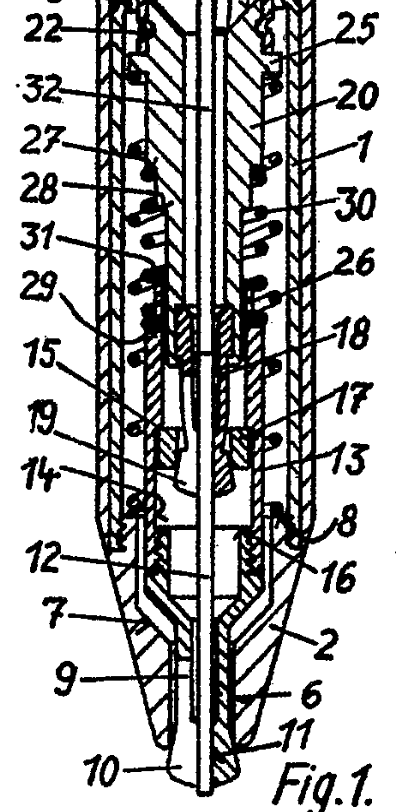
But the idea is that a second lead helps the first lead get fully used up?
3 Likes
Well, but it happens with many pencils without a double clutch; a Tikky can do that, for example.
After finding a Pilot Clutch Point by chance, I became quite interested in the double clutch technology, and later got a Protti PRD105; I have to say that, given the rubberised grip on the Pilot, I generally prefer the Protti, even if I had hoped for a slightly lighter pencil — the Protti tends to be a bit on the heavy side, at least for my taste.
I wondered for a while whether it was possible to relocate the internals of the Protti into a different pencil with a lighter barrel and grip area, but I think the heaviest part is a single bloc, and cannot be disassembled to the point of being recycled into a different for factor.
Still, a great innovation for writing/notetaking pencils; impossible to carry over to drafting models, I am afraid, but nonetheless an impressive achievement.
4 Likes

Amazing! I will be experimenting with screw threads combinations, looking for possible lighter alternatives. Thanks @First_Sail !
3 Likes
Looks like the cone and front part of the grip could be fitted to ”any straight tube” kind of body with a bit of irreversible violence and glue.
For now, the Protti’s internals are fully compatible with the Penac Pepe’s body; it even accepts both eraser caps. Here with the Protti cap. It looks better, but it sits a bit high and separate from the inner walls of the body. The silver Pepe cap fits better. In the image, you can see the Pepe’s mechanism with its silver cone.


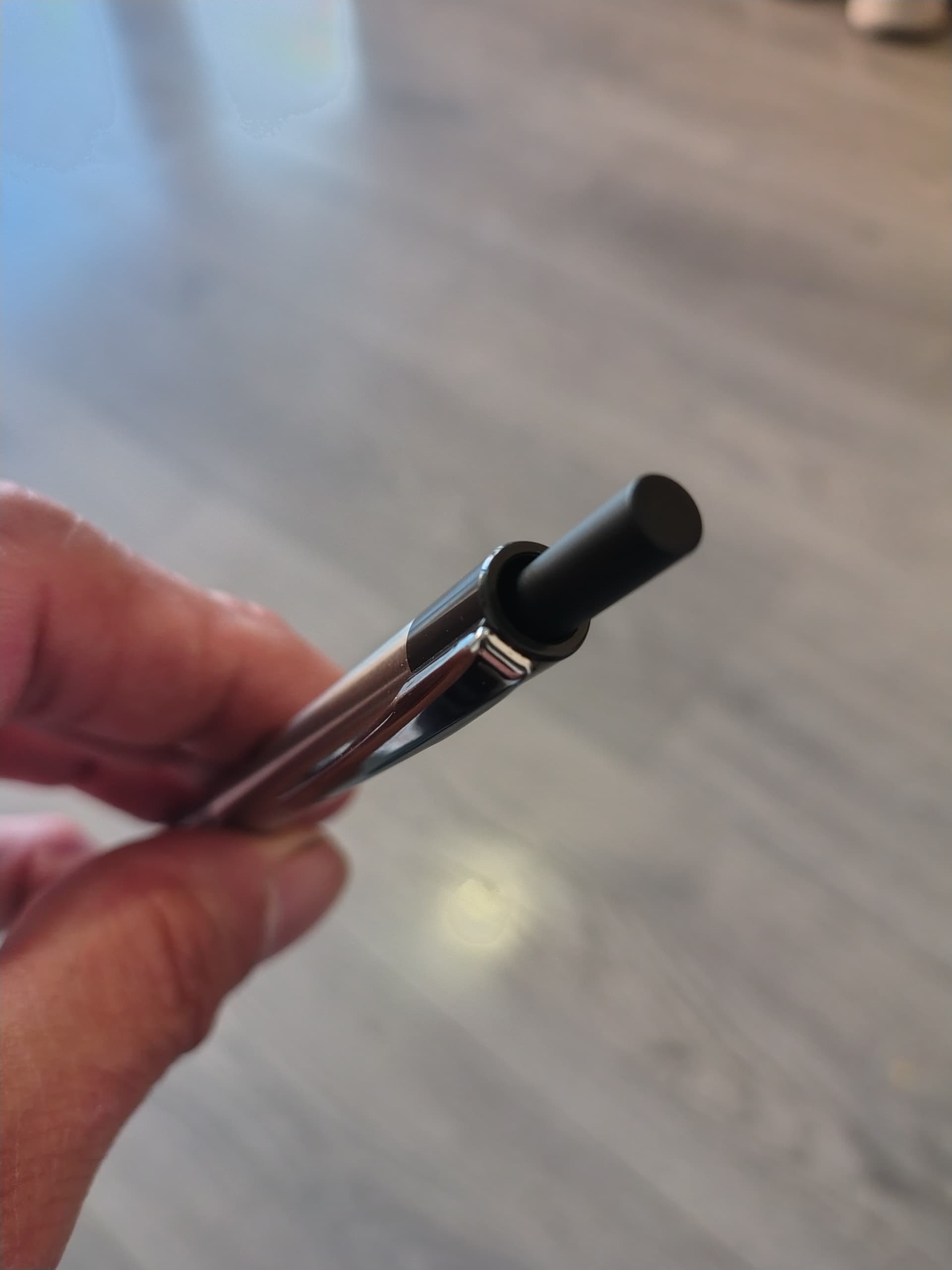
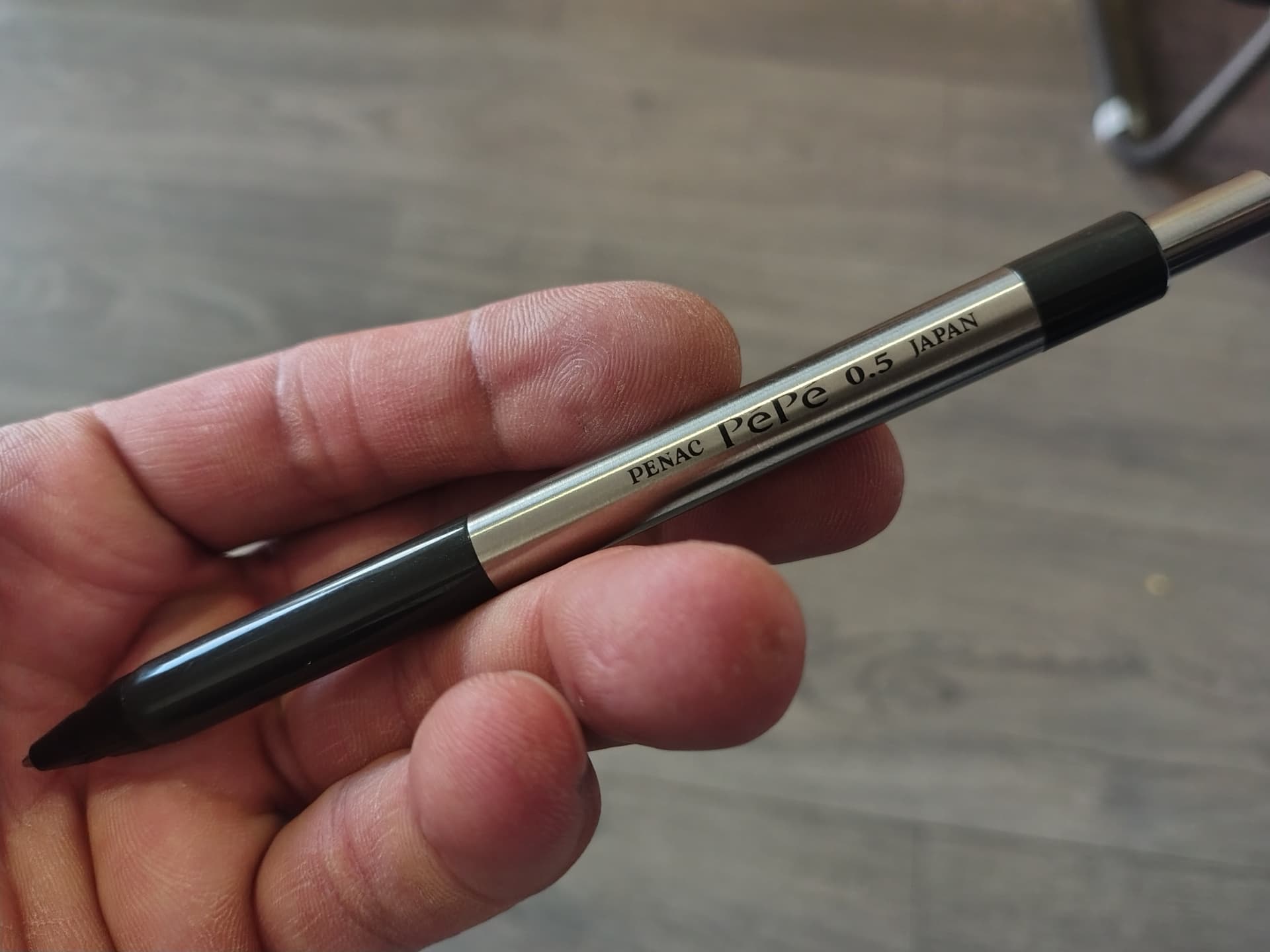
Well, I’m just scribbling here, and honestly, it does improve the overall feel. The Protti’s cone is slightly shorter than the Pepe’s, which I think it feels better and more solid. The thing about the Protti is that strange combination of features that puts it out of any recognizable category: it has a knurled grip along with a conical, cushioned sleeve. It’s not ideal for writing because of the grip, but that sleeve makes it unsuitable for drawing lines with a ruler.
4 Likes
1 - tip clutch opens, inner clutch is closed, lead is pushed
2 - tip clutch closes, inner clutch opens
3 - inner clutch slides back
4 - inner clutch closes
I can see how this mitigates breakage risk of the lead, however double clutches are also advertised to ‘use more of the lead’. But I don’t see how?
Is the assumption that a second lead will follow, or does this claim also apply to only a single lead being used? (not a ‘repeater’ type).
Because if it’s only 1 lead, I would assume since the additional clutch takes more space than a rubber bushing, that even more lead is wasted.
Could someone please explain?
Also I think 1950s montblanc pix pencils worked like this, to add another pencil to the list.
1 Like
Basically a vast majority of mechanical pencils have a lead retainer in the nose cone, a rubber stopper with a hole through it that provides a little friction against the lead. Its main purpose is to prevent the lead from falling out when the clutch is opened. Over time, it can end up with a graphite coating that may induce lead slippage. But a lead clearing tool can help remove that buildup. On old vintage pencils they can start to ossify, and then lose adhesion to the nose cone. The result – the removal of the nose cone leaves the retainer behind, sitting on the lead. And then it can be easily lost.
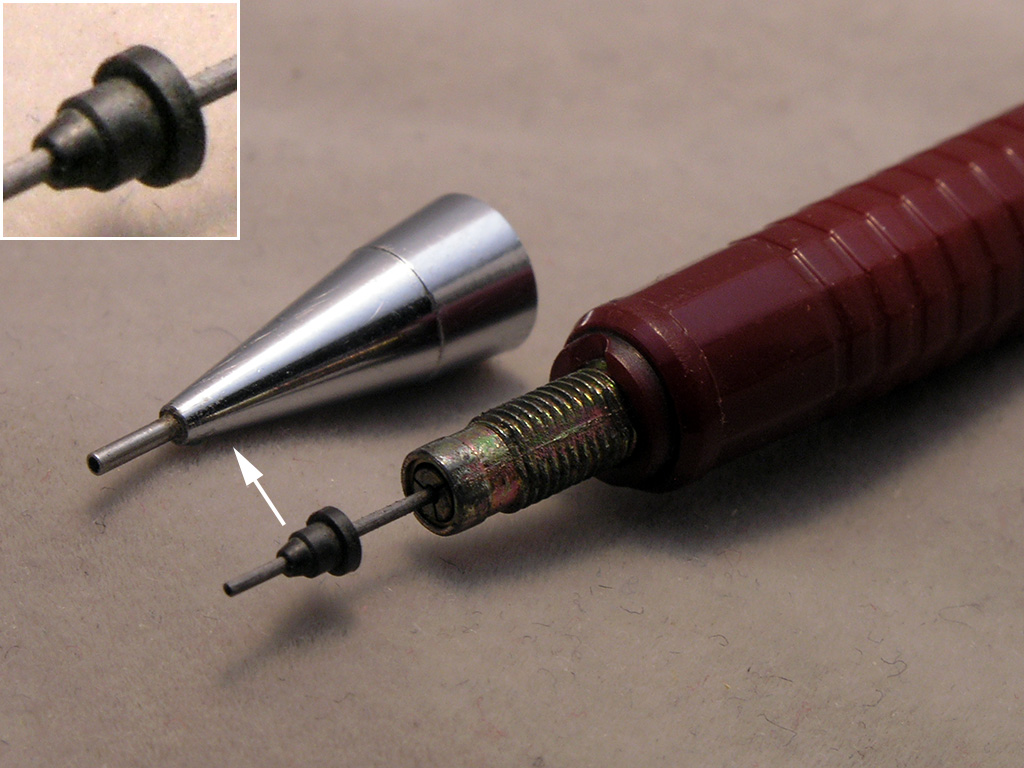
Instead of a rubber lead retainer, one can use a 2nd clutch… as noted here, “double clutch.” Frankly, I have used one and I don’t feel any lead advance difference.
3 Likes
Yes.
The front clutch grabs the lead securely, so you can write until the last millimeter of the lead, as long as the next piece of lead is held by the internal clutch, and when clicked, pushes the short leftover lead forward.
On normal MPs once the lead becomes shorter than the distance between the clutch and the tip, it’s only held by the lead retainer ring, and that brings a few issues, such as the lead freely rotating within the lead pipe, even if the next piece of lead held by the clutch is supporting it from behind.
4 Likes
This makes me wonder: why hasn’t (seemingly) anyone come up with a solution to this? Couldn’t they make the inside of the tip piece slightly thicker just behind the lead retainer? So they could fit the rubber in there in the factory, but it would be tight enough so that you couldn’t push it out with a piece of lead or jam clearing rod. Or maybe have a small piece of plastic or something that screws in to the inside of the tip above the retainer ring to secure it? I feel like there’s some room for innovation here
2 Likes
I’m guessing too much additional manufacturing cost, and like it’s always easier to replace a dead one with a new one. It’s just a piece of rubber after all. The issue is, this problem itself is too niche for any manufacturer to sell lead retainer rings separately…
1 Like
Thanks.
Then I assume what you are talking about does not include a tip clutch that opens during operation?
Because otherwise the short first lead, only held by the tip clutch, would immediately fall out, right?
Above I quoted another forum member describing double-clutch as an alternately opening clutch mechanism where only one of the clutches is closed at a time during actuation.
1 Like
What I believe how it works is
User starts pushing button, tip clutch opens, internal clutch goes forward bringing the lead, internal clutch opens, button is pushed to the bottom, user starts releasing button, internal clutch return to idle position, internal clutch closes, tip clutch closes.
When the knock button is pushed to the bottom, you can freely adjust the lead like on a normal MP, which I guess indicates both clutches are open at that time.
Adjusting the lead while pushing and holding the knock button also feels harder (like I feel there’s more friction between the lead and the open clutch, compared to a rubber retainer ring), which brings me to the guess that the tip clutch opens just enough for the lead to slide back & forth so it can be pushed, but still maintains some friction so the lead doesn’t fall out like from an open leadholder clutch.
3 Likes