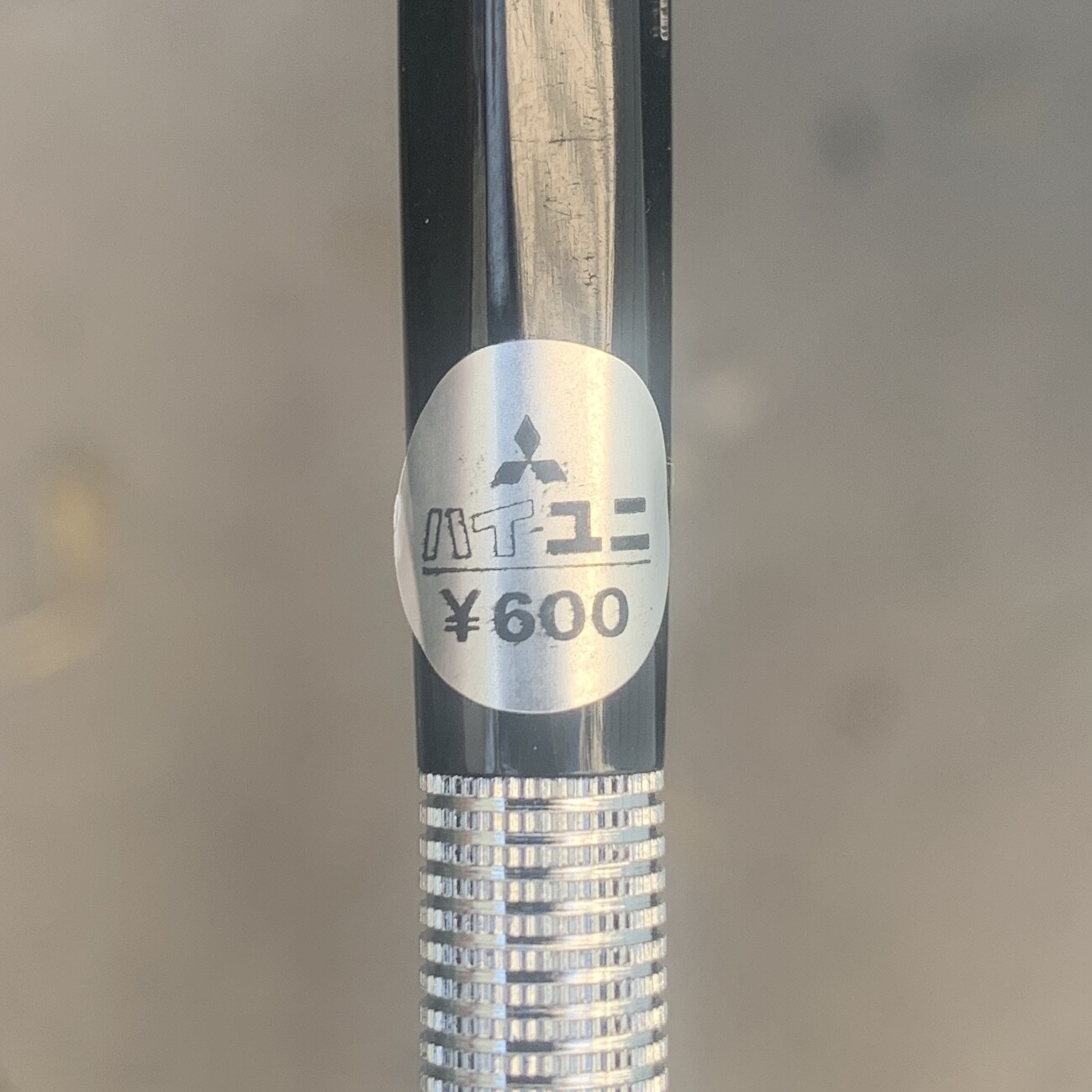
I also try to erase the distinction, especially when I feel that I am influenced by the price tag. I’ll therefore intentionally use the expensive ones and see if I love them as users. Some of them I do, others not.
Still, I keep noticing that some everyday, pedestrian MPs get a lot of love and some premium MPs are not as fun or comfortable in hand. It is not as though the more you pay or the more coveted the item, the better it is in use.
On the other hand, a good instance of a premium MP that is also a user is the TK. In this pencil I erase the distinction. Thankfully these are not so expensive or rare that I have to worry tremendously about damaging them.
2 Likes
What qualities does this leadholder posses to make it one of the TOP THREE mechanical pencils of all time?
Not challenging , just seeking understanding.
It’s all very subjective, I suppose. At the moment we were discussing it, and I was looking at it and holding it in my hands, I figured it could well be one of the most interesting pencils ever made, not only because the design survived 50 years and it still looks fresh and challenging (you can’t say that about most writing instruments) but the quality of the materials itself is quite amazing, the resin looks fresh, there’s no discolouration and the button is soft, cushioned, it is certainly one of the best 2mm that I’ve ever seen. I think only the uchida D and the old rotring 1305 come close, by different reasons. 2mms don’t have the peculiarities thin lead pencils have (e.g. the orenznero or something of that sort), they’re much simpler, they conquer by the gestalt proper which I guess is highly subjective. It’s mostly about design qualities, I guess — and I’m also considering that one of the places in the podium should be for a 2mm.
Of course you could line up all the top tier pilots or the TKmatics or others etc and they would fill all the first places in a scale of greatness, but they’re also mutually exclusive in a way, no need to repeat them inside a top 10. If I put the Pentel QX in #1, e.g., that’s stands for a lot of automatics, right?
3 Likes
I’ll put this here for anyone trying to collect the full Mitsubishi/Hi-uni lead range.
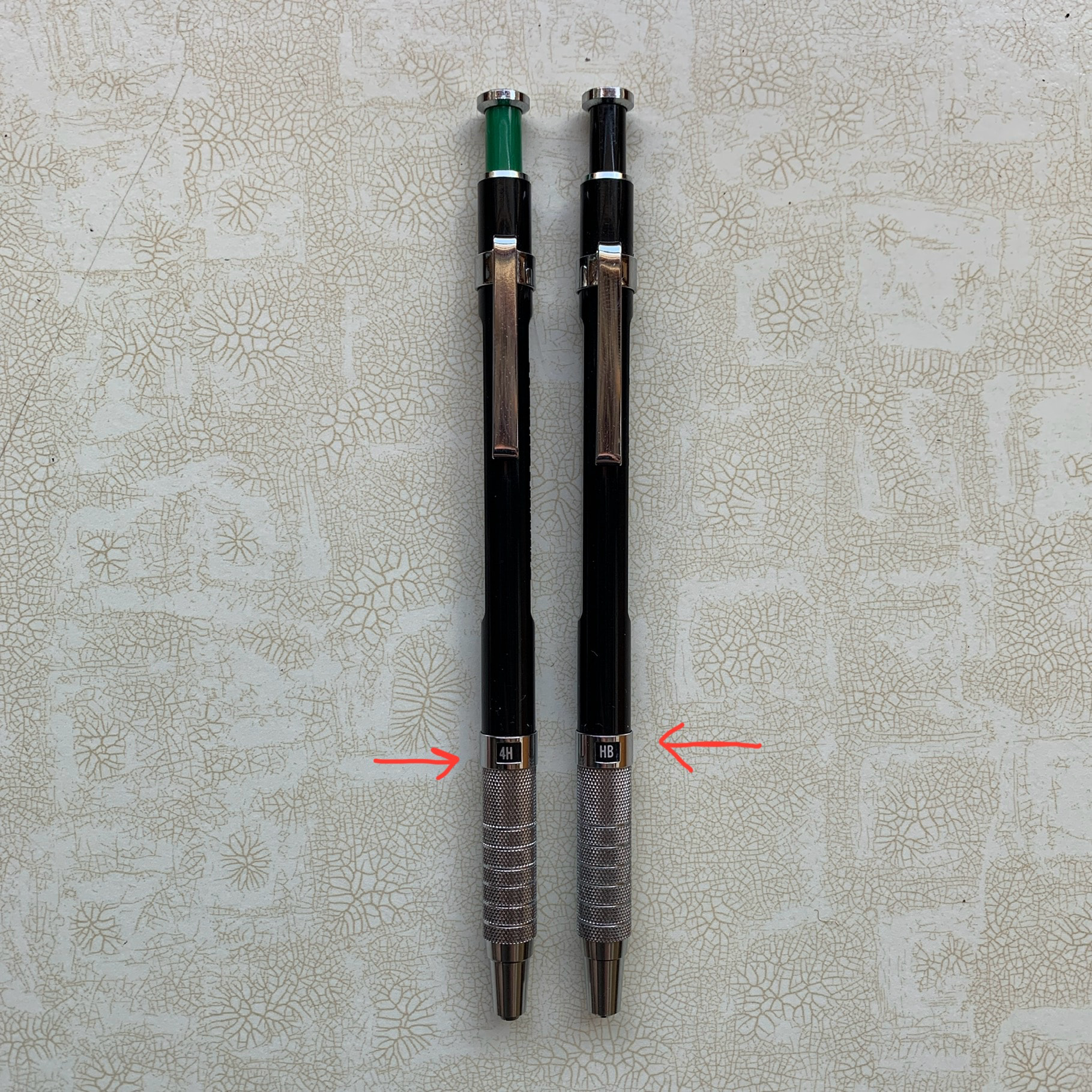
4H = dark green
3H = light green
2H = dark blue
H = light blue
F = dark brown… might mistake for black
HB = black
B = red
The lead grade lines up with the top of the barrel/pocket clip if you need to tell the difference between the blues, greens, brown/black.
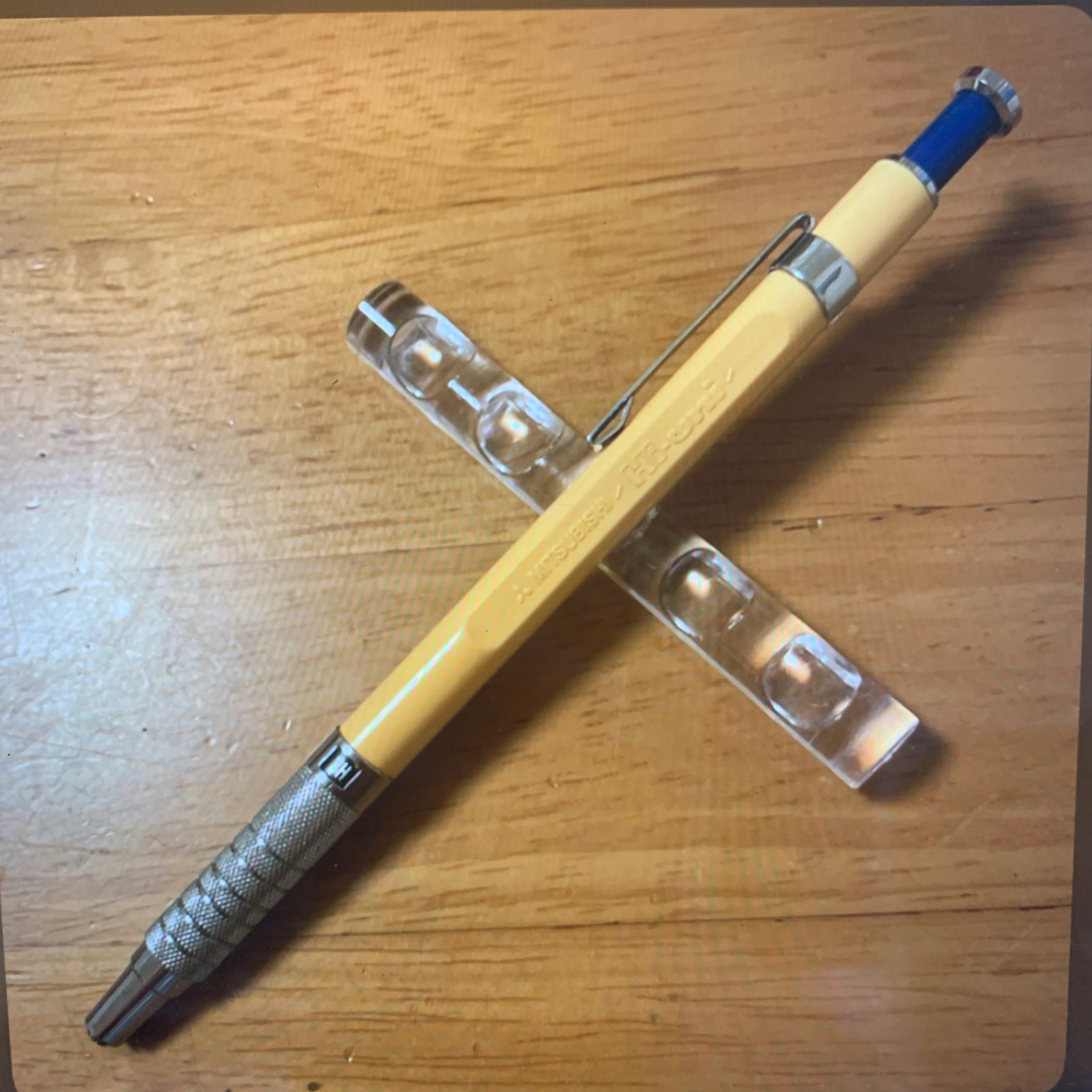
There is also a white/off-white? body version that I have only seen with a blue top but I suspect they had the normal range as well. If you have images of the white one with other colors please post them
*the only image I have saved is this badly sunburnt example, but in this image we can see that the lead degree shown is 3H. So we can deduce that the degree that lines up with the pocket clip is 2H(dark blue).
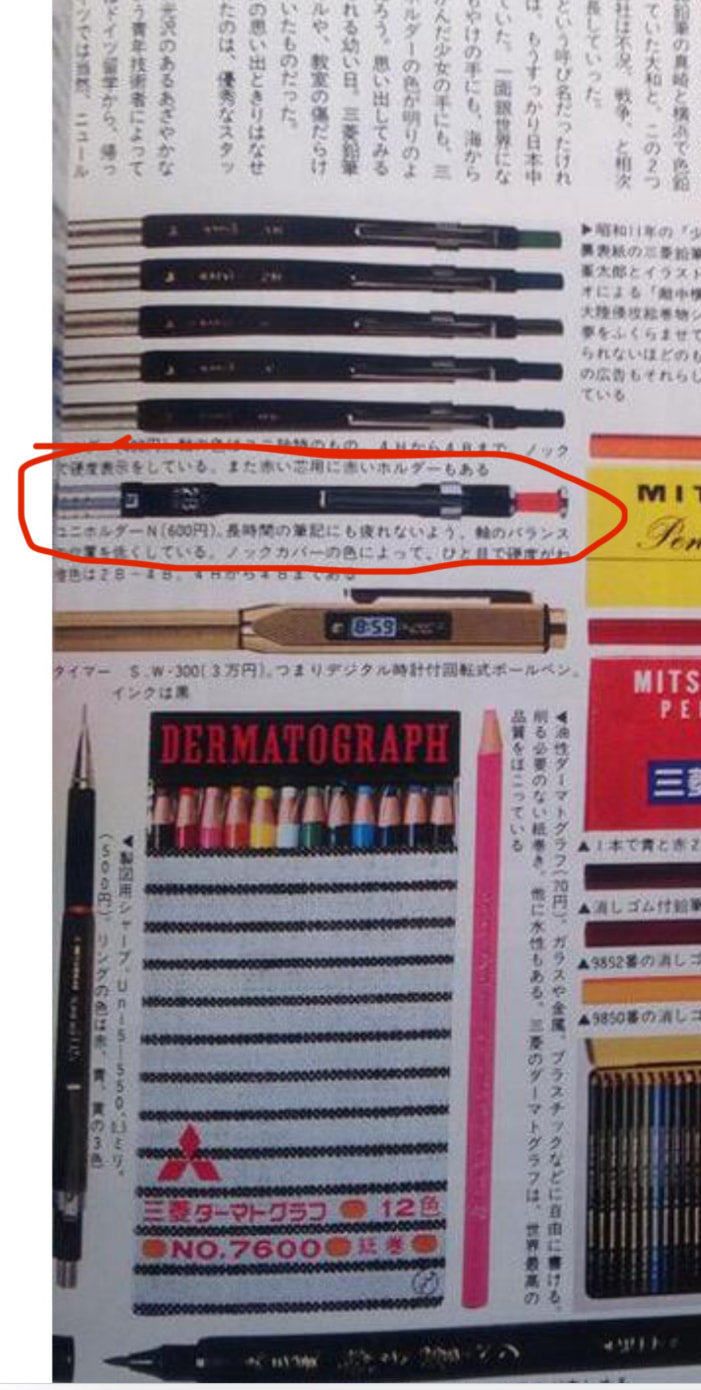
And there is this image showing a potential version with a black lead degree window and a higher lead range than the normal Mitsubishi/Hi-uni’s of 2B(orange).
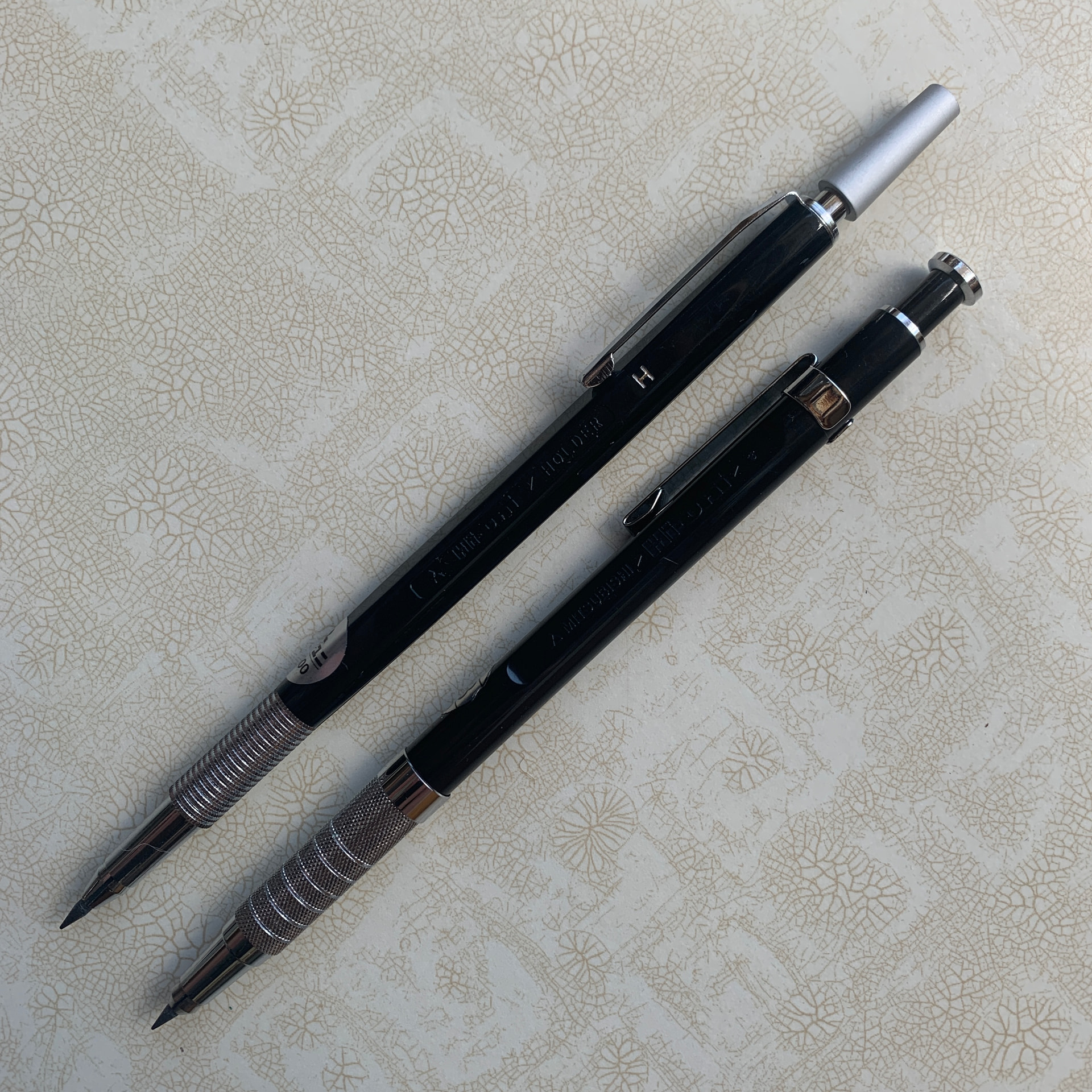
There is also the other earlier style that is also called Hi-uni… but the molded plastic on the barrel reads Hi-uni/holder instead of Mitsubishi/Hi-uni, so those are the designations I use to separate them. It has a similar pocket clip design to the Mitsubishi M5-30, M5-35, and M5-50. It came with or without lead degrees printed on 3 sides of the barrel… I do not know the range. The example I have is printed in gold
If anyone has product numbers or production dates please share. Or if anybody knows of any more variants
4 Likes
Wow! Why do I keep on learning about cool Sakura offerings from the past and expecting not to be surprised? Sakura from the 80s was GOATed.
1 Like