You’re correct, for instance, PG2003 is prone to that, from time to time you’ll see a listing with different coloring where the sticker was.
1 Like
I think I can say with near certainty that the price/model sticker adhesive used by companies such as Pentel and PILOT are not harmful to the finishes. If anything, they act as an excellent UV blocker and when you see a difference in color upon removing a sticker, you’re seeing the fading on the barrel and the sticker spot a token preservation of the original color.
I’ve seen that as well, and every time that shade under the sticker is darker… suggesting that UV exposure to the rest of the barrel caused some fading. Have you seen the reverse, where the sticker area is actually lighter?
2 Likes
No, I’ve never seen that. I own eight PG2003s, and all the ones with this issue show a darker area. Another curious fact is that this only happens with the newer versions that feature the lead hardness indicator. None of the older versions have it. One thing I don’t understand is why the entire body is a lighter colorm given how they are originally packaged in a box, the back section should be darker than the front, which is exposed to sunlight. I once hypothesized that the sticker glue darkeneded the finish, but I’ve never found any information to confirm or anyone who knows how explain it. It’s only darker in the area where the sticker was, the rest of the body is a uniform shade. That strikes me as odd, since logically, only the front section should have faded to a lighter color.
3 Likes
Interesting. So you have several early copies of the PG2003 with sticker and haven’t seen any color differences on the body where the sticker is applied?
Have you tried applying some alcohol or acetate to the sticker area? If you have a rough example, I’d try it on that first just in case. Acetate can be very aggressive.
Another thing would be to look at the surface under extreme magnification and see if you can detect any kind of other changes.
Is it possibly oxidation related?
No, this happens only in the version with lead hardness indicator with the yellow sticker. I also have two from this same version, but with the white sticker (a side white sticker), and those have no color difference.
Have you tried applying some alcohol or acetate to the sticker area? If you have a rough example, I’d try it on that first just in case. Acetate can be very aggressive.
I tried applying isopropyl alcohol, but it doesn’t make any difference. This color difference is quite hard to notice, and you can only see it if you turn the pencil in the light until you find the angle that reveals the variations.
Is it possibly oxidation related?
I don’t think so. I bought all the PG2003s NOS in the box. Except for the ones with the white sticker, which come sealed in plastic, but those don’t have a color difference on the center sticker, as the sticker is on the side. And it’s actually funny here, because the side sticker is much larger, yet there is no difference in color. When I have some time, I’ll take a few photos to capture these differences.
2 Likes
Finally got a proper weekend. Besides sorting pencils, I’ve been taking photos for my next round of MP trades. The camera battery died halfway through, so it’s charging now.
While waiting, I came across this thread. I happened to have a few examples beside me to compare, and it made me think that whether a sticker stays or goes has gradually become part of the collecting mindset. I guess we’ve all become so used to seeing original stickers preserved that it’s turned into a bit of a subconscious preference.
Personally, I don’t really mind either way. I usually leave a pencil exactly as I receive it.
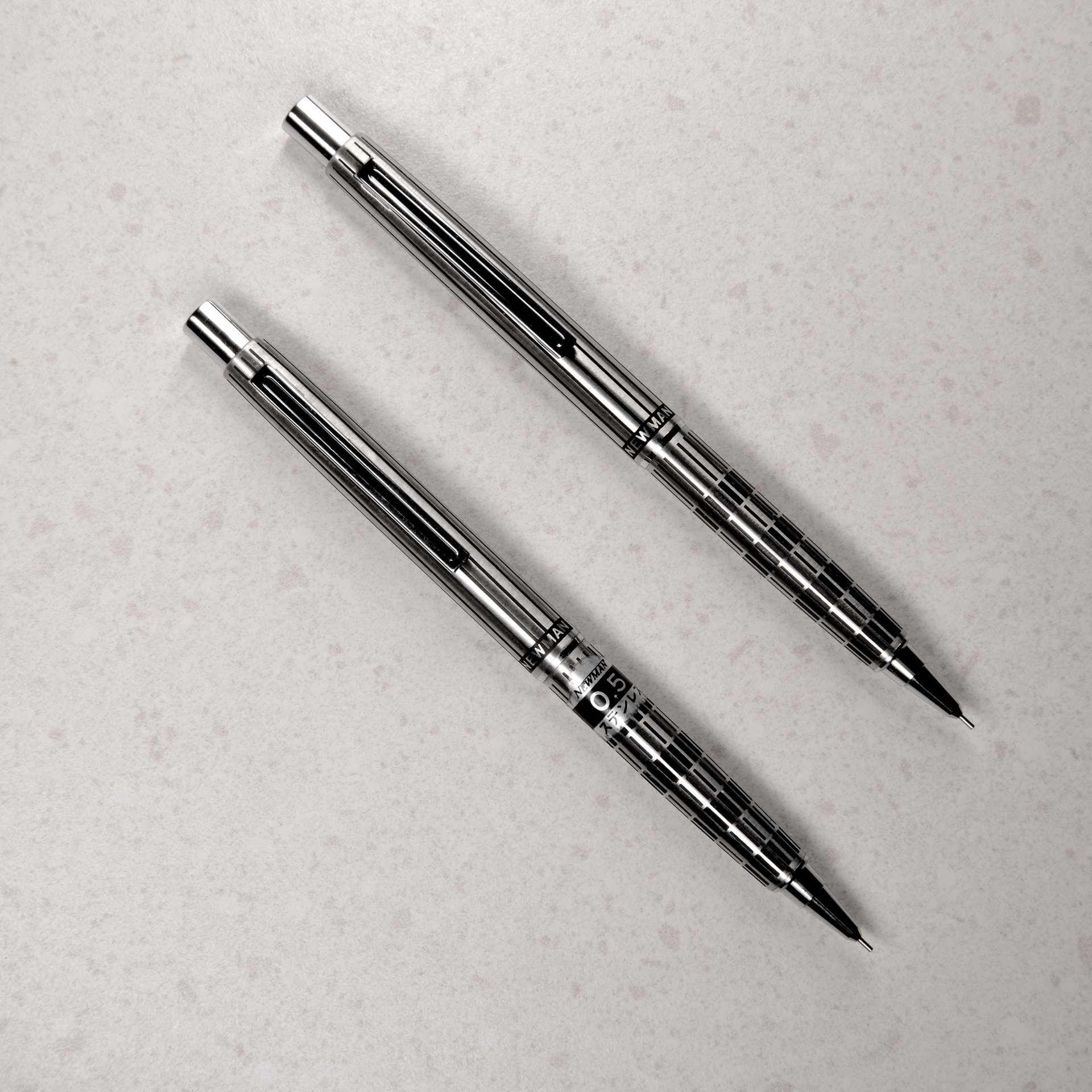
One of the very few exceptions was a Newman etched drafting pencil. Both of mine were almost mint, but the sticker on one had deteriorated so badly that it was already peeling off. I took it off as soon as it arrived. I still remember using a little IPA to gently remove the adhesive while being careful not to disturb the black etched finish.
10 Likes
Beautiful!!
1 Like
Another pair I happened to photograph while organizing the collection were my Pilot E500 and Pilot E.
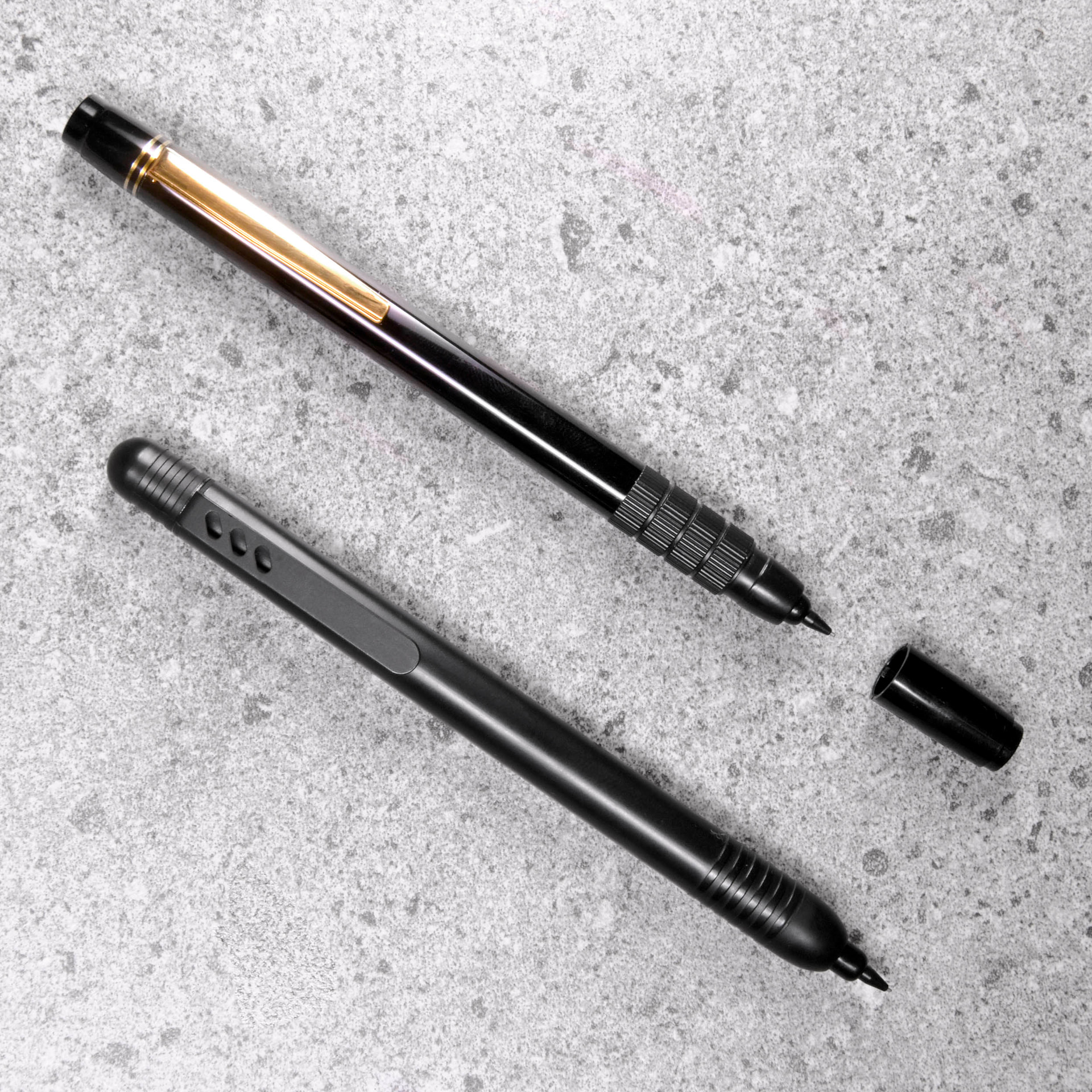
When I bought them years ago, they had already lost their stickers. Just clean, all-black pencils with nothing left on the barrel.
Even so, both are in excellent condition. The plastic still looks great, there’s no need to polish them, and they both work perfectly. I just don’t have the courage to take either of them apart.
8 Likes
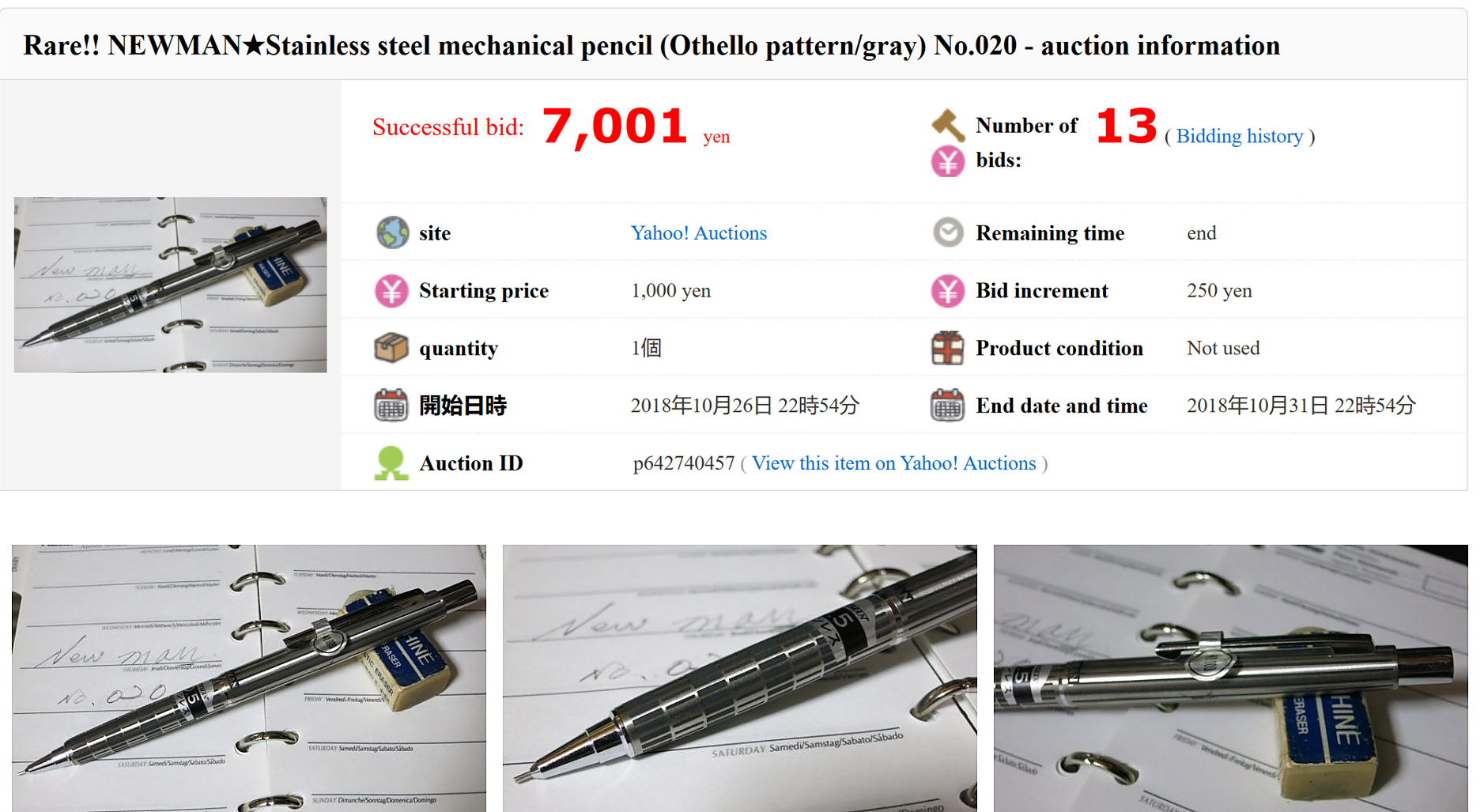
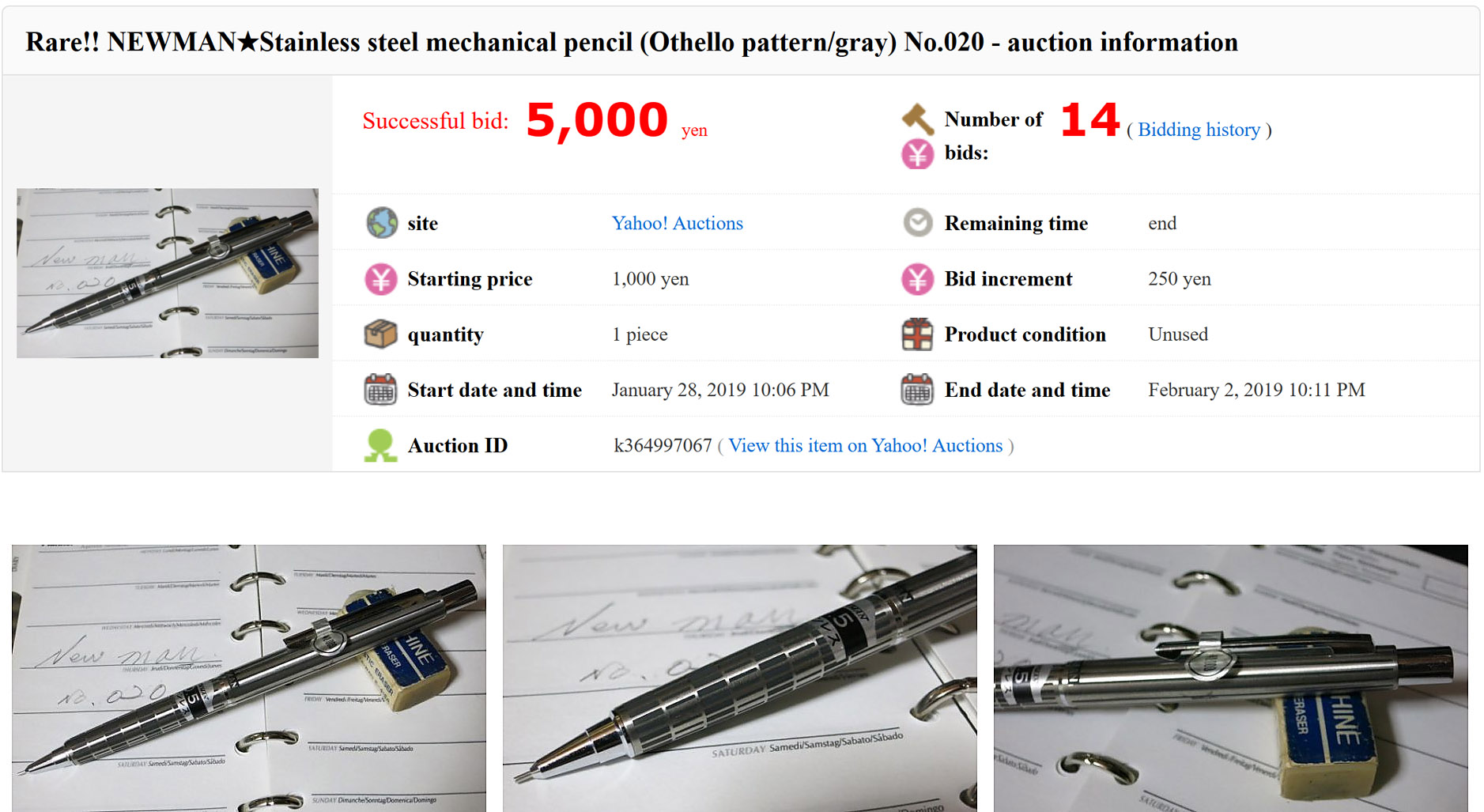
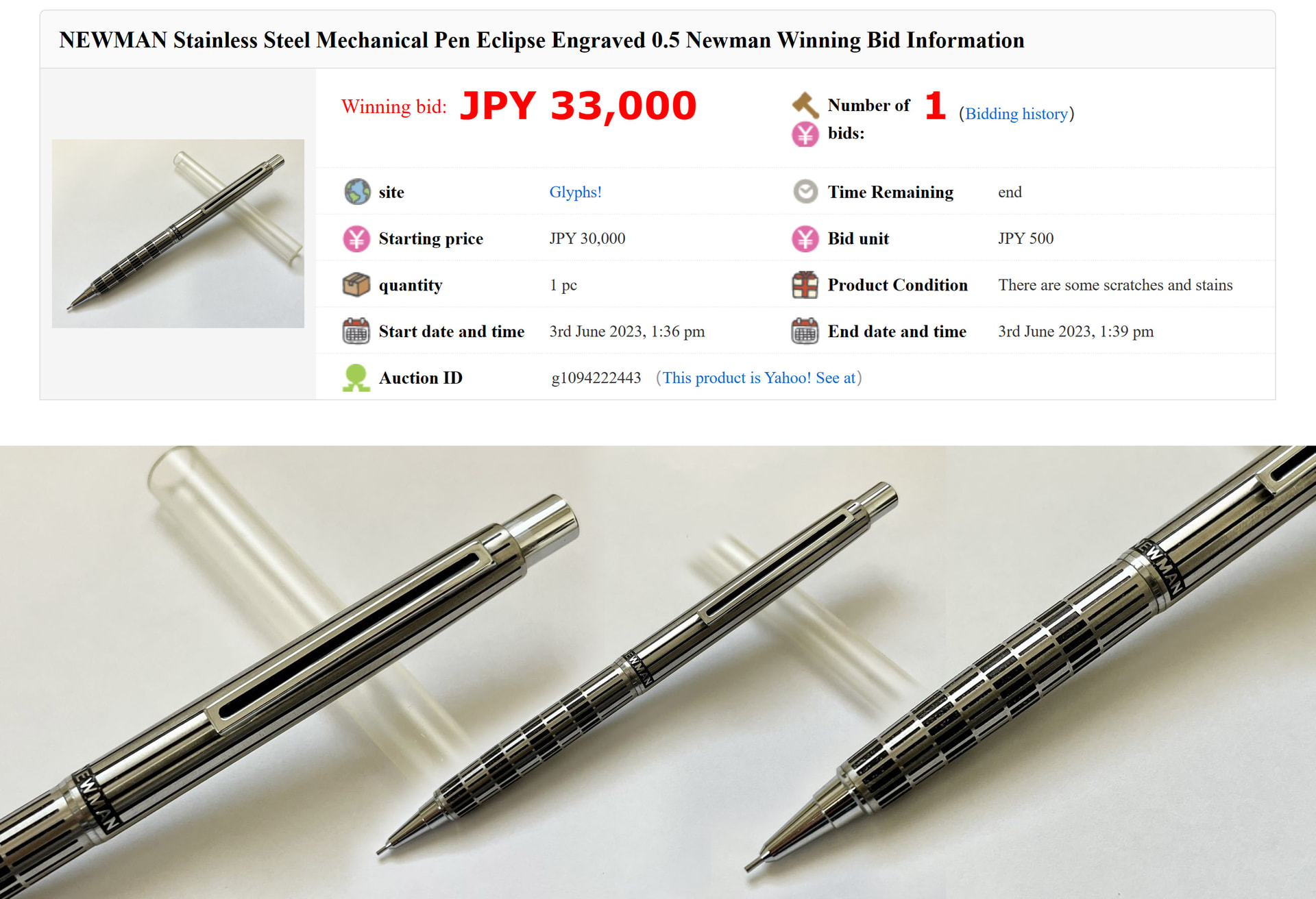
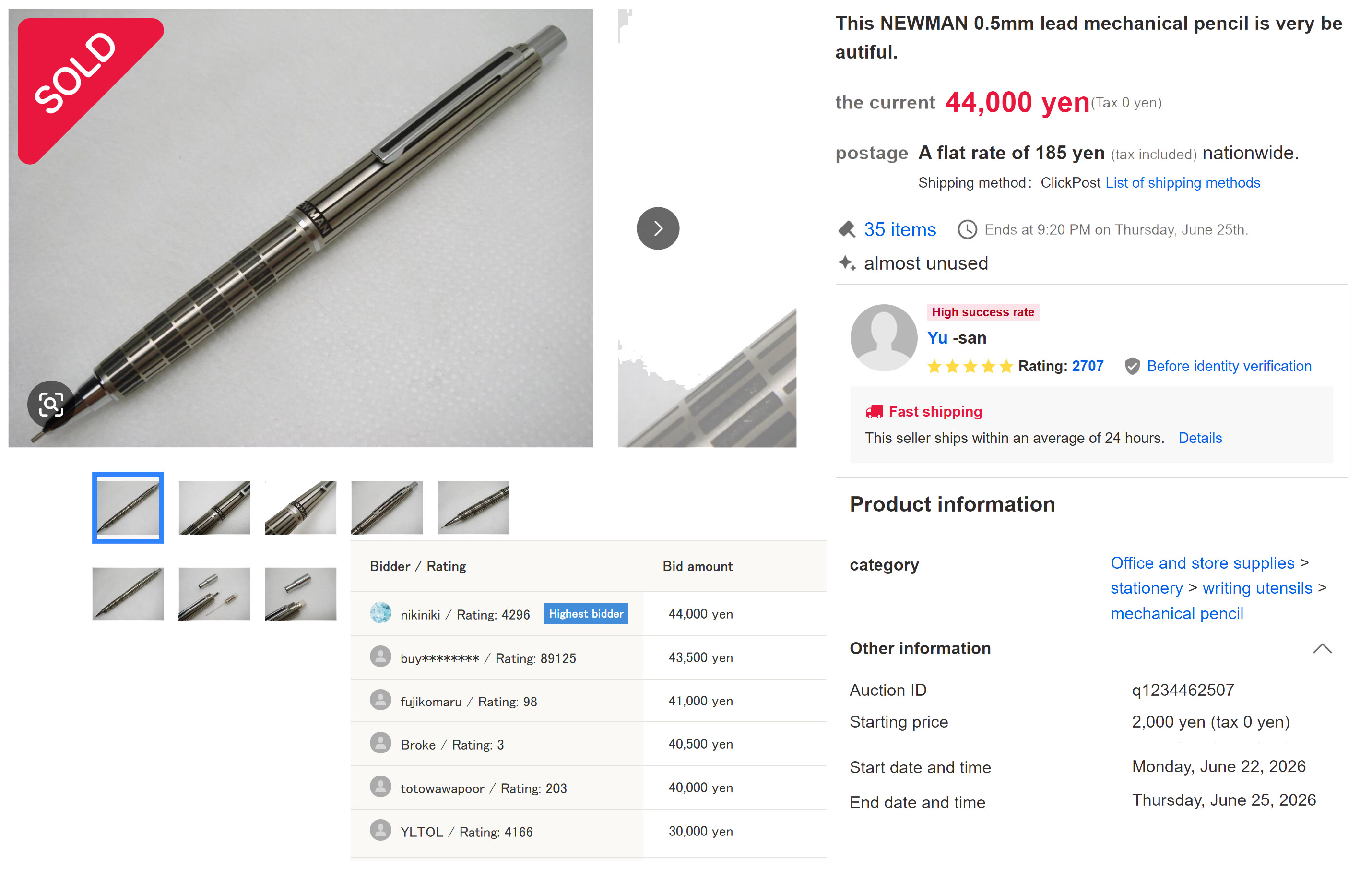
You’re quite fortunate to have two of those. I think this one was named “Othello.” They’ve vaulted up in price over the past few years to just ridiculous prices. I was lucky enough to grab one before the major price spike, although searching history found some painful prices in the past (crazy low).
4 Likes
So it’s called the Othello. I’ve never been able to find much information about it, so I’m curious whether the Japanese seller information in the records is actually accurate.
Before my attention was stolen by all the beautiful designs and mechanisms out there, I spent years chasing what I thought were my grails. Back then, information about mechanical pencils was incredibly limited. Collectors had to piece everything together from scattered clues, and everyone relied on their own detective work to find the models they were after.
These found me by accident. They were originally the consolation prize after failing to find my grails. I also ended up with two because I used to have a bad habit of bidding on auctions after work with a beer in hand. (I’ve completely kicked that habit now. These days it’s usually whisky or tequila instead.)
While chatting with @DarkwingDuck , he let me know there’s an even higher-end version with a lead grade indicator ring above the grip. That version looks fantastic too. I’m sure I’ll find one eventually… as long as the price still makes sense.
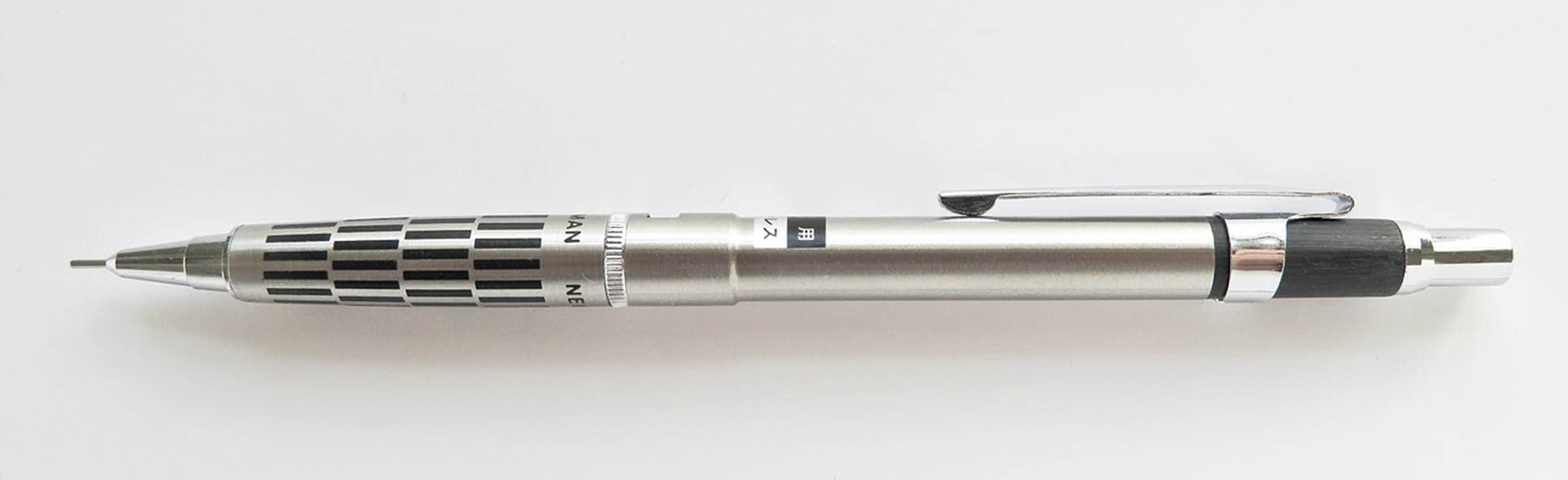
A little while ago, a descendant of the Newman founder’s family started sharing more about the company online, and suddenly Newman gained a lot of attention again. Then, almost overnight, auction prices started climbing. It became hard not to notice. Collectors who had barely paid attention to Newman suddenly had it on their radar. It’s a fascinating shift, but I still can’t quite explain it.
While reorganizing my collection last night, I pulled out my Newmans. I only found five of them, although I’m pretty sure there are more hiding somewhere in the back of a drawer. The funny part is that I’ve never even created a proper Newman section in my catalog. Meanwhile, my KINTO collection is getting close to filling an entire storage box.
In the hand, it feels very much like other steel-bodied pencils from the same era. The click is on the firm side, but the all-metal mechanism gives it that reassuring feeling of reliability that I really enjoy.
Looking at today’s prices, though… I honestly wonder if something has gone wrong. Rising prices may benefit the people who already own them, but I can’t agree with this kind of irrational premium. In the long run, it isn’t healthy for the hobby. Collecting should be about the enjoyment, not constantly having to justify increasingly unreasonable prices. So many models I’ve discovered in recent years have become surprisingly expensive. These days, I’d rather save that money for my children’s future than chase every pencil that catches my eye.
That probably also explains why I didn’t hesitate for a second to remove the badly curled, deteriorated sticker from mine years ago. I normally preserve a pencil exactly as I receive it, sticker included. If a previous owner has already removed it, that doesn’t bother me either. The mechanism and the engineering have always mattered far more to me than the sticker.
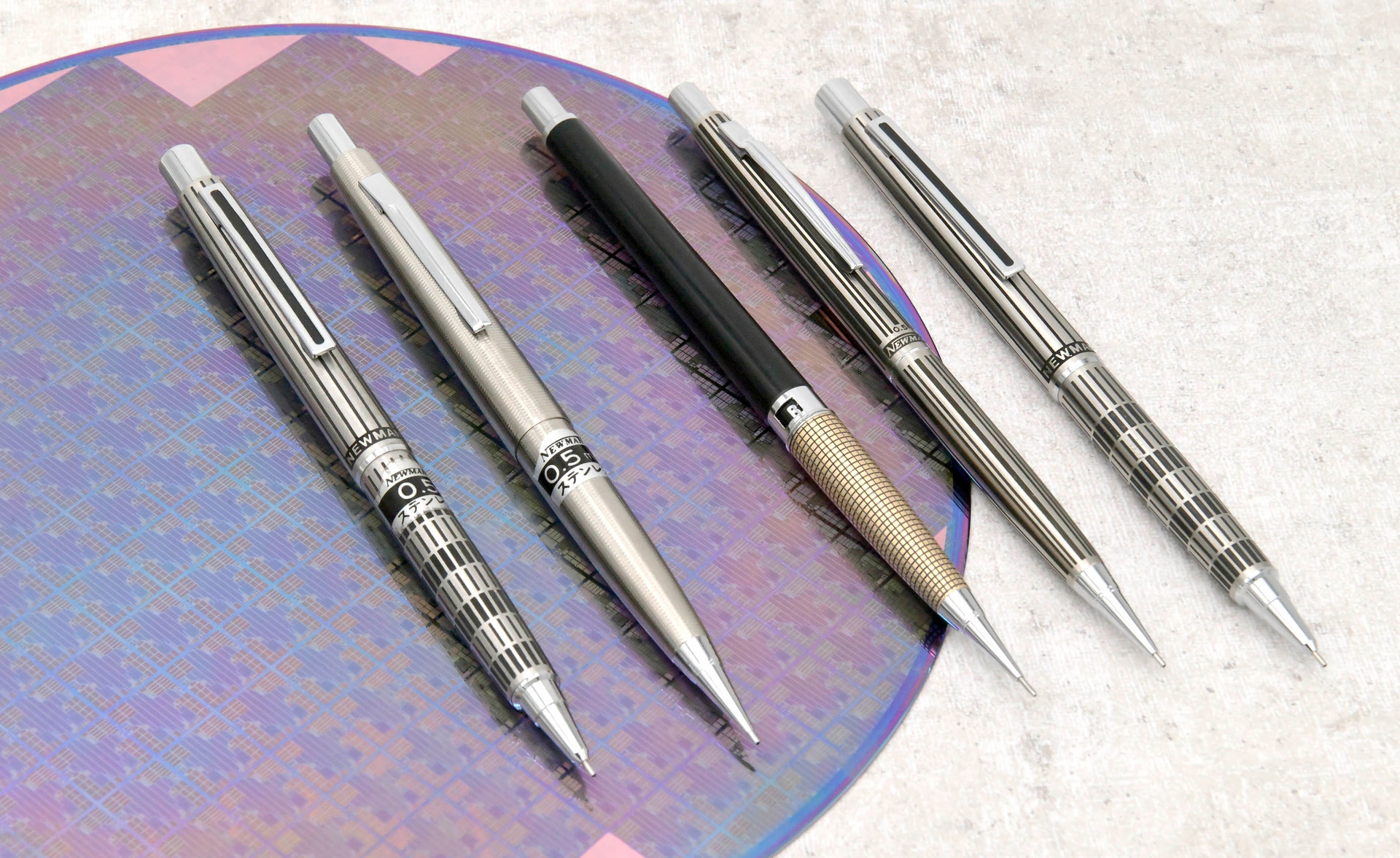
To match the recent Newman MPs price boom, I thought a silicon wafer would make a fitting backdrop. Two still have their original stickers, and the other three are happily running around in their birthday suits.
One thing I should clarify: the Newman Othello was originally a drawing pencil in the 2,000 yen price range, not around 5,000 yen.
It may have been an excellent value product, but the original retail price is always one of the factors I consider when judging whether the current second-hand premium is reasonable.
11 Likes
What a beautiful photo! Now I’m more curious about how you managed to get a wafer lol.
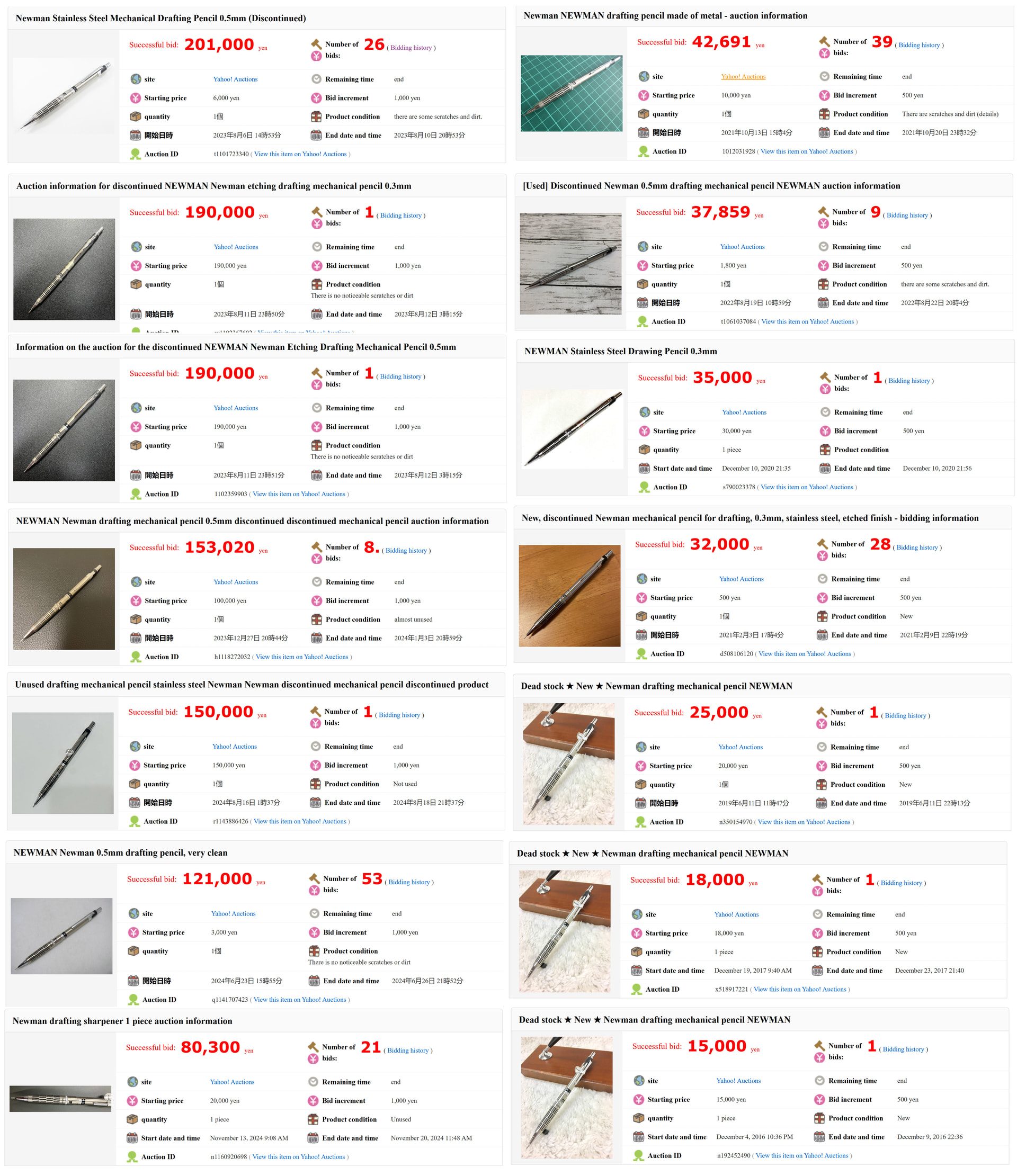
Ever since I discovered the Newman Drafting, it’s become one of my “grail” pencils too, though the price is hard to justify, aside from supply / demand, they usually go for around 100,000 yen. Despite the cost, it’s one of the most beautiful mechanical pencils for me.
Because I work with clients from all kinds of professions, I often come across some really interesting things. I’ve had this silicon wafer for a while now.
One thing that surprised me is that I always assumed the surface would scratch easily. In reality, the etched surface is remarkably hard and much more scratch-resistant than I expected.
4 Likes
We’ve called it the “Newman Drafter.” I don’t know if there’s an actual model number for it. There was a time when these weren’t too pricey, relatively speaking. After the grandson of the Newman company founder appeared on the scene and Newman prices vaulted, the drafter saw a notable uptick… and then one day the bidding competition on these went stratospheric. They’ve at times sold higher than the PILOT Automatic!
4 Likes
The trends in this world are getting harder and harder to understand.
I have a coworker who is absolutely obsessed with Pokémon cards. He is constantly buying and selling on the market, with something like $40,000 to $50,000 USD in play…
At this point, I am starting to wonder if I have completely lost touch with how this world works.
I still only care about mechanical pencils and rock music.
Well, I suppose I have to add my kids to that list too. Sorry, guys. Family comes first.
8 Likes
Wow… that’s an incredible amount of money tied up in Pokémon cards! I wouldn’t have believed it possible. But it’s likely much higher with vintage baseball cards. A single card can go for hundreds of thousands. A tiny piece of cardboard with a photo overlay!
Excessiveness is all relative, I guess. I’ve seen some collectors shell out nearly $10k USD for a PILOT H-5005. I could never do that. Even just $1k USD is beyond my comprehension, in terms of perceived value.
Timing is everything. It’s kind of crazy to think that a ¥5000 tagged quality PILOT mechanical pencil (Grandee) could be bought in recent years for about ¥3000 off of Mercari or YAJ… and yet, a ¥500 Newman drafting pencil could sell for ¥40000.
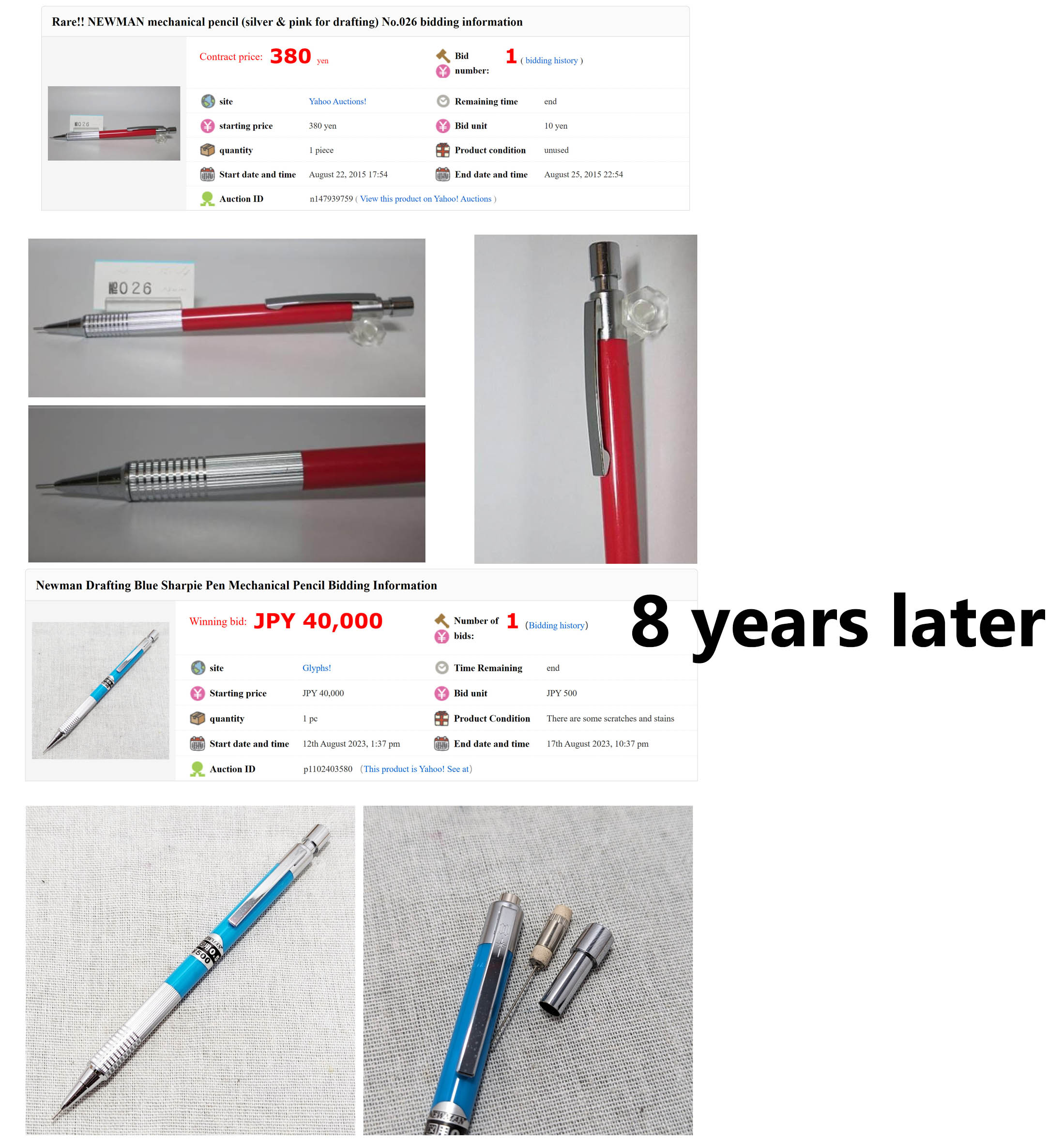
This world is unpredictable in many ways, but there’s also microcosms of collecting where value is extremely relative. People outside the vintage mechanical pencil community are astonished for what prices some models can fetch. THEY don’t understand it. I can appreciate it, because I had that mindset in the beginning. I couldn’t believe how pricey an H-2005 was over an H-1005 (around the time it was discontinued). But these writing instruments are really things of beauty when you consider the design choices companies made. The Japanese were especially passionate about making quality writing instruments to not only stand the test of time, but be visually appealing as well. And it shows.
5 Likes