I’d like to contribute a bit of material for the video as well—if any of this is useful, that would be great.
The TK-Matic 9725L was the pencil involved in my very first face-to-face deal with a real collector, about 12 years ago. Even now, whenever I have a little extra budget, I still circle back to alpha-matic and TK-Matic pieces to grow the collection. Besides TK-Matics, I’ve also been lucky enough to secure a few alpha-matics along the way.
The TK-Matic is an absolute classic in the collector community and often where many people start. Because of that, there’s already a wealth of solid reviews and documentation online. Its writing-style sibling, the alpha-matic, is also very well covered.
However, when it comes to the alpha-matic executive 230th Anniversary Gold, most information stops at exterior looks and auction results. Discussion tends to focus on prices, with only brief appendix-level notes—something that happens to many vintage pencils.
So this time, I’d like to shift the focus a bit and spend more time on the 230th Anniversary Gold, adding more photo documentation here.
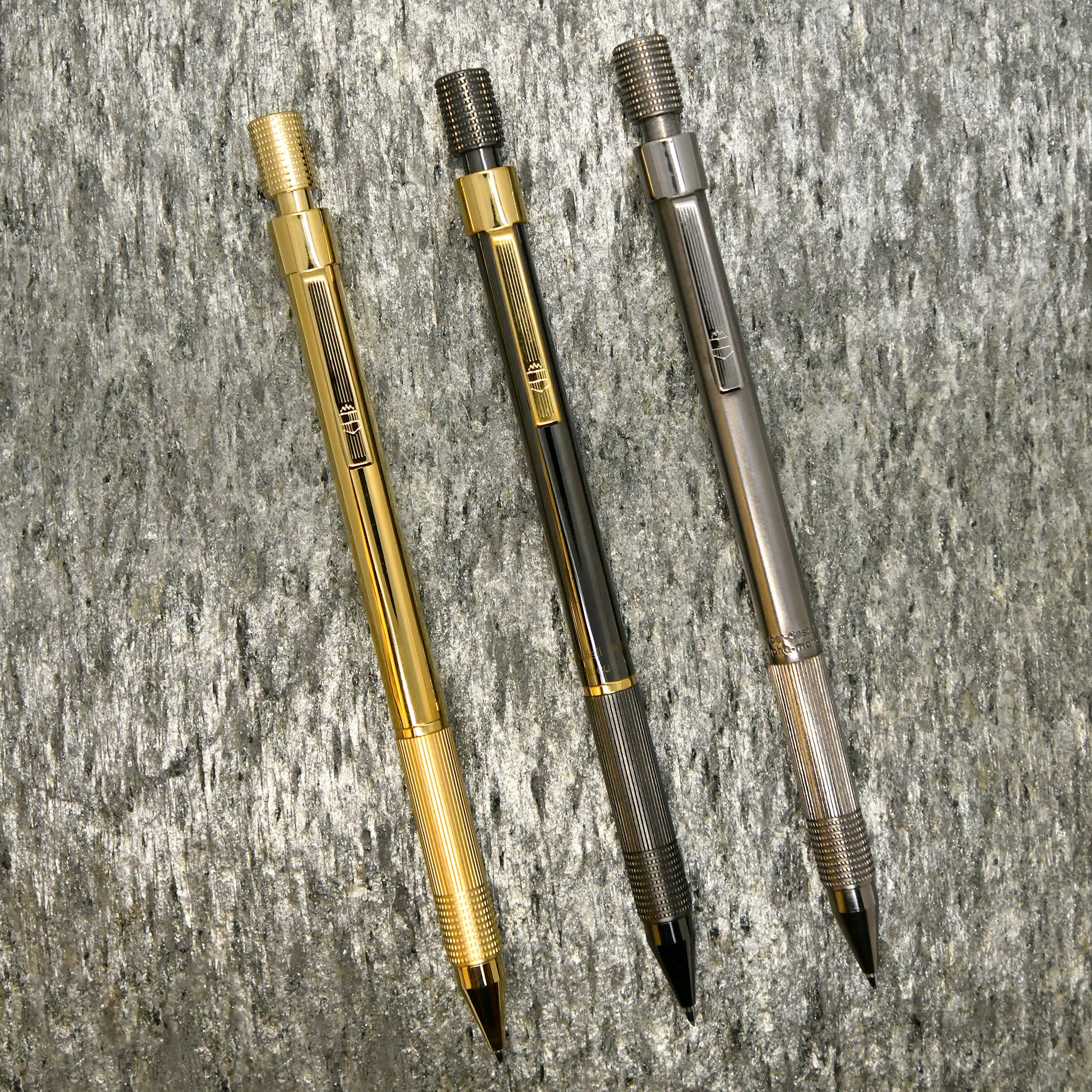
From right to left, my three small favorites are:
- Faber-Castell alpha-matic Titanium
- Faber-Castell alpha-matic executive
- Faber-Castell alpha-matic executive 230th Anniversary Gold
The two executive variants share an extra metal ring at the knurled grip; otherwise, their construction is nearly identical. The biggest difference is the barrel material.
The grip feel and lead-advance mechanism are well known for being reliable and consistent—but while photographing them, I kept getting distracted by the tactile experience and that unmistakably German click: pure metal-on-metal. Solid, confident, dependable. Using it is deeply satisfying and feels exactly like what “Made in Germany” should feel like.
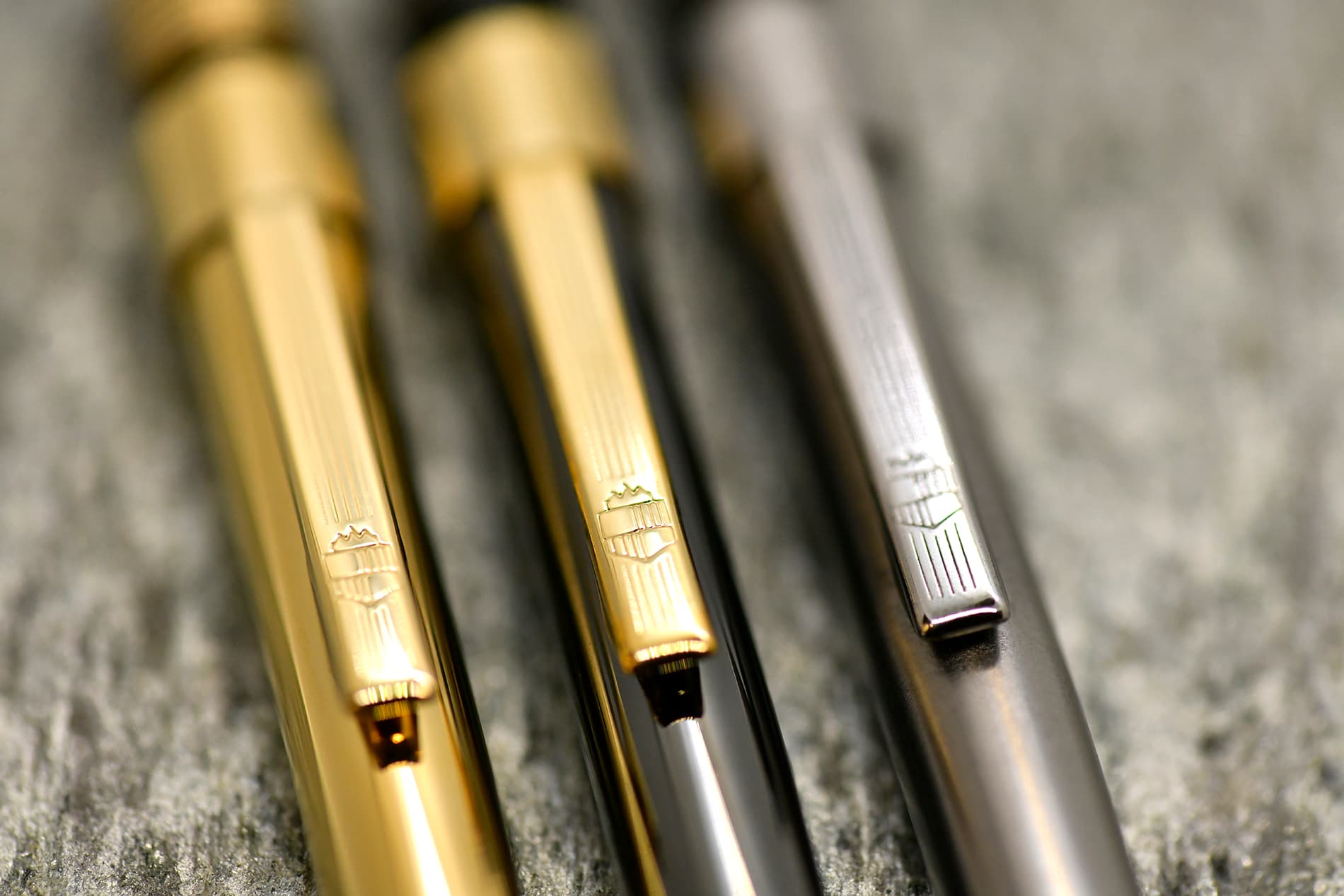
The clip engravings are consistent across all three. Personally, I think the black-and-gold colorway of the executive looks fantastic (it took me a long time to finally track one down). The glossy black barrel with restrained gold accents feels refined rather than flashy.
As for the 230th Gold, honestly, I rarely bring it into daily rotation—it feels too special. That said, gold resists oxidation well, so compared to the Titanium version, it’s actually easier to maintain as a collection piece.
I once tried to identify the material of the Titanium clip. Its sheen is clearly different from titanium, so my guess is stainless steel with some kind of plating—but I don’t have enough evidence to be certain. I do know it has a tendency to oxidize, and until the surface material is confirmed, I’m hesitant to polish it.
That said, the titanium alloy barrel itself can safely be treated with mild stainless-steel polishing compound without issue.
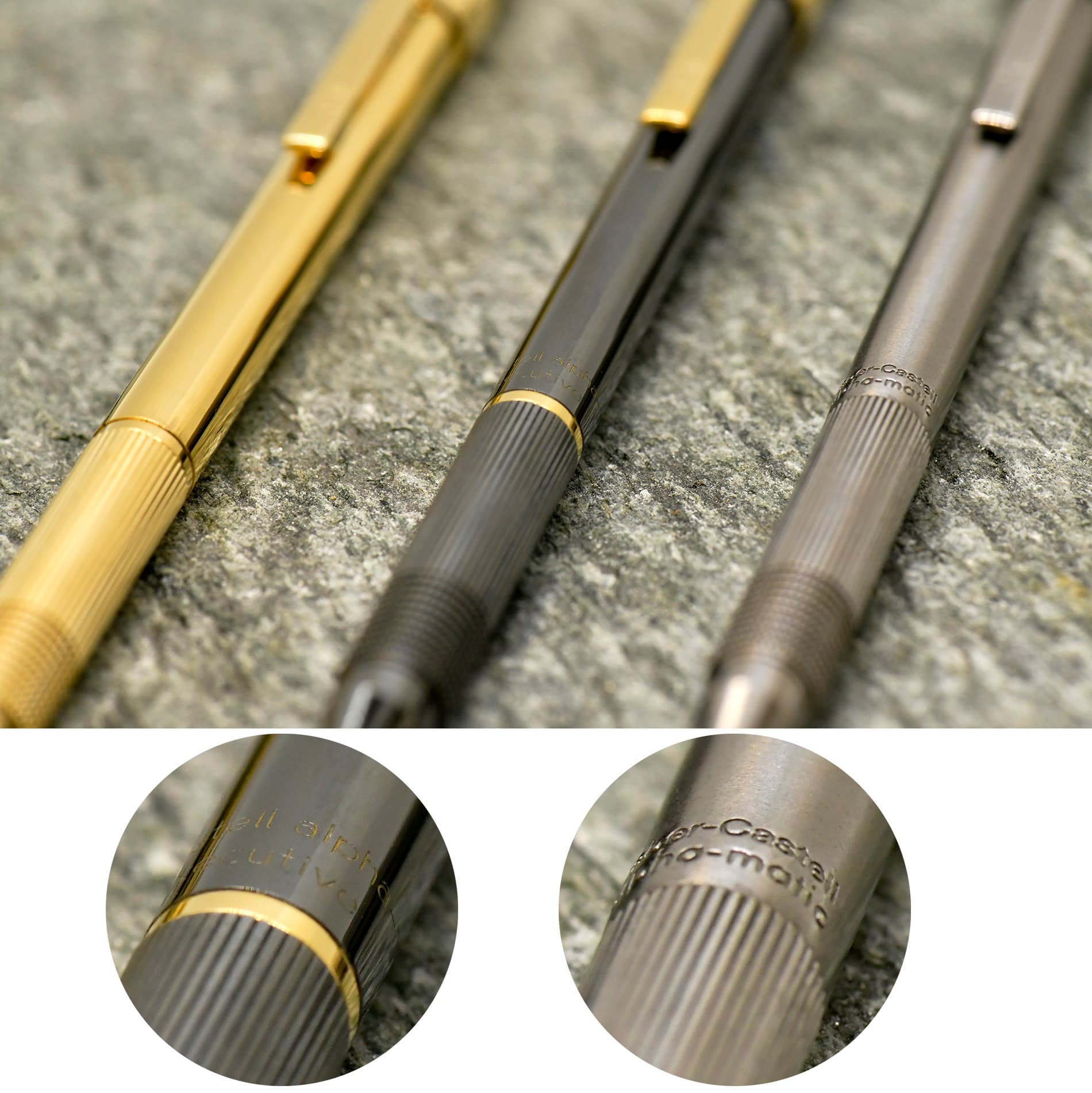
Above the knurled grip (above the executive’s metal ring):
– The 230th Gold has no text
– The Titanium looks like high-pressure stamped lettering
– The executive appears engraved, with what looks like exposed brass underneath
So… is this a titanium sleeve over a brass barrel? Macro shots clearly show brass peeking through on the inside. Strange—CNC machining wasn’t really available at the time, which makes this another small mystery.
(The black residue along the recessed lettering edges is simply leftover polishing compound from pre-shoot cleaning.)
As for the different fonts and barrel colors, VitOne has a deep and very informative post that goes into this in detail.
I’ve been out of my younger AOL-media days for a long time now, and my typography knowledge hasn’t progressed much beyond a few old favorites—so I’ll gracefully bow out of the font-analysis rabbit hole for now.
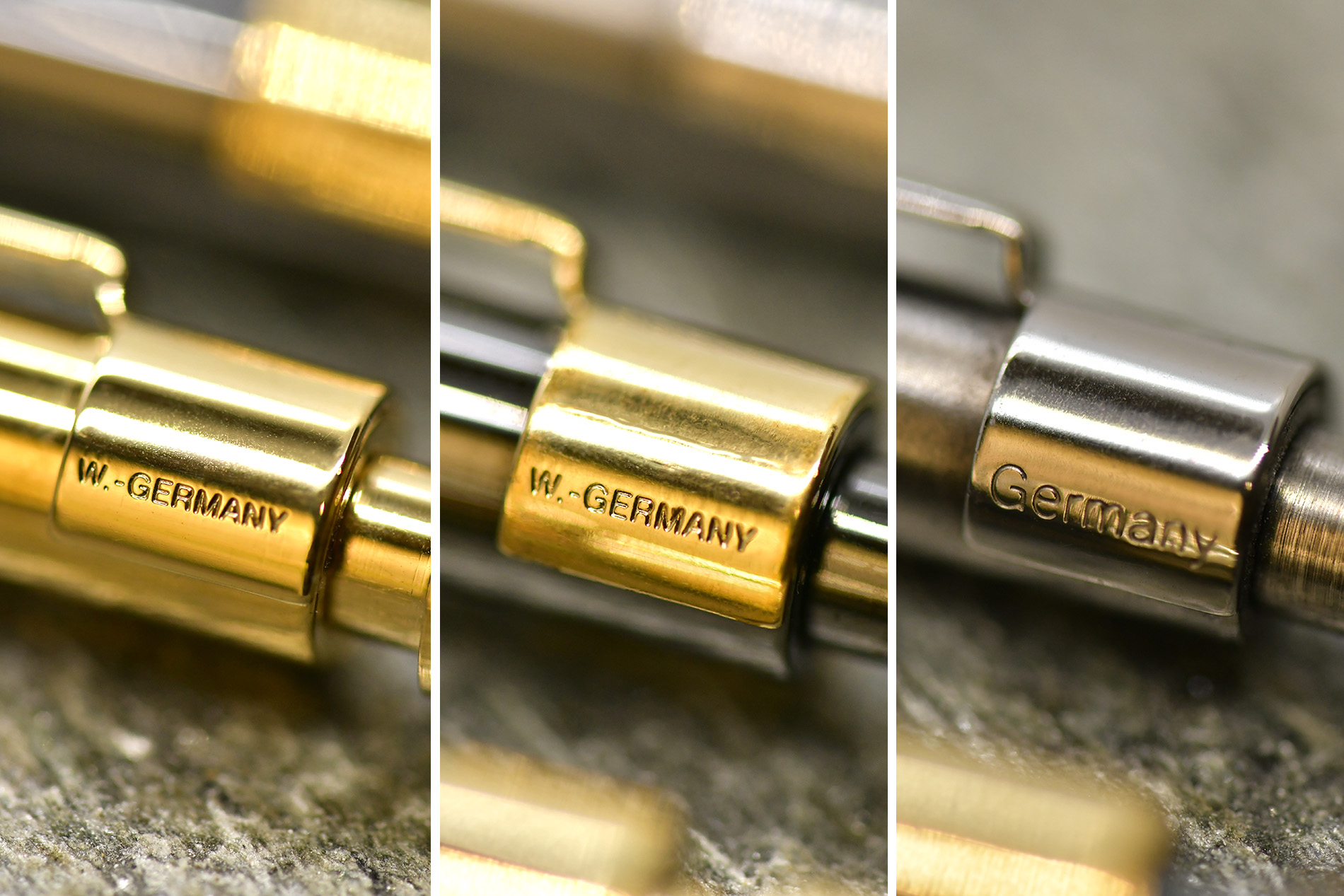
The 230th Gold and executive are both marked as West Germany production, while the Titanium was made after reunification. (Yes, I really want a West-German clear-window matic engine too.)
That said, the font-spotting game begins again: all three clips show subtle differences. The executive and 230th Gold are closer to each other—possibly mold deformation from thermal expansion or long-term wear—but the overall shapes are similar.
Still, the Titanium’s “G” has a tail, while Futura’s “G” doesn’t… so am I overthinking this? Probably. (Let’s drop it again.)
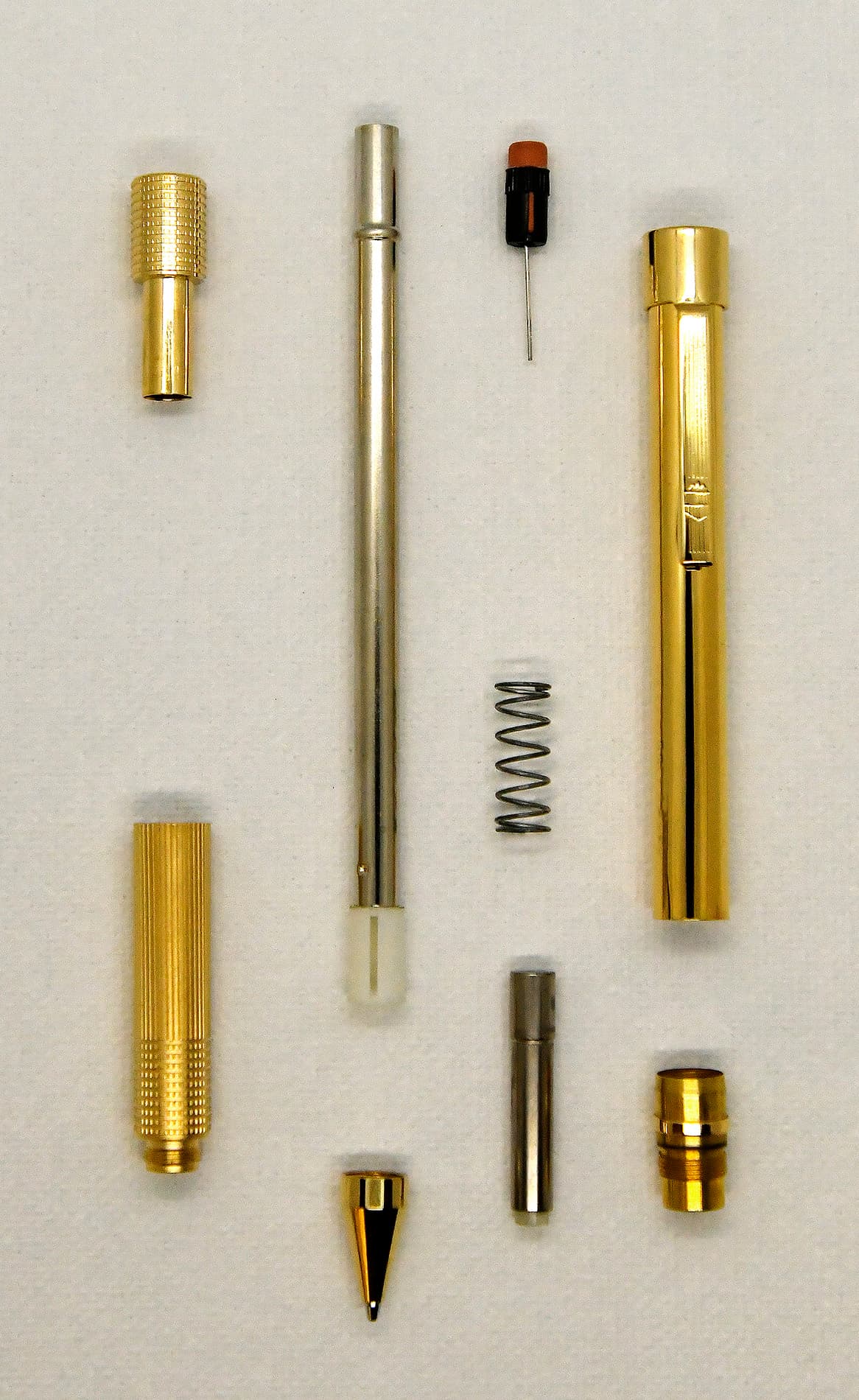
Here’s a teardown of the Faber-Castell alpha-matic executive 230th Anniversary Gold.
It’s been a busy week and I haven’t had a proper full night’s sleep in a while, so I missed removing the metal ring that connects the grip to the barrel. Aside from that, I haven’t found many teardown references for the 230th Gold—maybe I just haven’t searched hard enough. Either way, this is at least a record.
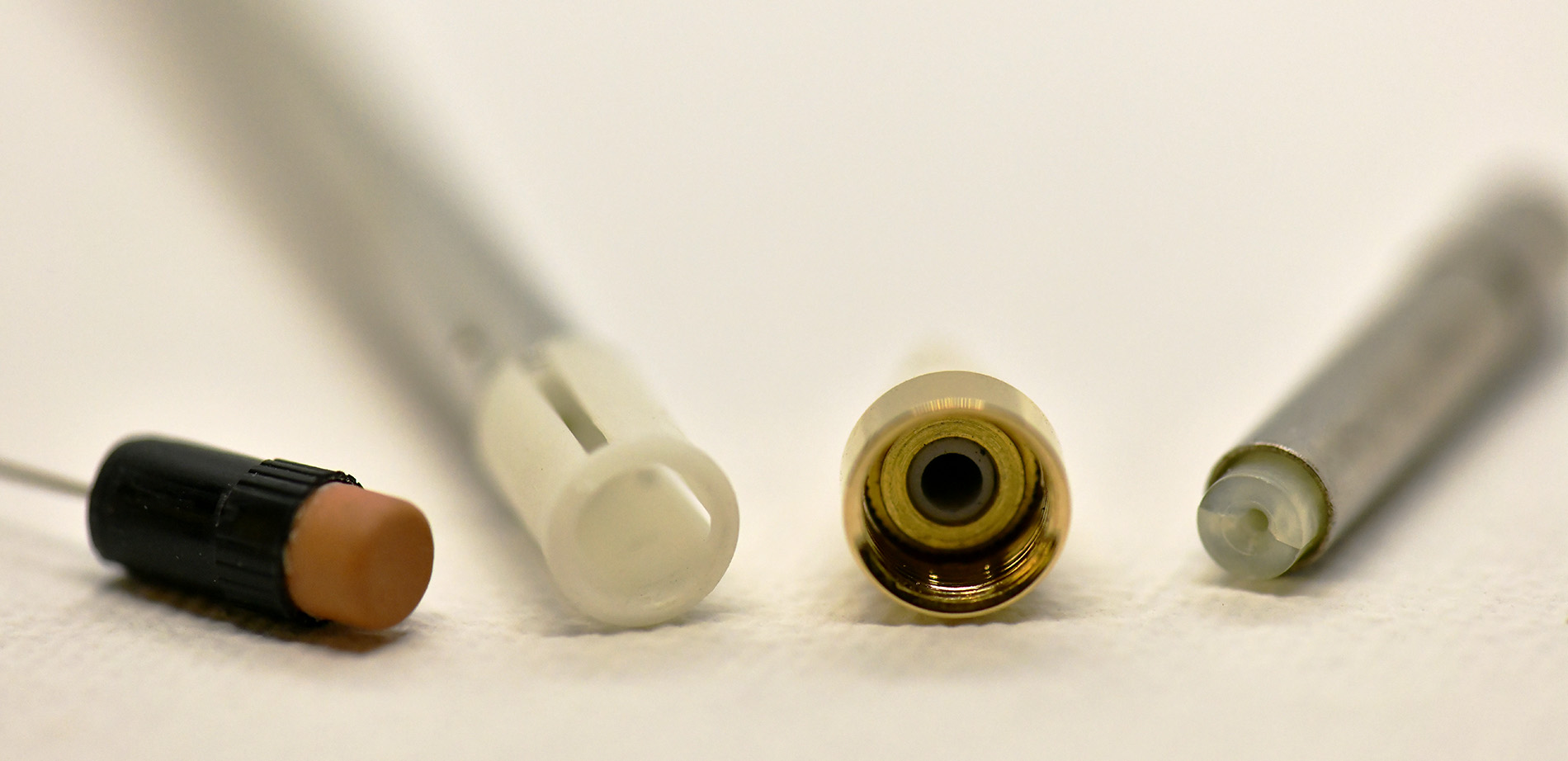
Inside the 230th Gold, four components are plastic, as shown in the photos. Compared to the all-metal construction of West-German TK-Matics, this feels a bit disappointing. For a commemorative model, I had hoped for a bit more engineering romance rather than cost optimization—but whatever the reason, I accept it.
Maybe the internal discussion went like this:
“We’re only making 1,761 sets. Everyone will just collect them—no one will actually use them. Let’s save a bit.”
Motion carried unanimously.
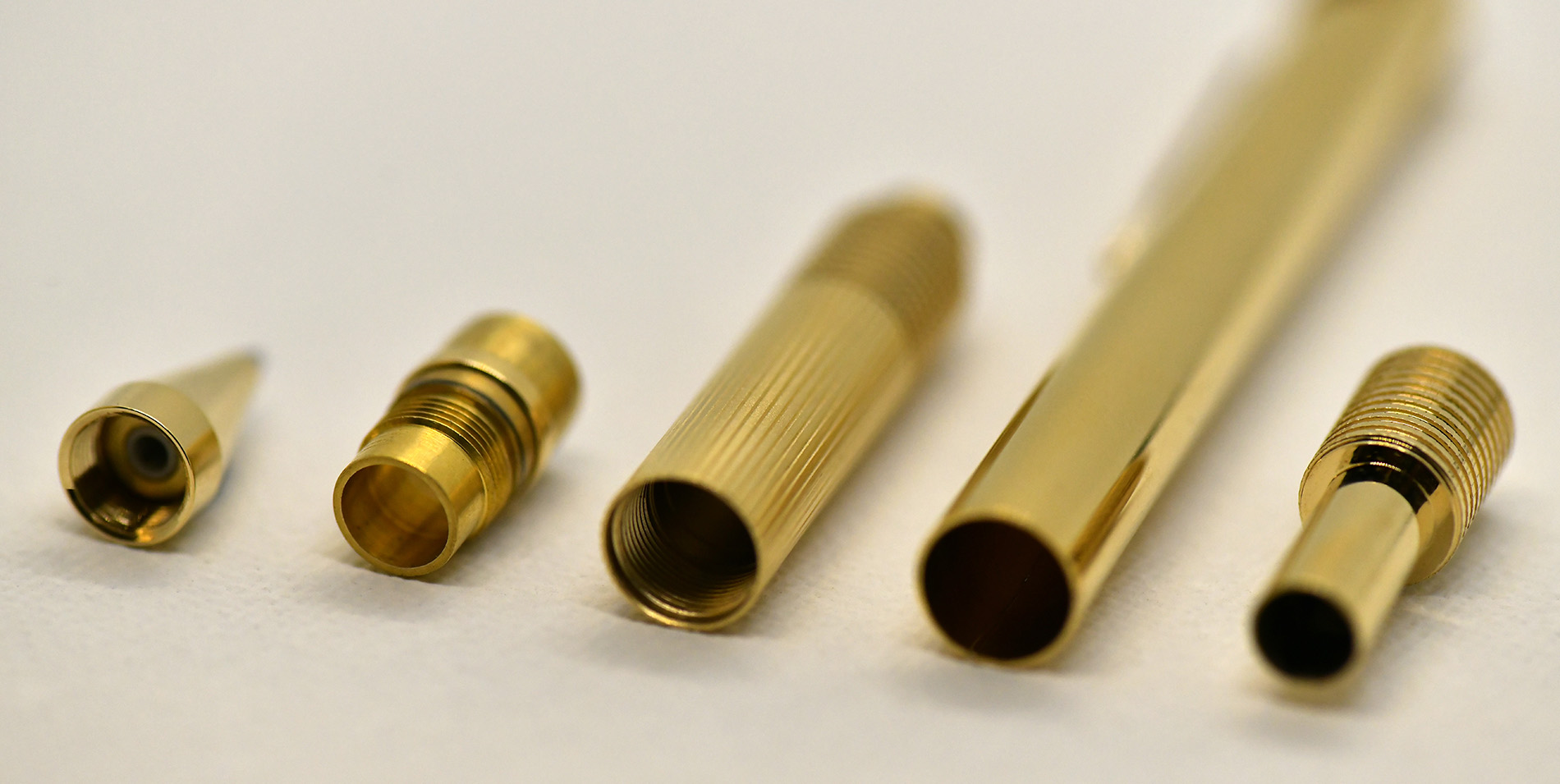
The internal metal parts are also gold-plated. Based on the uniform coating—even inside threads—I believe this was done via vacuum deposition, similar to modern titanium coating processes. From what I know, only vacuum plating can achieve this level of internal coverage.
Given that West Germany’s industrial “golden age” was around the early 1980s—right when vacuum deposition matured and became widespread in mass production—maybe the timing also supports this assumption.
This tiny plating difference may also explain why the 230th Gold has the highest rotational resistance when disassembled (though it’s still easy to take apart). It’s another small reminder that German tolerances earning their reputation isn’t just marketing talk.